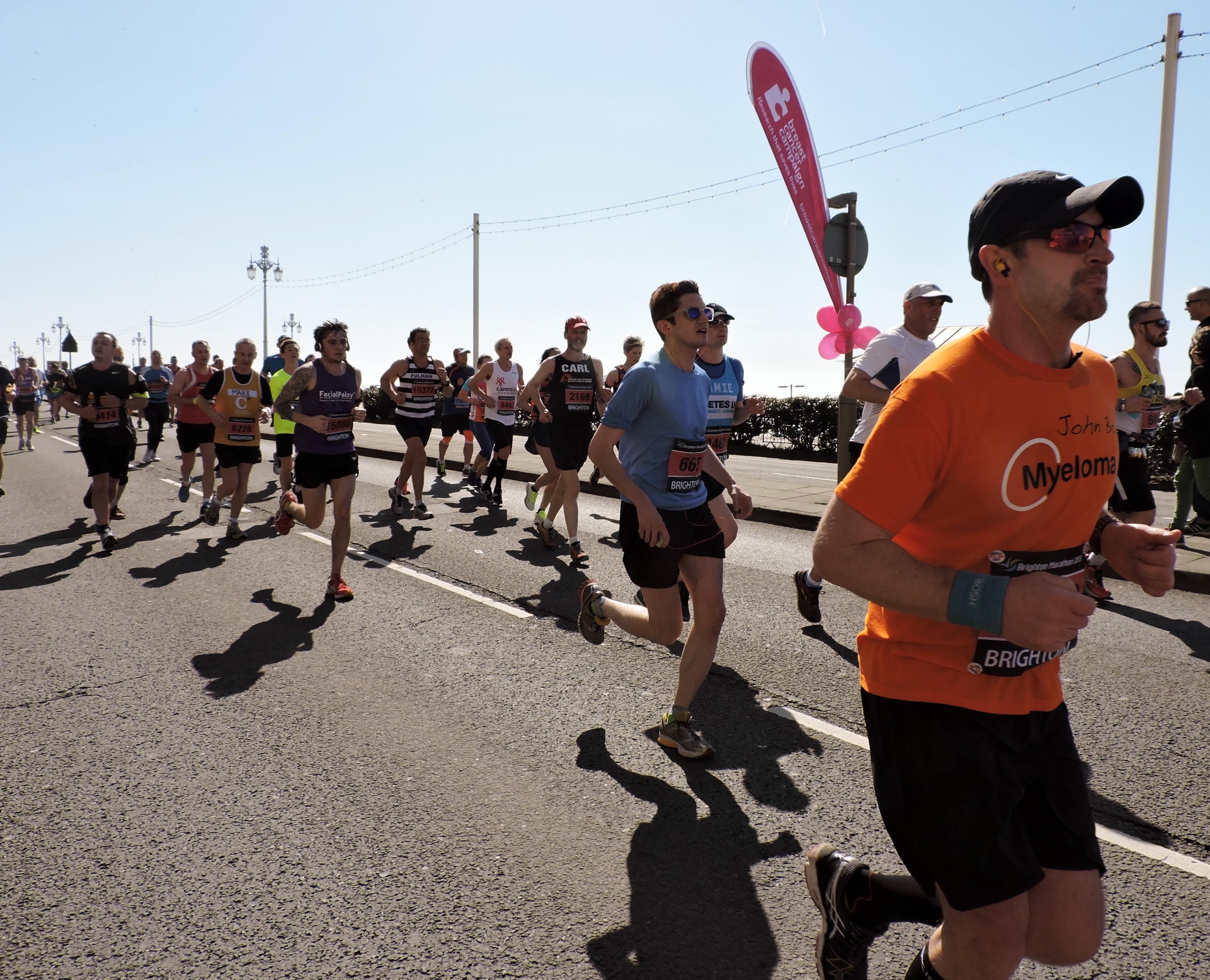
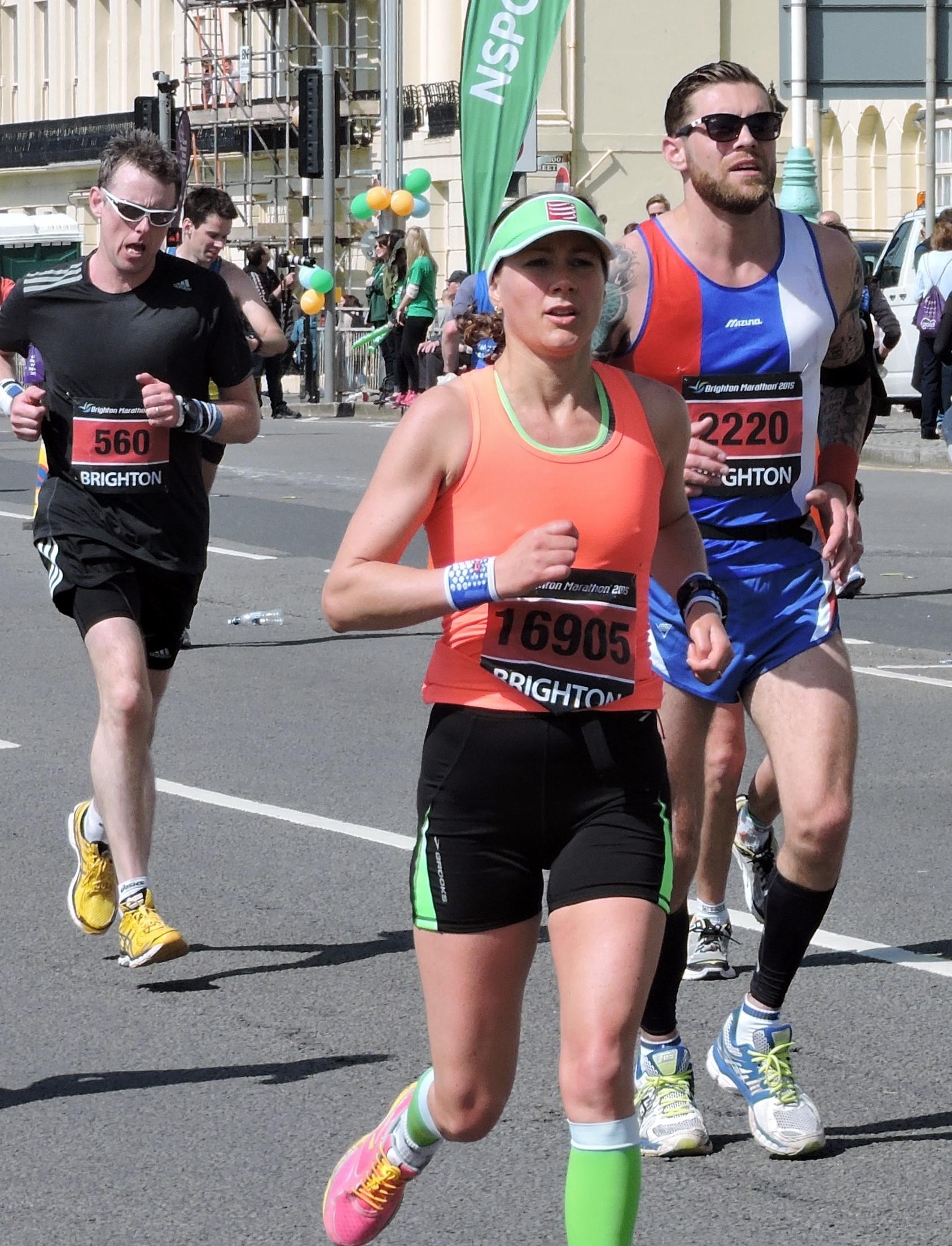
On Thanksgiving morning, I rose early on a rainy and cold day for a 5k race. My daughter arranges the volunteering that she and I do for several years. We’ve run in road races, but during warmer seasons.
Each year, we’re assigned a spot on the running route to give our water or point runners towards a turn. It’s two hours of standing in the cold, yet the time flies. As runners pass, we shout encouragement:
“Good job!”
“Great running!”
“You’re doing great!”
“Way to go!”
“You can do it!”
Many runners pass by, without seeming to hear. But I know that they do, having been in their running shoes. When running in these events, it means a lot to me to hear people calling out encouragement. Strangers who I don’t know, and who may very well not be shouting to me—it does not matter. I am energized and appreciative. So I call out encouragement even when it seems that I’m talking to myself. I believe that the runners hunger for it. Some runners grunt acknowledgement, something that I do, and others do express gratitude.
The last third of the participants walk the course. We cheer them with just as much enthusiasm as for the frontrunners. There is no judgment or value placed on pacing. They are all outside on a cold and rainy day—participating.
This event reminds me of the value of giving thanks, not just at a race or when we gather later with our families to celebrate Thanksgiving. Showing appreciation is a simple act that represents the act of giving of ourselves to others.
December is a time of giving. Cynics would say that it’s a time of spending money and shopping for stuff. They might go further to say that December is the opposite of giving. These cynics are right. Unless…
We can choose to act with recognition of the opportunities to show appreciation through our interactions. For example, thanking a sales clerk when they complete a sale for us shows appreciation of their efforts. If you are working with a customer, saying thanks or have a great day—matters. Even knowing that such responses are most likely the result of store training, it’s still nice to hear. So lets all do our part.
Saying “thank you” is a gift of giving, as are other expressions of appreciation and encouragement. Let’s embrace this season to give thanks everyday to someone. Such practice for 31 days could engrain such actions into our normal practice that it extends into the new year. That’s a gift worth giving.
Going through airport security through the pre-check line is usually fast and efficient. I typically get through in 5-7 minutes from entering the line to leaving for the gate, although Atlanta and Washington Dulles take longer. For those unfamiliar with this great deal, pre-check passengers have gone through a rigorous background check. The result is that they go through a separate security line that is typically shorter. Shoes and belt stay on. You can even wear a light jacket or sweatshirt. Wallet stays in your pocket. Only phone, electronics, and anything metal still needs to go through the scanner. Laptops stay in the carry-on. The result promises to be a fast walkthrough.
Unless you get beeped walking through the metal detector. That signals one of two things. Typically it means you’re wearing or carrying something metallic, such as in some boots, belts, or jewelry. Or, you forgot to unload one of the prohibited items mentioned previously.
Occasionally the second reason for the beep occurs, which given my travel I’ve had to experience on several occasions: The randomly selected person in the pre-check line has to go through the scanner machine that everyone without pre-check goes through.
In my case during a very recent experience, it meant waiting. And waiting. Aaaaand waiting. The TSA officer at the metal detector had to radio five times for a colleague to come over to take me through the process. I can tell this irritated him, as it did me. Just to be clear, I’m fine with this random selection. It “feels” inconvenient, but in the big picture it’s still faster than going through the regular line, and if it helps with the overall safety of people passing through airports—I’ll live with a little inconvenience.
The problem was that there were several TSA officers in the area who were not scanning or engaged with passengers. They were walking around, perhaps patrolling. By the 4th time the radio request went out, I started to show my irritation.
Rule #1 regarding TSA Security: Follow their instructions.
Rule #2: Do not show impatience, irritation, or any other emotion that may be perceived as negative. Better to take yoga breaths and whisper to yourself “Ommm”.
When a TSA officer finally showed, he had me go through the scanner. Here is where I broke the 3rd rule by checking my watch and huffing into the scanner. That would be Rule #3: Always remember Rule #2.
Just a side note, when going through the regular scanner, it’s best not to wear a belt or light jacket. These will pop up on the scanner and you will be put through a frisk. This is a bit conflicting for someone in pre-check who does not have to take off belt or jacket. I’ve gone through such experiences, which tend to be quick and non-invasive, as the TSA officers seem to recognize this conflict—especially when you are “randomly selected” to go through the scanner.
Not so on this experience. The TSA Officer showed me on the screen how there was a shaded area around my waist and upper chest area. Rather than giving me the option to take off my belt and jacket for a rescan, he proceeded to pat my chest. He then ordered me to loosen my belt and, in front of everyone in the security area, stuck his hand inside my belted pants and did a pat down.
Now you could say that I got it because of breaking rule #2 and #3. In hindsight, I would have kept calm. That may have avoided the humiliating pat down that occurred. Since I’ve gone through many such “random selections” and this is the first time anyone did what this TSA Officer chose to do, one has to wonder at the motive.
When he was done. I said, “That’s the first time this has ever happened to me at a security checkpoint.”
The TSA Officer’s response: “Hope you enjoyed the experience.”
***
For other helpful tips about airports, check out this article on Yahoo.
Top 5 Myths about the “Real World” by John McCarthy
I recently read a syllabus for a college course that struck me as odd. According to the syllabus, the instructor stated that he was preparing his students for the real world. How? If students brought out their cell phone in class they would immediately be told to leave the class. Also, if a student is sent out of the class twice during the course, that person would be kicked out of the course.
This is not made up. Based on the instructor’s faulty logic, people in the workforce are fired without opportunity to redress or remediate the problem, when there is often some sort of due process. Even if the logic was true, if employers let go of employees for the most minor of faults, they would be under staffed, and would be critiqued by their boss for the high cost of constantly retraining new employees. Most likely the manager would be fired for creating such disruption in the work force.
Here are some other myths about the real world that are perpetrated in schools. See which ones you may have encountered:
Late work will not be accepted.
In the real world, a supervisor needs a memo or work product even past the deadline. In most cases, the staffer charged with the task is still required to get it done. Will there be a consequence afterwards? Yes, either officially or unofficially. The staffer may get a dressing down, warned, written up, and/or not be given such responsibility for a long while. Firing is a possibility, but usually not the first option. The work must get done, and if it’s high quality, the staffer might get off with no official penalty.
Accepting late work sends the message to students that they are not off the hook and must get it done.
Listening to music using earbuds while working is a distraction.
There are many offices, cubicles, and cafes where people work while listening to music. They wear earbuds or headphones so as not to disturb others. Work time is different from times for lectures and discussions. Banning the practice denies the opportunity for coaching students on proper etiquette.
Do not ask questions during emergency drills.
A mother shared with me how her child received a demerit for talking during a tornado drill. On the surface, this seems appropriate. If you’re talking then you and those around you won’t hear the instructions from the authorities. In this case, the offending student was asking another student why for a tornado drill they were marching outside to another structure. The other structure was a tornado shelter, which makes sense to an adult mind. However, this child did not understand and asked the teacher, whose adult-minded logical response did not satisfy the concerned child, “But why would you go outside at all if there were a tornado?”
While idle chatter is not appropriate, inquiring questions should be welcomed. People ask questions about different situations and under different circumstances. Schools and most workplaces are not military installations. Speaking up to inquire under any conditions is an important skill, just as responding to someone’s concerns under difficult conditions is critical.
When students fail due to low test scores and missing assignments it’s their responsibility.
Students do share a responsibility to do their best and complete all tasks assigned to them. It’s also the teacher’s responsibility to model perseverance by providing all resources to meet the needs of their students. These efforts can be draining, yet determination and doggedness can lead to students turning around and finding success. How can we expect students to learn to persevere and strive past obstacles if the highly trained professionals give up on them–and the students know it?
In the teaching workforce, when an employee struggles to be effective, they are placed on a work plan. The intent is to help the person improve their practice so as to get off the plan. The process can be quite extensive. Both teacher and administrator are responsible to work together. We should offer the same real-world opportunities to all students.
If a student fails a test there are no retakes.
Only in academia is this practice believed to be the way of life. In many other fields, future professionals can take the required tests multiple times until they pass or get the score that they need. Such examples of these tests for professional certifications include C.P.A (accountants), Bar exam (lawyers), ACT & SAT (prospective college students) and state certification for licensure of teachers.
Allow students to retake a test when they are ready and have grown in their understanding. It’s more important to have highly skilled students then a collection of grades based on the archaic practice of averaging scores.
What are other myths about the real-world that you have experienced or heard about? Post them in the comments section below.
The Book Gallery (Phoenix AZ) is in a non-descript plaza, which from the outside does not attract the eye. I might have missed it if I was not looking for it. The place has the familiar and strong odor of antiquarian books. I prefer bookstores that have more inventory of books from the last couple of decades, whereas this store is filled with books that go back much further. I almost left on taking a few steps past the entrance. If I had, it would have been one of the biggest mistakes in my bibliophile life.
Stacks of hardcover books line the shelves as you walk to the back of the store. Many books are from the time when publishers did not turn covers into eye candy to draw a prospective buyer’s attention. On finding the Science Fiction and Fantasy section, I was mildly curious about the classic authors from the 1970’s and before – when I first started reading books. It was an interesting collection that reminded me of the classic greats who laid the foundation for the amazing writers today.
My attention waning, I turned to leave when I noticed a Dean Koontz novel, Seize the Night, had a “Signed by Author” tag. After looking over the $35 copy, I skimmed the shelves. It was like somebody sprinkled fairy dust on the shelving and a third of the books sparkled. I’ve never seen so many signed by author books collected in a single space for Science Fiction and Fantasy.
It was joyful and frustrating.
I felt awe looking at signatures of authors who I admire and enjoyed reading. Several of them inspire my ideas about fiction. There were many books that I wanted to take home, which would have been a challenge to pack for the plane, but they were expensive.
Refusing to leave empty handed, I settled on The Book of Skulls by Robert Silverberg. It’s a nice well kept signed 1st edition that was sold for $35. The same copy on Abesbooks was going for $100. It’s most valuable to me for being a story I read as a teen that stays with me today. There were a couple of other books I purchased—none signed but having great appeal.
The Book Gallery is one I strongly recommend visiting for the genres that you love. I know I’ll be visiting my book friends again, and, perhaps, take more signed editions home with me.
Philadelphia is known as the City of Brotherly Love. The people I met during a short stopover lived up to the title—friendly and open to sharing their stories. It’s amazing what you can learn in a short city visit if you’re willing to ask and listen.
Chartered Bus Driver
In the morning while taking a bus into the heart of Philadelphia I was the only passenger. This wasn’t a city bus, rather one of the chartered versions that get hired for events, conferences, and groups. Having the bus to myself seemed like an opportunity to chat, which the driver was happy to do. She’d driven for over 16 years, based in different states. I was intrigued. For someone who’s seen much of the country, driving passengers from many different walks of life, I wondered at the stories she could share. So I asked.
“You must have dealt with all kinds of people during your travels?”
She chuckled. She had drug dealers, murderers, and other criminals. One time during a required rest stop, police were waiting with drug sniffing dogs. The animals sniffed out drugs in a bike that was chopped up and stuffed with drugs in the tires and frame. The drug carrier had residue all over him.
When asked if given a choice as a passenger–drug dealer or intoxicated businessperson–which would she want on the bus? Without hesitation, she chose the drug dealer. “He won’t make no trouble. He keeps to himself, not wanting attention.” Made perfect sense.
Cab Drivers
Cabbie 1
One cabbie who took me from the downtown area back to my hotel had much to say about education funding. He felt the burden of ever increasing taxes to support the public schools. He wondered why he should pay for a system, that in his opinion showed no progress or success. When I suggested that some of the corporate entities in the city were most likely paying few taxes, he fiercely defended the tax breaks that corporations like the Philadelphia Eagles and other corporations received because they created jobs. Without those breaks, the corporations might threaten to leave the city, taking their jobs with them, to settle in another city that would be happy to offer the tax break incentives. If he’s correct, it’s an unfortunate vicious cycle. Those with the most income pay less taxes to develop their future employees and entrepreneurs, while the majority with less income carry the heaviest burden. Yet the very person who suffers is willing to pay the burdensome taxes so that corporate CEOs can keep their multimillion dollar bonuses from the tax savings they extract from the city.
Cabbie 2
During the second night, while returning to the hotel, I rode with a cabbie who was at the end of his shift. He was an articulate individual with strong opinions. I found this to be the case with most of the cab drivers during my trip.
His pet peeves were drivers:
Who did not use their turn signal or use it appropriately.
Driving fast in a downpour, causing potential accidents.
Drivers who do not follow the traffic signs.
Slowing down to gawk at accidents rather than drive on by.
I must admit I share his pet peeves.
There was an accident of 3-4 cars on the highway. Police lights everywhere. Looked like the cars had lost control, creating an accident. As traffic merged into his lane, the cabbie would not allow a car to pull in front of him in the lane. He held his lane all the way through.
He held strongly to the idea that professional sports are controlled by the gambling industry. The New England Patriots’ win over the Seattle Seahawks was an example of sports rigging to meet the spread. He rejected the idea that perhaps the final play of the Seahawks offence was just a very bad decision.
Science Leadership Academy
While visiting this school for a professional growth meeting, it was interesting to see what one school sought to achieve. Being summer time, without children around, it’s hard to gauge a school’s progress, yet there were many interesting signs. The teachers spoke of the students fondly as involved in their learning community. The school-wide norms were professional and inclusive of students as partners with the adults for culture building.
Core Values
Inquiry
Research
Collaboration
Presentation
Reflection
It’s refreshing to be in an inner-city school where staff are eager to continue their work with students, and to grow their own capacity to meet needs and challenge students to achieve higher.
Philadelphians are passionate. I hope to return and experience more.