Tag Archives: social media

#This! A writer’s Social Media Friend

hashtags

Check out John McCarthy’s posts & other publications and follow @JMcCarthyEdS or Subscribe for news about his new instructional book coming in early 2017.

***

I like to write at my favorite watering hole: Starbucks. The place might vary but the “feel” is the same. So much so, that every Starbucks I spend time in is like a reflective copy of “the one” I visit in the multidimensional worlds. It just so happened that I ran into one of my writer friends and fellow Deadwood Writer, Diana Hirsch @dianahirsch (See her publications at http://dwhirsch.com). She also seems to live and travel among Starbucks, but usually in different dimensional paths than me. Her travels are well recorded. What makes mentioning her in this particular post serendipitous is that Diana does great work with social media marketing regarding her publications and life as an author.

An author is metaphorically and in reality an independent business. Self promotion is integral to their making a living. One author once recruited me to be her publicist for a novel. She said, “I need you to promote my book so that I can focus on writing my next book. I only want to write, not do the promotional work.” I gently turned her down. There is no better promoter than the author. Yet, I understand her feelings as the process for marketing is daunting. Where to start? How do you get the word out? Hashtags is one answer.

In social media, hashtags (or the # pound sign) represents categories for conversation. People follow the ones that represents their interests. For example, I follow:

#2Write

#AmWriting

#Dwriters

Here is a sample from Caitlin Muir “44 essential twitter hashtags every author should know”

#AmEditing

#WordCount

#WriterWednesday

#WritersLife

#YALitChat

#LitChat

#MemoirChat

#BookMarket

#ScriptChat

#PoetTues

#ZineChat

#WritingParty

#IndieAuthors

#WriteChat

#NaNoWriMo

#PBLitChat

Hashtags work with many social media tools such as Twitter, Instagram, and Facebook. Search for them and follow the conversations. When you are ready, reply back or share the posts in your social media of choice.

For authors looking to promote their published work, add hashtags to a social media post. That way, those who follow the hashtag will see your post. Share the post 3 times in a week for 3 weeks. Use different social media tools to get out the word.

Not using hashtags is like shouting in a dark auditorium. You have no idea who heard you, nor if anyone is around. A hashtag lights of the room and ensures that all who are listening (to the hashtag) gets the message.

Upcoming Posts This Month

  • June 2: Erica Stensrud – Do We Remember?
    Here is a special post to honor the men and women who enlist. They are all important and should be remembered. Read the first from Erica, a new voice, who we hope to see more posts in the future.
  • June 5: Jeanette A – Fallout 3: WTF Moments
    Ever played the games Fallout 3 or Fallout Vegas? Here’s a unique look at the game by a writer who plays the games in an unorthodox and successful way.
  • June 6: Barbara Pattee – The Trip of a Lifetime: Australia and New Zealand – Part 2
    The adventures continue as Barbara regales us on her amazing travel halfway across the globe from home.
  • June 8: Karen Kittrell – Give it to me straight: Fates and furies, Part 1 of 3
    Sequential plots, fractured plots, and story arc – Karen has it all in this deconstruction of a novel that gives insights into author craft. Read alongside her with a critical author’s eye.
  • June 15: Jon Reed – Bones
    Jon has the gift to make a true story about a fractured bone compelling and humorous. Become drawn into his latest personal adventure.
  • June 18: Diana Hirsch – @dianahirsch – Coffeeshop Chronicles
    Follow the monthly caffeinated escapades and explore life, opinions and values through coffeeshops, even if you’re a tea drinker.  You never know.
  • June 21: Claire Murray – Chautauqua
    It begins by asking what do you think when you hear the name Chautauqua, Chautauqua, New York? It talks about The Chautauqua being an adult educational experience in the 18th and 19th centuries and how Road Scholar has continued that tradition. It ends by agreeing with Theodore Roosevelt that it is “the most American thing in America”.
  • June 24: Sue Remisiewicz – @SueRemi – Lunch With a Stranger
    Will a casual encounter during lunch become something more for Alice? Find out in this new piece of flash fiction.


Editors Note: Self-Marketing – An Author’s Responsibility

inspiration

In publishing, the conventional wisdom is that authors are their best marketers. This idea is sometimes a hard pill to swallow. Authors love to write. That’s what they do. Marketing is a distraction that should be pushed on to the publishers. Right?

Um, no.

People buy books because they like the premise, the subject, and/or the author. One would be hard pressed to find someone who says, “I love books by this ___ publisher. I get everything they put out.” An author carries far more influence, or at least they can if they put energy into their marketing. If the book is an author’s conduit with the writer for developing a relationship, marketing keeps it alive until the next publication nourishment.

Social Media is an author’s friend. It’s a bounty of tools to engage with a potential readership before, during, and after a piece is written and published. Publication alone is like standing alone in a desert at night. There is no one to hear you sing, shout, or whisper. Social media like Twitter and Instagram is the equivalent to having a megaphone to start. Build a network of followers and use relevant hashtags (#) turns the megaphone into a satellite television broadcast to local communities. Here are some authors who do an amazing job with their “broadcasts”:

Hashtags are a powerful tool for expanding one’s influence.

  • #dwriters – all things about author’s craft and staying up to date on publications on this site: Deadwood Writers’ Voices.
  • #amwriting – find an eclectic resource of writing references and conversations by writers.
  • #2write – an up and coming place for resources on writing. Soon to be a chat group for live conversations by aspiring and published authors.

More on hashtags in the next installment. But here’s an article with 44 Essential Twitter Hashtags Every Author Should Know.

***

John McCarthy, Ed.S. has a forthcoming book in late 2016: So All Can Learn: A Practical Guide to Differentiation

Follow @jmccarthyeds & @stsorywynd for more updates and commentary.

***

Check out the May edition of Deadwood Writers Voices. Here is a sampling of what you can expect:

The Trip of a Lifetime: Australia and New Zealand Part 1 by Barbara Pattee on May 6

Barbara describes in detail the beginning of the enlightening tour she and her husband took to two island nations on the other side of the world.

Hot Blacktop, Ch. 11 Full Throttle, by Wendi Knape – @wendijowrites on May 10

Sienna’s shields protecting her heart are starting to break. Will she finally let Saint tear them down? Read Hot Blacktop’s Chapter 11, Full Throttle to find out.

Coffeeshop Chronicles by Diana Hirsch – @dianahirsch on May 18

Follow the monthly caffeinated escapades and explore life, opinions and values through coffeeshops, even if you’re a tea drinker.

Memory? By Claire Murray – @ClaireAAMI on May 21

Why do we remember some things so clearly and forget others? Why, on some occasions, when we hear a chance comment, do memories come flooding back but other times when we try to remember something we can’t?

Fine Dining by Sue Remisiewicz – @SueRemi on May 24

A monster reemerges after being buried for centuries and craving human flesh to eat.

Four Tips about Writing and Everything Else

It’s the middle of November; how are your resolutions or yearly goals progressing?

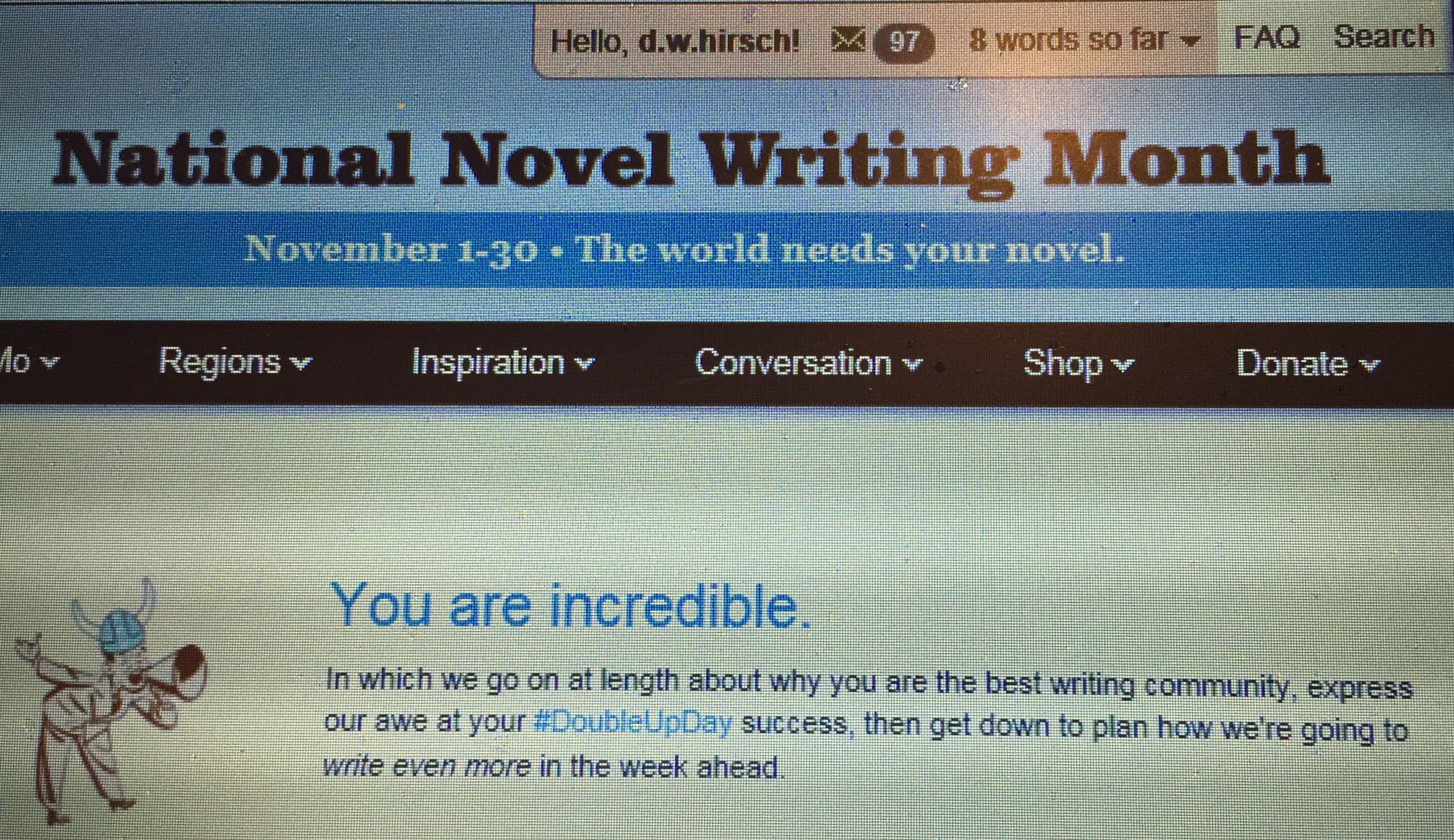
I am incredible. My NaNo word count is a work in progress.

I am incredible. My NaNo word count is a work in progress.

This is the heart of National Novel Writing Month (NaNoWriMo), the month where every writer and would-be writer suddenly finds the time to write 50,000 words in 30 days. Accomplishing this feat results in nothing more than bragging rights and the messy first draft of the novel you’ve been meaning to write. How do we make time now when we didn’t have one spare moment in the past 11 months?

The holiday season kicks off, too. If you’re a crafter, the stress of making Christmas cards is here because only 37 days remain until Christmas. To you chefs, the Thanksgiving meal is 8 days away. Other celebrations and holidays are a few weeks from now. What happened to your New Year’s Resolutions?

Oh, right. Those.

Why do you let everything and everyone else get in the way of your plans? How can you change that?

Schedule writing time, and I mean put it in your calendar. Would you miss a doctor or dentist appointment? What about your child’s football championship? Are you planning to miss your child’s trumpet solo at the musical recital? Writing time–or anything else–is a meeting with yourself. It is important, so block that time off in your calendar.

Set a timer for every activity you do, then switch to something new when the alarm sounds. I’ve heard that tip before, and I blew it off as corny…until I tried it. In increments of 23 minutes, I can wash a load of laundry, take a short walk or exercise, empty the dishwasher, catch up on one social media outlet, reply to some emails, or write a few dozen words.

Set deadlines. If you have a project due at work, do you blow it off and say, “I’ll get to it when I can.” There are unpleasant consequences for doing that. If you’re moving, you have boxes packed and mail forwarded by your departure date. I bet you don’t ignore such timeframes, so set a goal for yourself and stick to it. No excuses.

Reward yourself for completed tasks. If you have something good waiting for you at the end of a journey, you’re more likely to finish. Rewards don’t have to be big and expensive. Buy yourself something goofy from the dollar store. Get yourself a bouquet of flowers, one piece of Godiva chocolate, your favorite craft beer, or a coloring book. Tuck individual rewards you’ve listed in sealed envelopes, and choose one at each milestone you set. Surprises are extra-fun. Whatever you choose, be kind to yourself. If this is the first time you scheduled time for yourself and you didn’t accomplish everything, still reward your effort.

Small, simple changes: that’s how resolutions become accomplishments. “Losing weight” can only be accomplished by first “eating more veggies” followed by “climbing stairs at work for exercise.” That’s why NaNoWriMo is successful: 50,000 words at 1667 words per day. You can make small changes now, even if you’re feeling overwhelmed by the holiday season. Take time and test yourself by doing something you love. Write. There’s always enough blank space on the calendar to fit that in, even if it’s only five minutes.

Living by example, come back next month to see how this writer has handled life, the universe and everything else.

Wordplay: My Geek Is Showing

I failed my children by not pushing them further in studying spelling and vocabulary. One of my sons, a senior in high school, said to me that he just doesn’t know very many words. His limited repertoire made writing essays for his college applications a difficult and grueling process. Writing never came easily to him.

In contrast, I’ve always loved penning my thoughts and studying the mechanics of grammar, selecting the right words to convey my meaning. I love playing Boggle and Scrabble, and I look forward to quizzing myself with Reader’s Digest’s “Word Power.” I stop myself from giving my son too much writing advice because it’s important that he express his own thoughts in his own way. In looking back at the differences in our educations, I have an idea of why he struggles more than I do.

My elementary and junior high schools encouraged participation in spelling bees. I spent hours on rote memorization with the help of my patient mom. She read pages full of words out loud to me, one word at a time. I never once thought to ask her what the origin of an unfamiliar word was, but today’s top spelling bee contestants frequently make use of that rather sophisticated technique. If I had known there was more to studying spelling than memorization, I might not have lost first place to Kathy Trotter in the sixth grade. I didn’t know how to spell curry. Rote memorization only got me so far. Fortunately, I wasn’t competing for a college scholarship. The short-term goal was simply praise, a dictionary, and a trophy. The lifetime benefit was that I became a good speller.

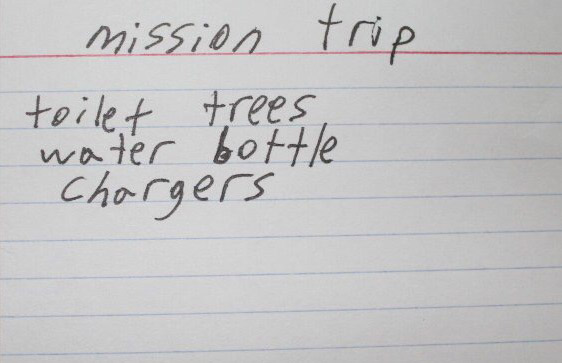
KellyDeadwood-2015-11Nov-ToiletTreesList

Spelling and vocabulary matter: I had to let my son know that toiletries would be easier to pack.

Sixth grade for my children was a different experience. Their spelling words were taken from their own journal entries. The children were tested on words which they individually used in their own writing exercises. I understood the practicality of holding students responsible for using self-selected words correctly. But I wanted a bigger challenge for my kids. How would they learn new and unfamiliar words and to expand their knowledge of language?

I reminded myself that teachers aren’t solely or primarily responsible for our children’s educations. As parents, we need to instruct and guide. To complement my children’s elementary school lessons, I developed a game that I thought would challenge them and be fun for our entire family.

During one week, I randomly selected a word each day from our two-volume dictionary. By the end of the week, we all had to know how to spell the seven chosen words and combine them into one sentence. The sentence could be longer than seven words, but it had to reflect correct usage and meaning. Essentially, the family and I studied a word a day—similar in scope to what Merriam-Webster currently offers online—but my game involved the added challenge I was seeking.

So that you can see how this game worked, I’m going to borrow the seven “Word of The Day” selections which Merriam-Webster promoted from October 29 – November 4, 2015. First, we have to consider the definitions of the words. The list below is taken verbatim from www.merriam-webster.com.

Pellucid: admitting maximum passage of light without diffusion or distortion; reflecting light evenly from all surfaces; easy to understand

Underwhelm: to fail to impress or stimulate

Ebullient: boiling, agitated; having or showing liveliness and enthusiasm; exuberant

Microburst: a violent short-lived localized downdraft that creates extreme wind shears at low altitudes and is usually associated with thunderstorms

Ruddy: having a healthy reddish color; red, reddish

Confidant: one to whom secrets are entrusted; especially: an intimate friend

Trepid:  timorous, fearful

Now comes the hard part: we have to consider those definitions in anticipation of using the seven words to construct one sentence. Here’s my solution to the puzzle:

My ruddy confidant was caught in a microburst which left her so trepid that, when she couldn’t describe the situation in a pellucid manner, I was underwhelmed, despite her apparently ebullient experience.

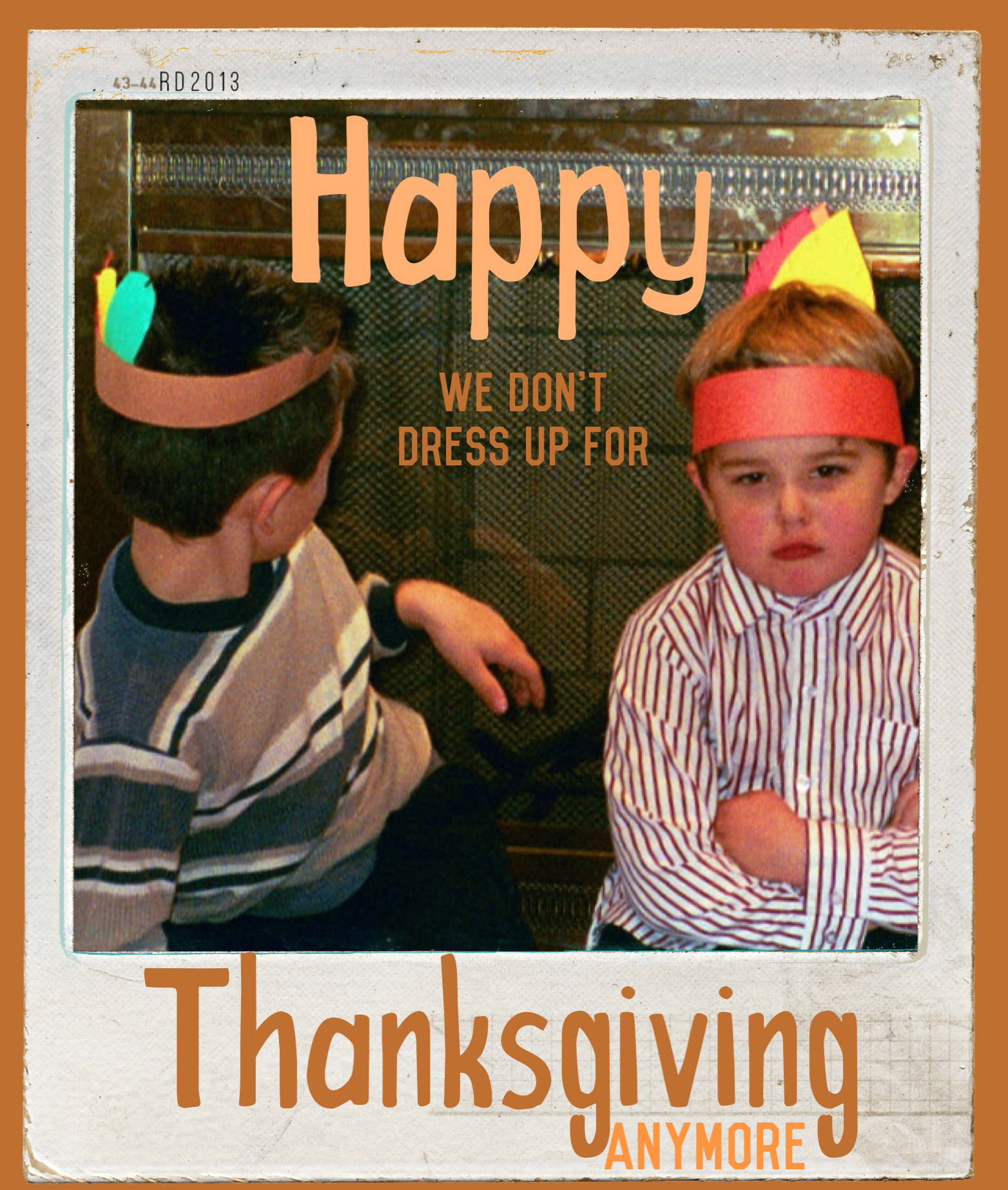
KellyDeadwood-2015-11Nov-KellyMemeThanksgiving

If I wanted to break the rules of grammar when creating this meme, I would have written Happy Givingthanks.

.
Sadly, my kids never really enjoyed the game as much as I did, and it was quickly forgotten. But thank goodness, they now have smart phones and can share highly entertaining, often grammatically incorrect, internet memes with one another. If only people like my kids understood the rules before they broke them.

Superfan Powers Activate!

I've found the new workbook as useful for blogging as the original book (another reason to share).

I’ve found the new workbook as useful for blogging as the original book (another reason to share).

What is a Superfan, you ask? Good question.

A Superfan is someone who adores, loves, admires and worships your artistic work. It’s not a phrase I coined, but a word someone wrote on a blog sometime mid-2015. If anyone out here has also read that intriguing post, please let me know so I can correctly credit the author. The word stuck with me, and it’s a way I now frame my thoughts and perceptions and just about anything when it comes to supporting fellow writers.

I am a Superfan of some writers, meaning I devour anything they write. I promote them by screaming from the rooftops and through my typing fingertips on social media. They owe me nothing, but I owe them my inspiration. Something about their writing, artwork, photography or personal interests resonates with me and I can’t not support them.

I stumbled on Marcie Hill’s book, “62 Blog Posts to Overcome Bloggers Block,” at a time when I was struggling with my blogging topics. The tip that resonated with me most was: It’s not cheating to publish a pictures-only blog post. I never thought about that, even though I have seen such posts elsewhere. I devoured her book, used some of her tips, and then I left an adoring review on Amazon. She wrote me back, “Thank you for that review.” I followed her blog and her Twitter account. Without asking, she did the same, and that’s how our relationship started.

Part of Superfandom is how writers treat me. It’s that personal touch, that sharing with others. I prefer to show my appreciation of Instagram photos with words rather than just Liking them. After commenting on @josameys.words poem about villains and heroes, we had an intense, and rather hilarious, discussion about the pros of being a villain and which Disney villains have the best wardrobe.

Remember the key word in social media: Social.

These authors, artists and other people talk with me. I couldn’t attend a weekly Twitter Chat with Nori (@ReadWriteLove28), so I Tweeted her.

“Wish I could’ve made it, but was still getting over bronchitis.”

She Tweeted back, “@dianahirsch Oh no 🙁 I hope you’re feeling better now!”

I replied, “Yep. Finally better. Took 2+ lingering weeks, but I’ll be ready next #RQWN.”

She replied, “@dianahirsch Oh good, I’m glad!”

Someone who takes that much time and attention is my idol. To show my appreciation for anyone who does that, I retweet their Tweets, I {heart} their videos on Vine and Like their Facebook page, when I’m on Facebook. Beyond such standard protocol, I ask questions and send encouragement through Direct Messages (DM). I show my hero worship by engaging with them on a personal level.

You can make people like you and have your own Superfans by doing those same things. Make sure there’s personal interaction not just some stock “Thank You for Following Me” auto reply. Be polite. Be sincere; don’t say something if you don’t mean it. Make followers feel important; they are your best advertisement and supporters. Answer questions. Send loads of virtual warm fuzzies across the Internet. Emulate the people you want to be.

Make people smile. They will adore you for that. It’ll make you feel good, too.