In the United States, if you visit a bookstore’s Fantasy section, urban and contemporary genres are dominant. Kelly Armstrong, Jim Butcher, Simon Green, and Patricia Briggs are some of the authors you’ll find that define fantasy literature. Magic and paranormal races exist in worlds that are familiar to us in interesting and personal ways. Jim Butcher’s Dresden Files series is based in Chicago where I grew up. Although Butcher does not live in Chicago (as of this post) he does a great job using the city as a base for great storytelling.
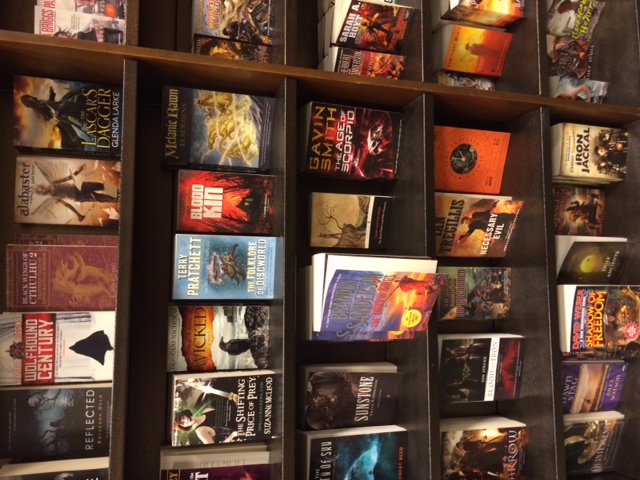
The age of sword and sorcery, middle age and ancient world time periods, are not passed, but just explored by a smaller group of authors. Just look at a store’s bookshelves to see what’s present on the real estate. Jennifer Roberson, Tamora Pierce, Brandon Sanderson, George Martin, and R.A. Salvatore offer worlds of wonder, magic, and swordplay that entertains with strong characters and in-depth culture and/or politics.
The fantasy writers that may be on the endangered species list represent the gritty underbelly of the ancient worlds as told by Robert Howard, David Gemmell, and Mary Gentle. Battles are unsanitized, the heroes are not clean spirited individuals who’s actions can go mostly unquestioned as the “right” and “fair” choice. Authors like George Martin have such elements—although his stories fill the need for taking a balcony view of intrigue and governance from mostly the leadership perspective.
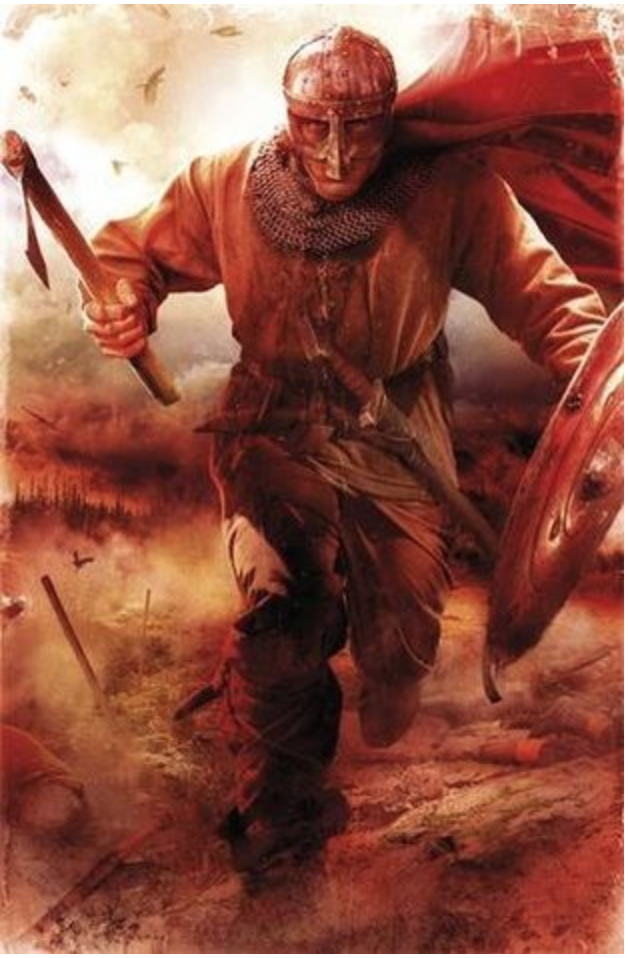 Nathan Hawke represents the next cohort of authors who picked up the banner from David Gemmell and others to continue to tell the gritty tale of complex heroes whose choices leave the reader unsettled even while accepting the choices made. Nathan Hawke’s Gallow—a 3 book series—uses the motif of the loner warrior who reluctantly takes on the cause of others.
Character Complexity
“Beside him Sarvic turned to run. A Vathan spear reached for him. Gallow chopped it away; and then he was slipping back and the whole line was falling apart and the Vathen were pressing forward, pushed by the ranks behind them, stumbling over the bodies of the fallen. For a moment the dead slowed them. Gallow turned and threw himself away from the Vathan shields. The earth under his feet was slick, ground to mud by the press of boots and watered with blood and sweat. A spear point hit him in the back like a kick from a horse. He staggered and slipped but kept on running as fast as he could. If the blow had pierced his mail he’d find out soon enough. The rest of the Marroc were scattering, fleeing down the back of the hill with the roars of the Vathen right behind. Javelots and stones rained around him but he didn’t look back. Didn’t dare, not yet.”[i]
With this opening in the first book, Nathan Hawke takes readers on a grand and gritty journey with Gallow, a warrior gifted at killing in a shield wall or alone against many. All he wants is to be left alone as a family man and a blacksmith for a community that despises him. Yet his sense of honor drives him along a path that takes him far from home, risking his life and those of others, and making deadly enemies of those he once called friends.
Hawke’s writing style is spare, reminiscent of Hemmingway. If a camera represented his writing craft, it would be tight focus images of people and places, exposing the imperfections and failings—so that no character that moves the stories forward is static or stock. And none are completely good or evil. Cruel men are capable of random acts of kindness, and good characters may commit heinous acts in the name of what they hold dear. Such character complexity effectively engages readers to follow each story line, and wonder at the potential unpredictability. For example, after a battle where Prince Medrin orchestrates the death of one of his generals, Screambreaker, he attends his funeral and speaks genuine words of honor to the dead:
“…the Lhosir stopped what they were doing and honoured the Screambreaker and the dead who’d fallen beside him. [Medrin] let the old ones do that, Tolvis Loudmouth and the rest. Let them start the pyre and, when the pyre was built, put the bodies of those they most wanted to honour on top and set it alight. [Medrin] said a few words himself, because he was their prince after all, then let the old ones who’d fought with the Screambreaker against the Marroc finish speaking him out. The pyre was huge and there probably wasn’t a single Lhosir who hadn’t put a piece of something on it.”[ii]
Prince Medrin enjoys torturing common people and then mutilating their bodies on stakes along roadways for all to see and fear. Yet, he pays honor to a fallen champion who he perceived as a rival. This is Hawke’s gift for character development that also moves the story forward.
Sword and Sorcery
In Nathan Hawke’s world there are ancient artifacts of power such as a red sword that cuts through steel like butter, which can only be effectively blocked by a special shield. There are ghoul dogs that hunt tirelessly in swamps and forests for human flesh. All of these pale to the much feared Shadewalkers:
“When Oribas walked toward the end of the arc of salt, the shadewalker moved with him. It kept moving, stepping gingerly along the line until it found its end and looked up. Its dead face didn’t change but perhaps its eyes gleamed a little brighter as it sensed its victory. It advanced quickly. Addic cried out, turned and ran while Oribas simply stepped over the line of salt to be on the other side. The shadewalker came at him, stopped abruptly at the salt and began to walk along the line again, looking for a way past.”[iii]
Shadewalkers are undying or undead warriors, who are nearly impossible to destroy, unless you have knowledge of the ancients and unshaking courage. The magic does not dominate the story. Hawke uses it judiciously in parts of the story for the greatest impact.
Some would point out that authors like Robert Jordan, George Martin, R.A. Salvatore, Steven Erikson, and Glen Cook also carry the mantel for Sword and Sorcery. All deserve credit for skillful craft in their own right. Of these authors, only Glen Cook comes closest to the grainy side of fantasy in ancient settings that brings alive the starkness of humanity through complex characters. David Gemmell was the leader in this area in recent decades, until his passing.
Last November I visited several bookstores in Sydney Australia. I was immediately struck by the volume of authors who wrote in this genre of Fantasy. Many have yet to land on American shores, but can be found via e-books and places like Abebooks. Perhaps on my personal journey to find more like Nathan Hawke, I will find that the lands to explore are across oceans.[iv] Until then, check out Nathan Hawke’s stories for engaging and powerful author’s craft.
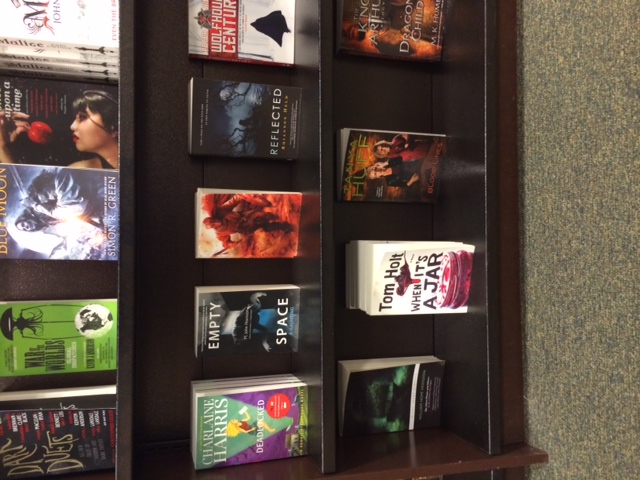 (As of this posting, Nathan Hawke comes to U.S. Bookstores: BN in Ann Arbor MI)
Next Month: Lead with a Story by Paul Smith
[i] Hawke, Nathan (2013-07-11). Gallow: The Crimson Shield (p. 7). Orion. Kindle Edition.
[ii] Hawke, Nathan (2013-07-11). Gallow: The Crimson Shield (pp. 265-266). Orion. Kindle Edition.
[iii] Hawke, Nathan (2013-08-08). Gallow: Cold Redemption (Kindle Locations 709-713). Orion. Kindle Edition.
[iv] Fantasy listing of books by sub genres: http://bestfantasybooks.com/