Category Archives: Writers

Perfect Endings Belong to the Quotation Mark

Picky Penny said, “I’m studying The Chicago Manual of Style.”

Misplaced Mark replied, “I hope I never have to read that”.

Penny is attracted to Mark because of his gifted story-telling. He’s prolific with his ideas. Mark thinks Penny is really cute, and he likes that she always seems to know how to spell words without having to look them up in a dictionary. He notices that she’s good at applying the rules of grammar, too. Their common interest in writing is what first brought them together. Each realizes that, if they were to blend their talents, they would have a beautiful marriage in which they create compelling stories through clear, consistent communication.

Before they can live happily ever after, however, our two lovebirds have some issues to overcome. Penny is a stickler for the rules that she studies so well. In her quest for perfection, she corrects punctuation errors, fixes parallel construction flaws, and battles to avoid inconsistent verb tense while she’s composing first drafts. Her compulsion to be exact gets in the way of production. She would notice the mistake in the opening dialogue above and abruptly stop to fix it before moving on with another thought. Heaven help her; she can’t let anything go.

Mark is overly distracted by his surroundings. He keeps a notebook on hand to jot down tidbits from the conversations he hears, peculiar behavior he sees, and story lines that come to him. When he writes, he knows what he wants to say and how he wants to say it, but he has little patience for Penny’s nagging about following the rules. In his opinion, those are really just suggestions that slow down his creative process. To Penny’s horror, he finds revision to be cumbersome. He wouldn’t care to change anything in the same opening sentences above.
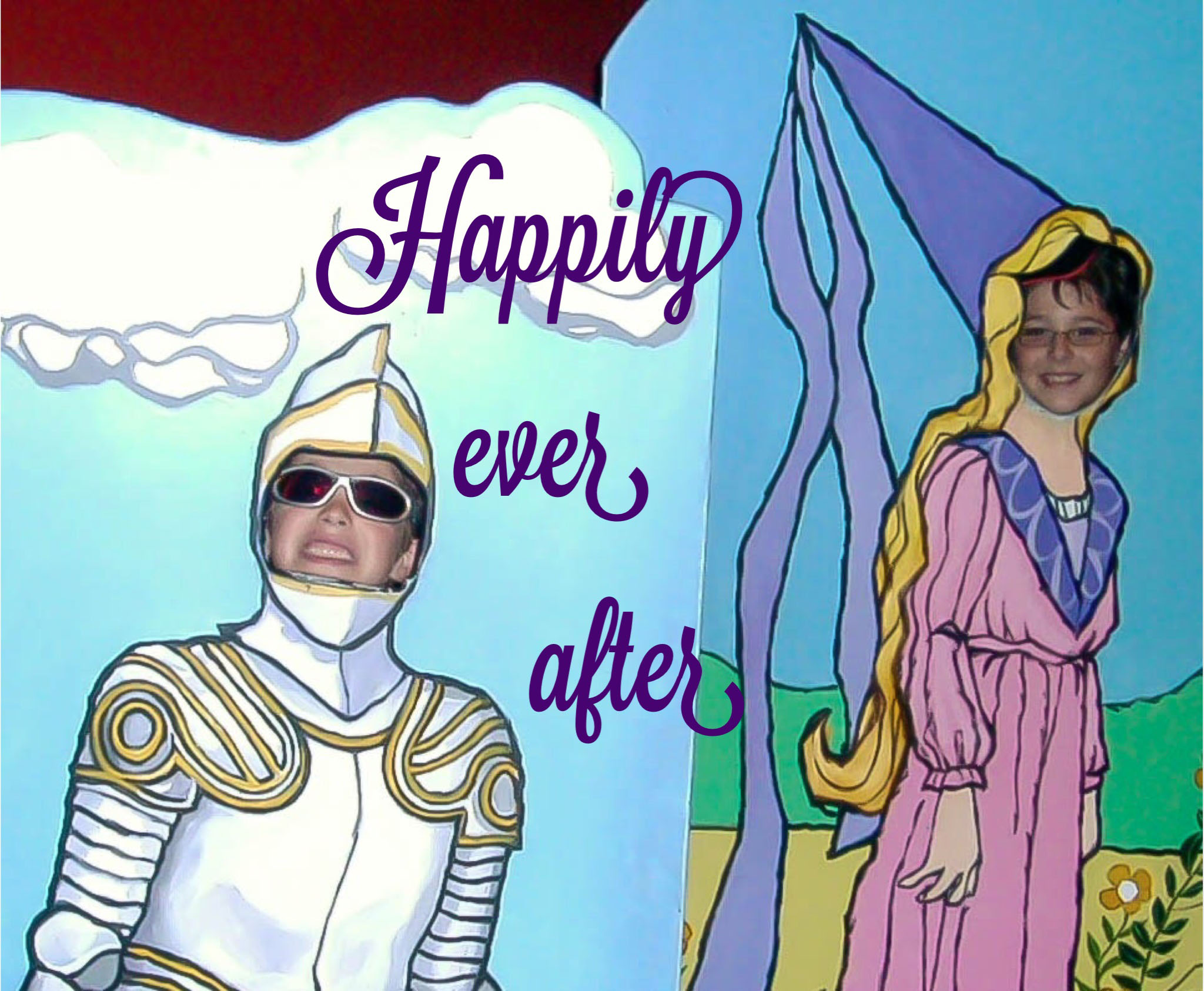
KellyDeadwood-20147July-PrincePrincessPhoto

Penny and Mark’s relationship is complicated. Both have strong opinions and skills in different areas. Is there a way to help the couple get along despite their individual styles and abilities?

I relate to both of them. As a writer, I admire Mark. He is comfortable with his craft. He’s confident, capable, and inspiring in his creativity. He knows how to set a scene, develop characters, and engage audiences. He paints entertaining images, even with discrepancies in protocol. From him, I’m learning to let the rules go for awhile, write what I need to write, and fix the grammatical issues later.

At least I try to fix them later. When I’m revising, I’m aware that I’ll never master all of the idiosyncrasies that pertain to good writing. There’s just too much information to remember. But certain things pop out to me. Either I know how to make those items conform better to the rules, or I have to look up advice in a style guide. Taking a cue from Penny, I most often rely on The Chicago Manual of Style for three main reasons. First, it’s widely recognized by writing professionals as a reputable, Standard English resource. Second, each subsequent edition evolves to keep up with changes in the writing industry. Third, through my online subscription, I can get answers to questions that stump me.

Generally, I’ve heard it said that once you know the rules, it’s okay to break them. This applies to writing. For instance, consider the difference between conversational language and more formal communication. Suppose you draft the following e-mail to the high school composition teacher: “I am wondering to whom I should forward the paper.” Doesn’t it just feel a little awkward? It sure sounds that way to me. Few people, often not even the English teacher, talk like that. In relaxed, everyday conversations, I think most people simply bend long-standing rules and ask, “Who should I send the paper to?” It may not be perfect grammar, according to Penny, but it’s perfectly acceptable, as Mark will point out.

While I’m okay with text that reflects the way people naturally talk, I’m increasingly concerned about certain grammatical mistakes that are making their way into e-mails, messages, and online articles. One of the most common offenses I’ve noticed is misplaced quotation marks. Having seen so many, I started to doubt my understanding of the basic punctuation rules.

I went back to the books to brush up, and I’m relieved to say that some things never change. We still only have three rules to consider when determining where to place our ever popular quotation marks: inside, outside, and sometimes inside/sometimes outside.

Of those three, the rule I wish Americans would agree with and apply is: periods and commas always go inside quotation marks. The Chicago Manual of Style, Associated Press Stylebook, and MLA Handbook for Writers of Research Papers say so. Purdue University’s Online Writing Lab (OWL) concurs and further notes that this punctuation is standard in the United States but not necessarily in other countries.

For many reasons, we just don’t do things the same all throughout the world. Consider the following ways we in the US differ from the English. Here we write gray versus their grey, and practice instead of practise. We go on vacation, and they go on holiday. We can try to emulate the accent in their speech. But we don’t follow a king or queen and we shouldn’t follow foreign punctuation rules. We simply don’t want to confuse our American audience.

If you look back at Mark’s statement to Penny, you may notice that it’s improperly punctuated for those of us in the US. I should have written: “I hope I never have to read that.” The ending quotation mark is now correctly placed outside the period. Whew! Hopefully, I’m not the only one breathing a sigh of relief.

I recognize that it’s difficult for us writers to come to consensus over all the little details we face. Even within our own U.S. borders, we are bombarded with inconsistencies in how things are done. For instance, I used to cringe every time I read an article on Wikipedia that looked to me to be incorrectly punctuated. That organization has American roots and computer servers located in the US. So, why are its articles littered with periods and commas flagrantly outside quotation marks?

After a little research, I realized that the mistakes weren’t due to inexperienced contributors. The errors weren’t missed during half-hearted attempts at revision. They weren’t accidents at all. Wikipedia had established its own style and its own rules—which, as noted, are unconventional for us Yanks.

My Picky Penny tendency pushed me to get an explanation from Wikipedia itself. Why was a basic standard compromised? In an e-mail response, I was told that, “All of Wikipedia’s policies and guidelines are developed by community consensus…Wikipedia’s users are all over the globe, not just in American-English speaking places.” Yikes! That seems like a pretty big compromise to me, but I suppose if you make up your own rules, then you can rightfully claim that you’re really not breaking any.

I do concede some flexibility in what we’ll consider guiding principles. Remember my favorite resource, The Chicago Manual of Style? It discourages the use of italics for emphasizing words placed at the end of sentences, like I did in Mark’s statement to his betrothed. I could have written, “I hope I never have to read that.” The prevailing thought is that my readers would have naturally put emphasis on the last word, without a prompt from me. Was I wrong or breaking a rule to help the readers by forcing the emphasis and putting the final word in italics? Not exactly. The rule that applies is a pliable one. Not a hard and fast rule, like where to place an ending quotation mark. In this example, I was given flexibility to exercise a preference.

The hard part for writers is discerning between unbendable rules and suggested guidelines. It’s a daunting task. I’ve counted 35 different style guides used by just as many different groups of people. Lawyers, librarians, journalists, musicians, government officials, students, scientists, researchers, geologists, businessmen and editors all have their own style guides. No wonder writers struggle in deciding what to do under specific circumstances. Every industry, even every company, has the potential to do things differently.

If you pay attention, you’ll see how other writers address grammar issues. Be forewarned that they bring their own knowledge and personal choice—right, wrong, or just different—to their work. Personally, I have quite a bit of fun discussing fundamental principles with my father-in-law. He’s known to have a quirky way of punctuating sentences. Eventually, he convinces me of his unique logic, and I in turn try to persuade him to find a style guide that supports his view. (I’m beginning to think he’s British.) Picky Me suggests that if he can’t find one, then it’s time to conform to some published criterion. Heaven help me if he chooses Wikipedia or writes his own!

Let’s think back to Penny and Mark. In trying to help them blend their different writing worlds, I suggest that they, too, agree on one basic style guide. It’s less distracting to readers if there is uniformity amongst us writers. That’s one reason publishers and online sites post submission guidelines or indicate the manual of style they would like writers to comply with. At the very least, we don’t want to alienate or irritate their editors by ignoring the very tool they want us to utilize. We want our submissions to work for us, not against us.

Following the rules can be considered one of writers’ most basic job requirements. Consistency in applying them will make us look credible. Accuracy will generate respect; compliance may generate a paycheck. And Mark and Penny will have one less thing to argue about on their way to a fairy tale ending.

Finding the Mind of a Villain

Recently, a computer guru, otherwise known as my husband, replaced my hard-drive with a solid-state drive. Arriving the following evening at the local coffee shop to write, I realized all my files had been transferred to our computer network, leaving me without my manuscript.

“So now what,” I asked myself, taking a sip of my coffee.

It took a few minutes to decide what would be the best use of my time. I decided research stemming from my blog post titled Fear, appearing on June 10, 2014, sounded interesting. I wanted to delve into the psychology of a Villain. Why is he the way he is? I tapped Wikipedia for basic information, and found some good resources to read, regarding Maslow’s hierarchy of needs and Frederick Irving Herzberg’s Two-Factor Theory (A theory to improve job satisfaction, oddly enough).

Maslow’s hierarchy of needs, combined with Herzberg’s Two-Factor Theory, made for an interesting dichotomy of how I could create sanity and insanity in a character, based on my interpretation of the theories. Look at Maslow’s theory of needs that include, self-actualization, esteem, love and belonging, safety, and finally physiological needs, and combine this thinking with Herzberg’s theory, using it as a life satisfaction theory instead of a job satisfaction theory. It makes things a little clearer as to what a villain’s motivation will be and where his life diverted from happy and content to one that dips into insanity.

With the list of human needs that Maslow speaks of, each of us makes the decision to be happy or not, but what if that choice is taken away from us by outside forces. Looking back to my blog Fear, the child seeing friendly ghosts is now a teenager. The boy would have turned out sane and well balanced if left alone, but instead is locked away in a mental facility by his evil stepmother. Drugged by the doctors on a regular basis, per the stepmother’s wishes, and mentally bombarded by evil entities like the one I described toward the end of Fear, it is easy to see why the entities follow him into adulthood. He has no shields against them. The evil shadow creatures have free reign to whisper their vile thoughts and twist the teenagers mind.

Based on Maslow’s list, what does the character lose? One, I can assume the character loses self-actualization because he is drugged. Two, previous friend’s label him crazy when they find out he’s in an institution, losing his respectability causing his self-esteem to plummet. Does he find love and belonging sitting in an 8×8 white room in a drugged out haze? No. This turns love and belonging into hate. The people that were supposed to protect him threw him away. He’s no longer safe. The entities voices slither into his thoughts, his drugged state causing him to lose independent thought. Top everything off with his physiology, he’s now skinny and white in pallor, because the doctors don’t let him get out for exercise, and the character has become something entirely different.

These two theories combined create a catalyst to the characters motivation. While he’s trapped in the mental facility, ideas spin, evil overwhelms. All he can think about is revenge.

Now a man, he escapes.

Whom does he go after? You guessed it, the family that threw him away. Only the stepmother is dead and the only one left is the daughter, his only focus. To make it more interesting, the evil entities tag along with our villain, attacking the heroin in the dark alley, which I described in my blog titled Fear.

It’s amazing how an hour of research, that wasn’t planned, is now motivation to develop a story based around a couple paragraphs from a blog post. How do you think a story might flourish once you do a little research?

Happy writing!

Here are some other subjects I researched regarding psychology of the human mind.

Phobias

Paraphilias

Motivation

Psychoanalysis


Writers Always Write

“A writer never has a vacation. For a writer, life consists of either writing or thinking about writing.” — Eugene Ionesco

As I was teeing up my golf ball one day, I noticed the name on the ball was Crystal. Aha, I thought. I know the perfect name for my character. She’ll be called Pearl. Stay with me. I don’t always do straight line thinking. Crystal reminded me of a pearl, which is a perfect name for the character in my historical short story. This demonstrates that I think about writing while in the midst of other activities.

When I first met my future in-laws, I was fascinated by the patriarch’s extensive stamp collection, his brother-in-law’s love of fishing from his motor boat on the lake, the small town they lived in, and the scary idea that most of the people knew each other and all their juicy gossip. In my mind, those details created a convoluted family murder mystery waiting to be written. I’m still working on that one.

As I was reading Claire Murray’s February 21st blog, “Finding Something to Write About,” I started thinking about how I find ideas for my stories. When I sit in a waiting room, on a plane, or in a restaurant, I sometimes overhear conversations that tweak my interest. I may discover a plot idea, an interesting scenario, an intriguing title, or see a person I feel would make a fascinating character.

Reading books or magazine articles sometimes gives me ideas. Because I also recognize some of the TV stories that are “ripped from the headlines,” I’ve started paying more attention to the news. Reading newspapers or listening to the news also gives me the opportunity to do a “what if” story. Tim Franklin’s February 27th blog addresses the “What if?” in a fascinating take on the demise of the dinosaurs.

My cousins-in-law were going through their aunt’s belongings helping her decide what should be given to family members, sold at auction, donated to the local historical society, or trashed. I was intrigued by the contents of an old, unwanted notebook. The cousins gave it to me. That notebook provided the plot for “Pearl’s Legacy,” which I’m preparing for a short story contest.

I keep a supply of notebooks, pens, and pencils in every room in the house and notebooks in various sizes to fit my purses, bags, and suitcases to catch any fleeting ideas before they escape my grasp. My handy, idea filled notebooks help jump start my writing long before I face that intimidating blank screen. Without my notebooks, I think I’d still be staring at a sea of white space without a clue of what I should write about.

Artful view of Book Inc.

The Bookstore Ethnographer by John McCarthy

Every bookstore has character. That’s what engages or deters customers from frequent visitation. Some are polished formal affairs that feel like a museum or perhaps an art gallery—look but don’t touch. While others may be rustic family affairs where the shopkeepers are boisterous, compelling visitors to engage them in the news of the day or talk about favorite books and authors. Then there are the places where the shopkeeper responds with grunts to give clear directions of book availability and to make change. Along with the people, the books and store structure add to that character.

I’m John McCarthy, and I’m a Bookstore Ethnographer. I travel to many places for my work of Education Consulting. During my “free” time, I love to visit bookstores, where other travelers might find the local pub, golf course, restaurant, or beach. These posts are not intended as reviews. I am a social activist who speaks on behalf of the books. My intention is to capture the character of each store, which is shaped by the selection and care of books by the shopkeepers and the store structure. Follow my Pinterest board for pictures of the stores I visit and follow me on Twitter  for more about my work in Education, Bookstore Ethnography, and other articles. Share your bookstores by comment below or a tweet to @jmccarthyeds. If I’m in the area, I will very likely visit.

Artful view of Books, Inc., 1760 4th St, Berkeley, CA 94710

2014-06-21 15.18.42 HDR

A block from the bookstore is an Apple Store, where I stopped to get help with my laptop. The area is filled with shopping and restaurants in what appears to be an affluent neighborhood. Parking close by offers 2 hours of free parking, where I was lucky to find someone just leaving a spot.

The front of Book Inc. reminded me of an art gallery store front with large windows and stone stairs up to a common porch with other stores. Inside, the single room is deep, well lit, and showcases a pristine set up of bookshelves and open lanes to any section of the store. Every genre is represented with new books in tightly fitted shelving. The selection for each genre is modest, which may be due to the size of the store. You can find anything that’s current, with little from past decades except for classics.

2014-06-21 15.04.45

Like some bookstores, there are staff recommendation cards posted by books or author series that share why customers might take a chance on such a purchase. What I found unique to my travels were the reviews posted by customers. The store keeps a basket of index cards, and encourages customers to write their own book reviews. There was one by a high school student whose review was for a YA novel. It makes good business sense to invite these comments, like we find on Amazon and other places. I wonder why I have not seen this great strategy in other bookstores?

2014-06-21 15.05.04

Several employees talked to each other about book related stuff, looking busy as they went about their responsibilities. I walked up and down the store several times without being approached for offered assistance. Maybe I looked like I was zeroed into the books, which would be better than the alternatives. The conversations was business, like you would find at many non-bookstores. Perhaps this is because of the touristy nature of the area? Hard to say from a 25 minute visit. The time was well spent in an artful-looking bookstore.

Stanley and Lucy

Spring is the time that the Canadian geese are visiting in the Metro West Industrial Park in Plymouth, Michigan. Since Chrysan has the biggest front lawn on Keel Street in the industrial park, naturally we have more geese as guests who were looking for worms on the lawn. Occasionally I had to make a sudden stop when a flock of geese were crossing from one lawn to another with little goslings. With a “honk, honk” they crossed the busy street without any rush, just waddling.

A lonely goose waddling on the lawn is very rare. They are always in flocks, or at least in a pair, but once I saw one goose alone on the front lawn. Mmm, that cannot happen … just one goose. Talking to myself, I looked around the south end of the building. Following the pair rule, the male goose was heading to the north with the “honk, honk”, thereby telling her he was coming.

“Kwang, geese never travel alone. They are always in groups or at least in pairs.” He was silent without any comment on my observation. He was digesting why I brought up this unusual subject and also calculating what I wanted from him this time. “So, let’s go everywhere together like geese,” I continued without looking at his face. He was still silent with his face down over the Detroit News. I assumed that his ears were filtering what he wanted to hear. “You are silent. Silence means ‘yes’. Let’s go,” I added.

“Where?” finally Kwang broke his silence in surprise.

“To Grandma’s,” I answered with a soft voice, reading his expression. My mother’s grave is on the corner of Novi Road and 12 Mile Road, at Oakland Cemetery. Our family calls it “Grandma’s grave”.

“No”, with strong rejection, and then he lowered his voice one octave, “You go alone.”

“I just explained about geese in pairs theory, going everywhere together.” My voice was almost begging him to go together to Grandma’s. Late afternoon at the end of March the sky was gray … a snowstorm might start any moment instead of rain. It was getting cold and windy. Once a week visit to Grandma’s is one of my regular scheduled stops since 1996 if I am in town. The most powerful geese’s pair theory let Kwang’s heart thaw, or was it my nagging power … and we went to Grandma’s together as a couple before we finished our cups of coffee as geese.

Two years ago a goose was nesting at the south side of our plant. Actually near the loading dock. For Heaven’s sake, why here? There are many other places to make their nest, I murmured with surprise and uneasy feelings. Then I went to Jeff, the plant manager, who was unloading bulk base oil from a tank wagon. “Hey, Jeff, how long has the goose been sitting on the nest without moving or changing position?” When I asked Jeff, my voice was vibrating with a mixture of deep concern and excitement with the goose nesting.

“Oh, no, Kook-Wha, they take turns. The gander is watching the nest very carefully from a distance, and he takes a turn to let her rest.”

“How do you know if it is female or male?”

“Geese are always together as a pair. The gander is protecting the female who is on the nest all of the time.” Jeff’s observation made perfect sense but he forgot my question … how many weeks has she been sitting on her nest?

I could not control my curiosity. I approached the nest closer and closer, and stopped two yards away. Suddenly with a loud “honk, honk” a goose flew down from the sky. Actually, he came from the roof with “honk, honk”, and he was ready to attack me in full force. I ran away from the nest as fast as I could.

Jeff came over and warned me, “See, Kook-Wha, be careful. You may get hurt. Sometimes they can become quite nasty,” he warned me.

Holding my breath, “Yes. I should.” Then I went back to my office without further observation. A cup of coffee helped my disturbed mind to settle down and I sank into deep thought. Why was the gander on the roof?

“Kook-Wha, is something wrong? You look very tired,” Julie, our office manager, asked me with serious concern.

“Nothing. I am fine.”

Julie left my office shaking her head that she could not understand my unusual behavior.

About one month later Jeff ran into my office. He was almost screaming with excitement. “A baby came out. A baby came out.”

“How many? How many?” I screamed back at him.

Jeff did not answer my question but went back to the nest area. With extreme joyfulness, I wanted to follow him and check into it, but instead I calmed down and just waited in my office for further news.

Through the windows I could see the gander standing five yards away from the nest in the middle of the truck driveway with his head up to the sky. “Honk, honk” expressing his excitement. Jeff still did not give me any numbers. The next morning I saw that the gander was still in the same spot protecting the nest.

In the afternoon I heard really loud “honk, honk” through the windows. It echoed a mixture of desperation and misery. Jeff came to me again quite emotional, and upset … “One baby was killed. A truck ran over it. The gander will not move from the spot.” I saw through the window that the gander was flapping his wings and honking. The poor goose, I turned back from the window and wondered how many goslings were left unharmed.

In the spring of 2009, when I came back from the trip in Asia I found a new goose nest this time it was by the flowerbed on the north side of the building which is near the employee entrance under the conference room windows. It was a much safer place than near the loading dock, but it is still a heavy traffic area. The nest was under the tall shrubs and between the hydrangeas and the Christmas poinsettia. In the morning there was nice sunlight and in the afternoon it has reasonable shadows to protect the geese from sunburn. I am not sure whether a goose can get a sunburn.

Again this foolish goose makes a nest near busy traffic. I talked to myself thinking that I hope this time nothing goes wrong and they have a successful hatch.

As soon as I entered my office Bonnie mentioned, “Did you see the nest?”

“Yes. I saw it. How long has the nest been there?”

“About a week,” Bonnie answered with her face full of smiles.

I did not like her answer at all. I wished It is ready to hatch was her answer instead.

“Just one week?” I questioned her, and then I changed the subject, talking about the trip to Asia. I was getting a headache from anxiety and frustration from previous experiences of geese hatching. How can we keep the nest three or four weeks more without any accidents in order to have the goslings born safely.

I took a picture of the goose sitting on the nest from about 5 feet away. She sat calmly without moving her body but her head was moving to the left and right with fear of my approach. You will be okay, I am trying to protect you as much as possible. Hello, goose, do not worry, I promised her.

Soon I heard a “Honk, honk, honk” noise coming from the roof. The goose was looking down at me from above my head on the roof and he was ready to attack me. Oh, my gosh. Again I upset the gander. Hello, gander, I will not hurt your friend. Believe me, I will not.   I took a picture of him on the roof, too and quickly went back to my office. I was relieved that at least he did not jump on me from the roof.

The next day was Saturday. I got to the office later than usual. Oh, no. Oh, my gosh, what happened last night? I screamed and screamed when I saw the broken nest. Luckily nobody was near to hear my screams. One large unbroken egg was about two feet away from the nest and a couple of broken eggs were on the top of the nest. What happened? What happened? I could not control my screaming from desperate anxiety. I phoned Kwang, seeking comfort from him. As usual he was quiet at the end of the telephone. I hung up slowly, trying to forget the broken eggs.

That same day in the evening we had dinner with friends from Carmel, Indiana. They told us an interesting story about Canadian geese that built their nest just under the dining room window again in the flowerbed. They named them Lucy and Stanley. For weeks Lucy sat on the nest and Stanley guarded it. Even if we had the exact same experience twice, we did not make any comment. We just listened to their story with curiosity and thrills.

Ken and Nancy told us the whole four weeks experience with unbelievable excitement. They gave all sorts of support to have 100% successful hatching. They did not use the front entrance of their house and just watched them from a distance. Also, they told the same story, Stanley was on the roof protecting and watching Lucy on the nest. Their house is in a gated community with five car garage and there is quite a distance between the houses. For four weeks they could only use the entrance from the garage without any inconvenience. Also, human traffic was much less in their community, and in their absolutely quiet neighborhood Lucy and Stanley had the best conditions for hatching the goslings in peace and comfort.

One day they saw seven baby goslings going in a straight line into the pond in their back yard. Of course, Lucy was in the front and the seven goslings followed her. The newborn goslings went into the pond without any fear or hesitation and were swimming away except for one. The last one was hesitating at the edge of the pond and could not jump into the pond. Then later Lucy and Stanley came back and escorted the last one to the pond and watched to make sure that it went into the water.

We did not tell Ken and Nancy our two unsuccessful sad experiences. I could not get rid of the image of the broken eggs in the nest from my mind for a couple of days. As my five-year-old grandson, I asked myself why? Why couldn’t our geese make it in our yard?  I understood the first failure well enough. There was too much heavy traffic of trucks. For the second one all the employees did their best to protect her without disturbing her by walking on tiptoes and closing doors quietly. But if the geese could not hatch in our yard, then what is the reason?

The list of clues of the second failure popped into my mind. It could be blamed on the wild animals. In our large wooded back yard there are still deer, raccoons and other wild animals living there. Every winter I have seen footprints of deer near the evergreen trees around the plants. Maybe at night while looking for food they came and destroyed the nest. One gander could not protect the nest against a wild animal attack.

The vanished nest was about six inches deep and two feet wide, like a fort. A nest consists of mulch with very tight, strong structure like a concrete wall. It cannot be destroyed easily, not like a bird’s floppy nest of straw and branches. It was several layers of mulch with sturdy construction.

I hope they come again as a pair for third and fourth attempts. We will do our best for a successful hatching.