Tag Archives: memoir

What’s a Penny Worth?

I buy most of my hair products at Ulta3. I find the people who work there helpful in suggesting the right product for what I need. I also like their sales. My favorite is the one where, if you buy two of something, the third one is free.

Last November I needed some hairspray. I went to Ulta3 and talked with one of the saleswomen. “What hairspray would work best on fine hair that has a mind of its own? I want something to hold it in place. But I don’t want to look like I have a steel helmet on.”

The salesgirl suggested one of the Paul Mitchell products.

I wasn’t sure. “What if it doesn’t work for me? Or, what if I don’t like the way I look?” I asked.

She told me, “Don’t worry”. It’s a Buy 2, Get 1 Free sale. If you’re unhappy, you can bring the unused product back with the receipt and exchange it for something you like.”

That sounded fine. I bought three cans.

When I got home, I put the cans in the bathroom closet because I hadn’t yet finished with the old hairspray I was using.

A few weeks ago, I finally finished the old hairspray and started using one of the new ones. At first it was o.k. But, after a few days, I wasn’t happy with how my hair looked or felt: It felt hard, not fresh and silky, and looked dried out, just like I had a steel helmet on my head. I decided to give it a few more days but nothing improved.

I searched for my receipt, put it and the other two cans in the Ulta3 bag and went back to the store. Once there, I walked to where the Paul Mitchell products are kept and located the hairspray that I was bringing back. I looked around on the shelf to see if they had something else that would look and feel softer on my hair. I read the descriptions on the back of the cans. Finally I found one that sounded good.

I stopped the saleswomen I saw walking by. I told her my problem and asked, “Will this other hairspray work for me?”

“Well,” she said, “The new spray won’t hold your hair as well but it will feel soft and natural.”

I walked to the front of the store to make the exchange. I explained what I wanted to do and the cashier said with a smile, “No problem.” To me, that’s the universal sign that very soon something’s going to go wrong.

The saleswoman entered the product information into the cash register and called for her manager to put in her code to complete the exchange.

The manager came up front. “You know,” she said. “It’s too hard to do it this way. I know an easier way.”

“Fine.” I said. I just wanted to complete the sale and get going. I hadn’t planned on spending this much time at the store.

The manager started ringing up the hairspray. First she swiped the bar codes on the cans I was returning. Then she punched a number of keys. After that she stopped and gazed at the cash register. Lastly, she cancelled everything out and started over.

I watched her do this three times while trying to discreetly peek at my watch to see what time it was now. This was taking much longer than I’d expected.

After the third attempt, something must have gone right, because she asked me to hand her the two new cans of hairspray that I wanted to purchase. She swiped them.

I looked at her expectantly. It looked like everything would be o.k. after all. But then she undid everything and started over again.

At that point I couldn’t help myself. I very obviously looked at my watch. I’d been in the store for almost half an hour.

I looked at the manager again. She was still swiping and pushing buttons on the cash register. I asked her, “What seems to be the problem?”

“The cash register keeps saying you owe a penny in tax, but you don’t.”

“That’s fine. Don’t worry. I’ll pay it.”

“No. You don’t owe it,” she said.

“I don’t care. I’m happy to help fund the government. I’ll pay it.” I put a penny on the counter.

“Are you sure? You really don’t have to do this.”

“I want to.” I picked up my bag with the new hairspray and walked out the door. I felt I had escaped.


Insta-success with Instagram

Twitter is stupid, and Instagram is for people who can’t read.”–Max, 2 Broke Girls

I always think of that quote when I mention Instagram to others.  Instagram is a social site for sharing snapshots.  If you don’t like imagetaking pictures, this post won’t be for you, but you should read to the end just to make sure.

As a writer, or any business owner, you need to find social media platforms that work for you and your desired end goals.  The sites need to be ones that you will maintain and that are fun for you.  I think Facebook is a big time-suck with algorithms that don’t let me see the feeds of everyone I want to in the order that I want to.  Still, I have a Facebook Author Page that I modestly keep up with.  I have discovered informative people through Twitter and it seems to be popular for writers.  It’s hard to keep up with the news feed some days, but there’s some good interaction with my tweets.

What about Instagram?  I’m a scrapbooker and, by default, take hundreds of photos every month.  I’m surprised it took me so long to find the value in Instagram.  My first two photos posted the week of June 10-16, 2012 (138 weeks ago) when I was just playing around with some filters on my first smartphone.  They were pictures of teddy bears.  I didn’t know what else to do with it, so I trailed off and lost interest.  I picked it up again the week of February 2-7, 2014 (53 weeks ago, or just over a year) as an outlet to showcase my writing, initially my haiku poetry.  Now I use Instagram for my writing and…well, stop on over and check out my photos at @dwhirsch.

I use Instagram as a marketing tool as much as a social experience.  I don’t pretend to know everything about Instagram.  I read information from bloggers who have done the research, such as @jenns_trends, who is a goddess on Insta-information.  What I’m offering is my personal experiences and successes adapting those tools.

To use Instagram effectively, you have to decide what you plan to share.  This can change over time, but start with some initial rules.  My guidelines are the same ones I have for my personal blog.  I never post pictures of friends or family without first getting their consent.  I don’t post photos of my house because I have “location services” turned on my phone.  I don’t want people to know where not to find me when I’m out of town.  There’s nothing valuable, explicit, religious, political, controversial or anything my dad–were he still alive–would be disappointed to read about me.

image

Instagram is Insta-easy to use, and the site’s features are relatively uncomplicated and obsessively playful.  It’s free to set up, and I recommend you snag your profile information now: create your Name (generally your real name or business) and Username (what you’ll be known @as). Photos are posted in a square, and most smartphones have a “square” option in the camera settings. If not, or if a square cuts off some important part of your photo, there are many free apps that will shrink your photo and place a border around it. To post, just upload a photo or 15-second video that you take live or have stored in your smartphone library. You can alter your media with black-and-white, sepia or color filters, with additional tools to adjust the image’s brightness, contrast or saturation level.  Finish it off with a frame or vignette, add a caption and press Share.

Now that you’re live, how do people find you?  Your 153-character bio, along with your photo’s caption, and hashtags need to be creative, potent and relevant.  Going back to Max’s quote comparing Twitter and Instagram, the latter is not restricted to 140 characters.  Your photo or video should tell a complete story, but you can use about 440 words to explain that image. This comment section is vital because you can tell your story and highlight your image using crucial hashtags.

Instagram is hashtag heaven. People with similar interests will find you based on how you tag your images.  Common hashtags reflect those you find on Twitter, but you don’t have to be familiar with Twitter to use Instagram.  Think about what your picture is about and tag your image with common terms.  As a snapshot in the moment, you can showcase a twisted #tree branch, a royal #sunset, a #selfie in your awesome new #shirt, an art exhibit or the #bananabread you’re baking.  You’ll get a feel for tags once you start using them.  Tags have no spaces and use just alphabet characters with no suggestions, so type in exactly what you’re looking for.  Much like Twitter lists, you can also create hashtags to group your own images in a somewhat folder design.  Some of mine include #iamapoetess, #SnuffletFinse and #Champsp. Be sure to check out this group’s posts, which are under the same hashtag as on Twitter: #dwriters.

The Explore tab complements tags by suggesting people to follow based on tags you use, images you’ve ‘Liked’ and people or companies that your followers follow.

image

Oh, yes, companies use this.  Instagram is a successful marketing tool, a highly-used space to display products from #clothing to #cosmetics. Check out companies like @Bathandbodyworks, @Ford and @Applebees.

I sometimes stage my work because I want my followers to see the best of me.  I give my followers a peek into my writing, #Zentangle art and my overall creative process while infusing my quirky personality and personal interests.  Think about it: if I follow a particular author, I feel more connected to the “person” rather than to the “celebrity.”  Therefore, I’ve taken my book cover image and overlaid a part of a review on top of it.  I type up actual text from my latest #shortstory or #poetry.  Photo editing can be fun.

Given my goals, I show images of blue-inked-up work as I edit my current draft.  I show the #coffee shops where I #amwriting. I show the stages of my Zentangle #wip so people can see my creation from start to finish. I have too much fun with it on the go not to let it be organic.

Remember, social media is social. I share my work and myself because like Max on #twobrokegirls, the experience on Instagram is more social. I comment more than I Like because the image doesn’t always grab me but the story in the caption section does.
image When someone takes the time to comment on my work, I respond to every–and I mean every!–comment made to me even if that person replied with a smiley face emoji.  I appreciate the time that person spent appreciating me, similarly the gratitude when I receive a #bookreview on #Amazon or #Goodreads.  If nothing else, I reply “Thank you.”  People like you when you like them.

What are the benefits?  The most important is meeting people with similar interests.  I’m reading a #memoir recommended by a follower who is #writing her own memoir. I’m inspired by new #art and #painting techniques.  I’ve been challenged to take pictures in #blackandwhite.  I could meet any number of them for #coffee if I was in their area.  I have a connection to these people. You can do the same with your peers and have fun doing it.

Tall Tales

My husband’s grandmother, Roseanna, prominently displayed a picture of herself sitting atop a camel. The memory had been captured while she was on vacation in Egypt. The one time I visited her home, I noticed the photograph hanging on a wall. I silently admired her sense of adventure and her confidence in traveling alone to a far-away land. She reminded me a bit of the protagonist from the movie, Titanic. In that film, the main character, Rose, nearly froze to death in icy Atlantic waters. She survived and went on to experience life in a way most women of her time didn’t even consider. Passionate living and unconventional travel set these two women apart from others. “Am I anything like them?” I wondered as I examined my own interest in traveling.

During my childhood, my family and I went on summer vacations. The six of us woke before the sun, piled into our Oldsmobile Delta 98, and drove to our destinations. Early into each drive, Dad rolled his window down to let in crisp cool air. His maneuver to jostle us awake worked as we quickly shivered away our sleepiness. Our chattering coupled with the whipping wind to keep him alert.

On one trip, I squished beside my three siblings into the backseat of the car for a nearly week-long drive from Michigan to California to visit relatives. We didn’t have to wear a seatbelt back then. Frankly, I’m not sure cars even had them. Unrestrained, my younger brothers were small enough to take turns lying on the rear window ledge. That helped my sister and me because we had more room to stretch out on the cushy backseat itself. Before you scream, “That’s not fair!,” know that we girls needed the extra space so we could take turns strategically holding a white pail for those moments when our motion sickness couldn’t be contained. Besides, we were older and bigger than them, and I’m sure we had “Called it!” first.

Monotony made the drive close to unbearable. To pass time, we counted red cars to compare with the number of blue, gray, white and black ones. We played “I Spy.” We kept watch for different state license plates. There was no mistaking us as The Brady Bunch, however. We weren’t cheerfully singing any song but did manage to get through most of one, “99 Bottles of Beer,” after running out of other things to do.

We tried to come up with novel ways to have some excitement and fun along the way. Once, my family took a short break at a rest stop so we could stretch our legs (that wasn’t the fun or exciting part). After we got back into the car, my sister and I convinced my brother, Gary, to crunch down on the floor and hide, while we girls patiently held in and planned for an expertly timed exclamation. After several miles one of us yelled out, “Where’s Gary?!” LOL, right? It didn’t take long for Dad to find Gary and for all of us to see that Dad didn’t appreciate our joke. I can’t remember which of us took the most blame, but Mom swears that it was really an accident when I was lost on a later trip to an aquarium.

We eventually made it to Grandpa’s house where I met aunts, uncles, and second cousins for the first time. We visited Great-Grandpa who was a talented landscaper earlier in his life. In his backyard, we saw a tree that produced two different varieties of fruit. He had created his own hybrid by splicing a fig tree and grafting some different fruit tree onto it. I can’t remember what the second was. His peach tree, however, left a bigger impression on me. It was naturally free from pesticides and the peaches would probably be considered organic by today’s standards. I still wish I had known that before taking a bite and seeing little squirming, protein-enriched worms inside. For many years afterward, I couldn’t make myself eat another peach.

Dad risked his life on a number of different road trips. On several occasions, he’d spot turtles trying to cross the freeways we were on. He reacted by quickly veering off to the shoulder and parking the car. The rest of us would then watch as he dashed in and out of traffic to collect an additional traveling companion. The clean, emergency white bucket came in handy to hold our newfound friend. Dad always knew what kind of turtle it was. The sharp jagged edges at the rear of its shell gave away its identity as a snapper. A pretty red bottom meant it was a painted turtle. A box turtle was just that: boxy. It was never long before we released each back into the wild.

Another time, he picked up three fiddler crabs and placed them in a paper cup for Gary to hold on the car ride. “Don’t spill them,” was barely uttered before those little creatures toppled over and scattered for hiding places. My sister and I shrieked and squirmed to get out of the backseat as quickly as possible. There was no way we were getting back in that car until those creepy crawly things were recaptured. The problem was that Dad could only find two. He wasn’t afraid of getting pinched by the renegade, so he tried to find that third crab by reaching into crevices of the cushions. Eventually, my sister and I were forced to get back into the car and we all continued on our way. That was a long, worrisome ride, but we were never bothered by the phantom fiddler, which had proven to be a great escape artist.

Dad had flown in tiny airplanes as part of the Air National Guard, and he vowed to never go on a larger commercial flight because he wouldn’t be given a parachute. If I were ever going to experience flying, it wasn’t going to be with him and the family. Therefore, my first plane ride was with friends on a trip to Florida for Spring Break. For several years, I could recall the handful of times I had flown. Most often, I dreaded air travel. Turbulence made me tense. I fervently reminded myself that flying really was safer than driving and that nothing was better than arriving at my destination in hours instead of days.

My interest in traveling grew after I married. My husband and I looked forward to annually visiting his brother and sisters who lived in California. After he and I had children of our own, I could no longer remember how many flights I had been on and my nervousness about flying was easing. Our children actually helped me get more comfortable with that. Their take on air turbulence was far different than mine. When we hit a rough patch for their first time, they squealed with delight instead of holding onto their armrests for dear life. What I feared, they loved.

When a friend of mine recently asked if I had a favorite vacation spot, I admitted that I didn’t. Each place I’ve been to has offered something unique and charming. Soon, I’ll tell you about them. You see, I’m afraid if I wait too long, I won’t be able to recall the details very well or that my perceptions will evolve into tall tales. While trying to verify some facts about Roseanna and her inspiring photograph, I found out that no one in the family remembers her having gone to Egypt…or having posed for a picture on a camel.

Ice Fishing in 1954

Ice Fishing in 1954 by Jon Reed

Have you ever been ice-fishing? I was thirteen-years-old and couldn’t feel my face in a bitter Lake St. Clair wind as the sky was just turning pink. I was waiting to go ice-fishing, and gusts of wind blew sheets of snow across an expanse of white. My father was inside a bait-shop renting a shanty after our 3:30 am drive to Caseville. I wore a parka over two winter coats, a sweater, several shirts, three pair of pants and socks, and heavy boots. I wouldn’t admit it, but I worried about being miles from shore on a foot of ice over twelve feet of water. A lump of ancient Model T Ford pickup that would take us out sat chuffing a few yards away.

A classmate friend, Eddie, and his father waited inside a big Dodge staying warm. Arriving a half-hour before to rent their own shanty, Eddie was a little slow and yet to figure out we had to sit on the flatbed exposed to the elements. My father came out and we climbed onto the flatbed, handing up thermos bottles of coffee and soup and treble-point fish spears more suitable for Roman gladiator coliseums. We were soon bouncing and roaring our way across Anchor Bay, unable to hear over the open exhaust, flailing tire chains, and wind. After a while, I stood up clinging to the top of the cab for a better view. It was clear for miles and I pulled a scarf over my face for better protection.

Tiny shanties appeared in the distance and we shuddered to a stop near two of them a few minutes later. Typical boxes of 4’ X 8’ plywood, there was room inside for only two people. They were cheaply-constructed because many were lost each year. Inside, a small oil stove would take the chill off. Each shanty was positioned over a pre-cut hole in the ice to fish through after a lid in the floor was removed. Without windows or lights, each shelter provided a clear view into green water below, like staring at a luminescent television screen. Before leaving, our driver said he would return with two more fishermen for the third shanty.

It was odd, watching him drive off, seeing how far away from the shore we were. Caseville was only a line of bare trees miles away. The wind picked up and the shanty stovepipes’ smoke flattened sideways. If there was a problem, we were alone.

Eddie and his father turned toward their hut twenty yards away and my father and I trudged through the snow with them to make sure they were alright. Fishing shanties aren’t necessarily built by the most intelligent people on Anchor Bay, much less to local building codes. They’re slapped together by fishermen, not architects. This particular one had its three foot square hole in the floor just inside the door. After lighting their oil stove a few minutes before, the driver had thrown the lid to one side before removing the overnight skim ice so they could begin fishing. It was an accident waiting to happen.

Too late, no one told my friend to look carefully before entering the hut. Poor Eddie dropped straight down through the hole, with a horrifying yelp, into twelve feet of freezing Anchor Bay. Fortunately, my father was standing just outside and grabbed Eddie’s collar as his head was disappearing in a splash of foam and ice.

“Whoa there, son. We can’t lose you that way. C’mon back here.”

After he had a good grip, he hauled Eddie back out and stood him in the lee of the hut. Eddie was wide-eyed, shaking, his hair turning to icicles as we watched. Eddie’s father stared, gulping soundlessly like a just-caught fish.

If someone falls through ice miles from shore, he’s in a lot of trouble unless he has a quick-thinking father like mine. Rescue from above is impossible. The instant swimmer better have taken a deep breath before going through and able to climb back out in less time than it takes to describe. If he hits his head going down, he’s gone. Rescuers might find him in a couple of months next spring when the ice melts. Eddie would have been dead for sure. As it was, he was lucky to be standing there, much less slowly freezing.

“Are you alright, Eddie? Eddie, can you hear me?” my father asked as Eddie stood there freezing. But Eddie couldn’t get a word out, fast turning blue.

It was obvious his day was done. My father flagged down the Model T returning from checking another shanty, and my friend was bundled inside while his father sat on the pickup bed. That was the last I saw of him for a few weeks. Shaking off images of a dead Eddie floating under a foot of ice, we went back to our shanty to bait minnows and think about a near miss. At the end of the day, we had a bucket full of good eating perch and I had a father who had saved a life.

Why You Should (Shamelessly Self-) Promote Yourself

I believe in shameless self-promotion and so should you.

I don’t mean just with your writing but with all aspects of your life.  You need to be passionate.  Who else is going to get excited about you and your work if you aren’t?

I have never taken off work on my birthday, and I never will.  It’s a waste of a good opportunity.  When someone asks that standard “How are you doing today?” question, I reply, “I’m doing great; today’s my birthday.”  I always get a smile and some variation of “Oh, I didn’t know.  Happy Birthday!”  It’s a bonus when that comment is followed by a “Let me treat you to lunch/coffee/spa day/paid week off” offer.

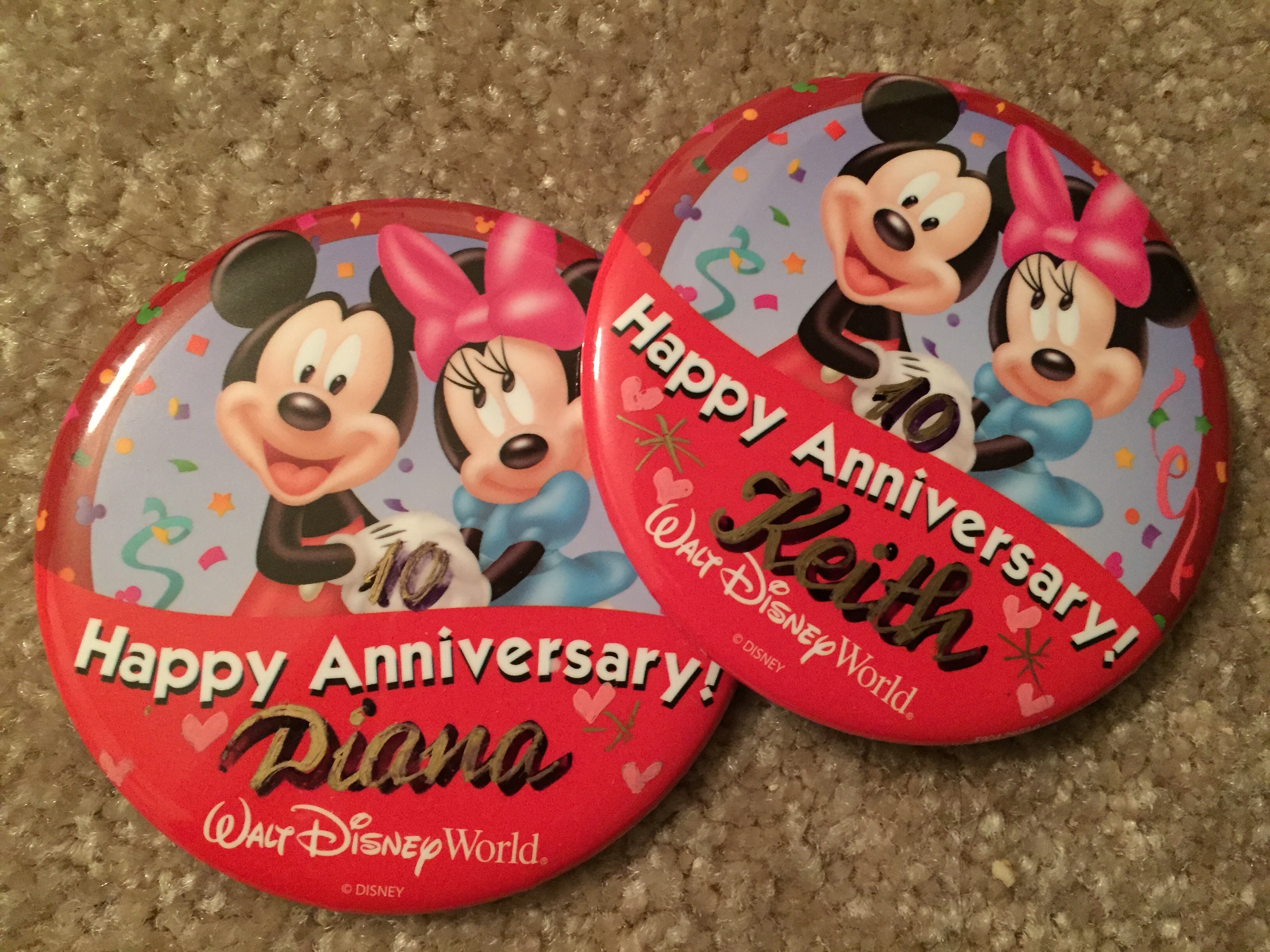
FullSizeRenderbuttonsI’m all about free stuff.  My husband and I celebrate every fifth wedding anniversary in Walt Disney World.  The resort staff knows we’re there for our special occasion–they know because we told them–so they give us large, cheerful Happy Anniversary buttons that we wear.  Because these days being married more than nine weeks can be an accomplishment, I tell everyone we meet “It’s our ##-year wedding anniversary.”  Compliments feel good. We get numerous congratulations, free drinks, special appetizers and special treats.  On our 2013 trip, a gift shop cast member took our buttons and surprised us with free personalization of our names and “10th anniversary” artfully crafted in gold calligraphy.  Those buttons were the most complimented, commented and coveted aspect of our trip.

The point is no one knows to celebrate you if you don’t share that information.  By telling people, you are celebrating you yourself.  Others will follow your lead and celebrate.

No one would have done anything if we weren’t bold.  Being bold is not egotistical or vain.  It is being proud of your accomplishments, whether they are personal or professional.

Think about the kids you know, yours or others.  Would you be hesitant to share the fact that one of them made first trumpet in the band?  Would you be embarrassed to brag that he or she won the science fair?  Would you volunteer that information?  If you don’t hold that back, then why would you hesitant to share your writing success?

To increase your success, you must promote your work.  Promoting can be as simple as telling people, “I am a writer.”  With every book I publish–three to date, all available through kindle on Amazon–I send an email out to my family, friends and acquaintances stating, “I published a book, (Title).  Go to (this link), please buy my book, and then leave me a review at (this link).  Thank you.”

When you ask, you may be surprised by what you will get.  With emails like that, I received reviews of Lessons from Dad: a Letter to You and a 4-star rating of my first fiction book, Jimmy the Burglar.  My most successful project publication to date is my first short story, Mom, Star Trek and Las Vegas: a Grand adventure with 10 reviews, two first place state awards and one third place National award. Give them a read yourself, and let me know what you think.

In order for people to know you’re a writer, you must tell them.  By promoting yourself, you are holding yourself accountable to others, thus motivating you to set goals and deadlines.  It also encourages you to write when you feel uninspired or stuck.  Will this generate sales?  Maybe and maybe not.  If sales are a part of your goals, then exposure is what you need.

Doing self-promotion can be intimidating.  I’m outgoing,–I get that spirit from my Dad–so it’s not as scary for me.  This does not mean I am not tentative. What if no one likes my writing?  If no one knows I exist, I’ll never know. And I want to know.

I promote myself on a variety of social media sites: Instagram, Twitter, Pinterest and, reluctantly, Facebook.  The more people who see me, the more I am noticed.  Those two statements are different.

Am I that important to merit or deserve all this media attention?  Yes I am.  I’m a talented wordsmith with three books, two columns staff for Michigan Scrapbooker Magazine and one award-winning blog.  However, some people may think these are modest successes and therefore, I’m not worth all this fuss.  I’m simply pretending to be more than I am.

But I’ll never be more than I am without believing I am.  You need that fierce approach to your writing.

If you’re not proud of your work and share your pride, why should anyone else be excited?  I won’t be.

Be strong.  Be fierce.  Be shameless.  Be successful.