Author Archives: Sue Remisiewicz

Overcoming Passive-Aggressive Writing

The feedback I received on my first submission to my friends in the Deadwood Writers group included many comments about my use of passive voice. Make that many, many, MANY comments.  After I highlighted every instance of the verb ‘to be,’ my pages lit up in yellow.  If I owned a color printer at the time, I could easily have used up an entire yellow ink cartridge.  I had a problem – a passive-aggressive writing problem.

As my first step toward using an active voice instead of passive, I looked up the grammar rules. In its most basic form, passive sentence structure is Object-Verb-Subject: The bear was chased by Tom.  Ho hum.  Yawn.  The sentence sounds like the action is over.  Often the stories we write don’t happen in the present moment and this is where the passive voice snares the writer.  We use past tense forms of the verb ‘to be’ to give the sense of things happening in the past.  Active voice can do the same thing, but in a more compelling way.

Consider the active sentence structure of Subject-Verb-Object: Tom chased the bear. Even though events are still happening in the past, there’s more immediacy and drama.  Comparing the two sentences, you can see the verb ‘chased’ already shows past tense.  Adding the word ‘was,’ as in the passive sentence, is redundant and slows down the pace.

I got a lot of mileage toward improving my writing from this simple sentence conversion method. Here are three examples taken from that first submission:


Angela was bombarded with questions from the team.

The team bombarded Angela with questions. 


She tried to get an explanation from Fred, but was brushed aside.

She tried to get an explanation from Fred, but he brushed her aside. 


Cindy’s fresh coat of nail polish was ruined when she jumped from the surprise.

Cindy ruined her fresh coat of nail polish when she jumped from the surprise.


These fixes to sentences using simple past (-ed) versions of verbs were my first round of corrections and cut the amount of yellow highlights down by half. In the second round, I tackled the past progressive sentences that used the –ing version of verbs: Tom was chasing the bear.  I revised these sentences with conversions to the simple past structure:


Gladys was now hurling packages of paper at him.

Gladys hurled packages of paper at him.


Tom was opening an email from Todd.

Tom opened an email from Todd.


The document was making its way to dozens of fax machines around the company and the city.

The document made its way to dozens of fax machines around the company and the city.


By this point, I cut the amount of yellow by three-quarters. The highlights remaining required less obvious, more thoughtful changes to achieve an active voice.  In picking out examples for this blog post, I realized the common theme involved adjectives used in conjunction with a form of the verb ‘to be.’  One way to fix the problem is to get rid of the verb ‘to be’ and select another verb that is similar in meaning to the original verb/adjective combination.


Tom was a little concerned that someone did something to his cube.

Tom worried that someone did something to his cube.


Todd was openly vocal about the lack of work Tom did.

Todd complained openly about the lack of work Tom did.


Another fix is to move the adjective to a place in the sentence where the verb ‘to be’ is not necessary.


If his hard drive was damaged, it would set back the Granger project even further.

A damaged hard drive would set back the Granger project even further.


When these adjustments don’t seem to work, you may have to rethink and rewrite the sentence.


That thought was enough for Sylvia.

“No way!” thought Sylvia.


Tom opened the file and was not treated to erotic images.

Tom opened the file but did not find the erotic images he hoped to see.


Did I eliminate all use of passive voice? No.  A few passive sentences are not going to make or break an entire piece.  In fact, trying to eliminate all instances may bring you to a point of crafting sentences that sound pretentious, flowery, or verbose.

When assessing your use of passive voice, the problem is one of numbers. For example, ten instances of the word ‘was’ in a paragraph is passive-aggressive and clearly needs to be fixed.  A page with ten occurrences is passive-assertive and still requires reduction efforts.  Ten passive sentences scattered across ten pages is mildly passive.  Though not likely to raise eyebrows, it’s worth taking a look to see if you can change some sentences from passive to active.  If you have ten cases in a hundred pages, not only are you in control of your passive-aggressive writing tendencies, you’re also saving a lot of money on yellow printer cartridges.
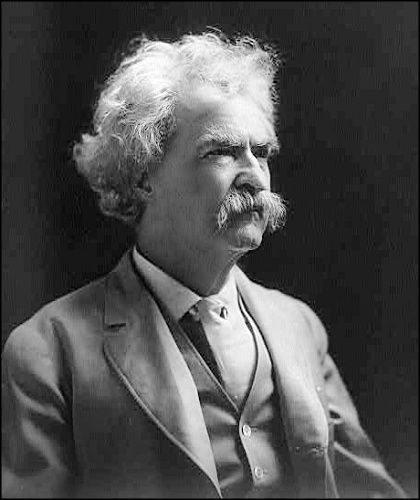
3 Writing Lessons from Ken Burns’ Mark Twain

Mark_Twain - BP

PBS television is a great resource for anyone interested in the works or lives of authors.  If you are an early riser, or good at setting a DVR, you can watch Terry Tazioli on Well Read interview authors such as Elizabeth Gilbert (Eat, Pray, Love), Amy Tan (The Joy Luck Club), or Khaled Hosseini (The Kite Runner) about their latest works and creative process.  American Masters has profiled Alice Walker (The Color Purple) and J.D. Salinger (The Catcher in the Rye) among others this year.

Last month I watched a reshowing of Ken Burns’ documentary on Mark Twain.  I recommend this compelling portrait of one of America’s foremost authors.  It reveals Twain’s monumental life along with his more personal, sometimes heartbreaking, experiences.  You’ll discover why his books continue to be read the world over as significant literary works.  After watching the film, I wondered what lessons specific to the writer can be drawn from the presentation.  So, I watched it again and discovered three takeaways.

1. Notice the details of people, places, and things

Writers tend to be natural people watchers, but how close do you look?  Do you notice the way people hold themselves?  The way people comb their hair or wear their hat?  Do they speak slow and steady or fast and jittery?  What about the places you go?  Are there smells in the air?  A certain color to the grass?  Sounds drifting in from someplace close by?  What’s interesting about the things around you?

If you stick to what is easy to see, you run the risk of giving the reader only the mundane.  The details provide little sprinklings of spice you can use to create more compelling narratives and characters.

2. Explore unconventional publishing methods

Twain’s Innocents Abroad published as a subscription book in 1869.  Sold door to door by salesmen, literary critics rarely bothered to review these works.  Both ePublishing and self-publishing have started out with similar low regard from established literary circles.

By going the subscription route, Twain got his books into the hands of the masses.  People who didn’t frequent or have access to bookstores could purchase his book causing sales to flourish.  In time he was promoted as “the people’s author.”  Going the traditional route for publishing is an option.  At the same time, keep an open mind to other opportunities that can also land you an audience.

3. Write about what it is to be human

We live in rich environments for storytelling.  You may think your life uninteresting, but it is a human life filled with people and experiences to which many can relate.  Add to that the social issues going on around us and you have fertile ground for your imagination to comment on the human condition.  A writer conceives from this bounty something that is magical, thought provoking, or revolutionary then wraps it up in an entertaining package.

Writers can take sides on social issues to influence people’s thinking for the betterment of our culture or ourselves.  Even the lightest works can help people see more about themselves and to understand significant things about our journey through this world.  Ultimately, that is the genius of Samuel Clemens’ Mark Twain.

Curse-ive Writing

Have you ever been reading a book and been jarred by the use of a curse word?  While I believe that swearing is something to avoid as a matter of personal virtue, I understand the dramatic effect and occasional necessity to a storyline.  However, sometimes the use of curse words doesn’t fit with the story, or character, making it come across as more out of place than your maiden aunt in a mosh pit.

When deciding if a curse word is appropriate, try thinking about two things.  One is the background of the character.  For instance, how would the character’s mother react upon hearing her child swearing?  Would ‘conniption fit’ describe her as she got out a bar of soap to teach the kid a lesson?  If so, your character is not likely to use swear words easily, even as an adult, with the taste of Ivory soap lingering in his memory.  Is the mother not around or doesn’t she care what the child said?  In this case, it’s quite possible that using expletives has become second nature to your character.

The other thing to think about is the situation.  Even a character living with flashbacks of soap dinners can be in a circumstance where a curse word will slip out.  Someone pushed to an emotional breaking point can let loose words she never thought she could.

There’s a great scene in the movie Speed (1994, screenplay by Graham Yost) where you can see this playing out.  Keanu Reeves, as Officer Jack Traven, is hanging through an access panel of the floor of a bus to check out a bomb that could blow him and the passengers up if the vehicle falls below 50 miles per hour.  Alan Ruck is Stephens, a passenger using a cell phone to act as the relay for a conversation between Traven and another officer.  After describing several aspects of the bomb, Traven reacts with a phrase that includes the ‘F’ word.  Stephens’ reaction is hesitation and then to translate it as “Oh darn.”

Traven’s outburst is situational from seeing “enough C4 on this thing to put a hole in the world.”  In light of this, any resistance he may have to swearing has broken down.  On the other hand, Stephens doesn’t know about the C4 and hasn’t reached that point.  He grapples with repeating the phrase then settles for something more compatible with his state of mind.

As people ‘mind their manners’ in everyday life, it’s up to you as an author to mind the manners of your characters.  Making the dialog realistic to their temperament and situation is important when using curse words.  Considering the impact of these expressions, tread carefully.  Your character’s mother may be watching.

Emergency Kit Essential: Books on Paper

It’s May 28th around 9:30 in the morning.  I’m guessing about the time because every clock in the house is off due to a power outage, and my watch is too far away to bother with.  As I sit listening to the hum of my neighbor’s generator, I think about my other emergency kit.  Not the one with batteries, flashlights, water, duct tape and whatnot.  I’m talking about my list of things to do when I have no electricity.

For years, the top of that list has been ‘Read a Book.’  Today, the question dawned on me: What if I go completely digital in my reading?  How long would an eReader battery sustain my primary activity if the power were out for days?  Will I find myself visiting my generator-owning neighbors asking, “Please sir, may I power up my tablet?”  Will I join an anxious mob at the local bookstore chanting, “Must have books… must have books…”?  No doubt, it’s a serious problem.

I had my first chance to try an eReader on a vacation when my sister, Colleen, brought along her Gameboy and a cartridge of public domain books.  A novel by G. K. Chesterton called The Napoleon of Notting Hill caught my eye due to an off-kilter, Monty Python kind of humor.  Even with a screen only a quarter the size of a standard paperback page, I found the read enjoyable.  I didn’t finish reading the book before the end of the vacation because Colleen, oddly enough, wanted to play games with her Gameboy.

When eBooks started making the scene, I didn’t know how the technology should or would fit into my life.  My questioning the role stemmed from my sense of wanting to “do no harm.”  From that perspective, I wanted to understand if authors would gain or lose from digital books.  Also, how would the technology affect the local economy?  Brick and mortar bookstores fuel the local economy in many ways and especially by employing people from the communities they serve.  Indirect support comes from the delivery channels it takes to keep the shelves full.  At least when you buy from Amazon you still help the local economy via the delivery pipeline.  With eBooks, you cut out all benefits after the initial purchase of the eReader.

With time, it’s become clear that digital publishing can be a big boon to authors.  Unfortunately, brick and mortar bookstores have not been fairing so well.  While I believe that bookstores will not disappear completely, we haven’t reached a comfort point of knowing how many will survive.

After I returned home from that vacation with Colleen, I went to the bookstore to pick up a copy of the G.K. Chesterton book and found they did not stock it.  This is the first time I couldn’t find a book I wanted in a local store – a truly paradigm shifting moment for a booklover like me.  With the book in the public domain and no money to be made by an author, I decided to load the book to my smartphone and further test the experience.  I found some very good reasons for adopting eBooks:

I can carry a large number of books at the same time without a bone-breaking, heavy backpack

  • No matter where I’m at, if I have a few minutes I have something to read
  • If I want something new to read, I can download a new book instantly

Yet, there are some good reasons to continue purchasing books on paper:

I can’t write in the margins of eBooks

  • Flipping through an eBook to find a certain passage is harder to do without the spatial memory you need to help remember the location
  • It pretty much takes an act of God to destroy a paper book, but one momentary act of human stupidity can wipe out an entire electronic library

So, that brings me back to sitting in my house with no power, wondering what I would do without something to read.  The answer is: I’m not going to let that happen.  Truly, there is room for both literary forms in the world.  It doesn’t have to be either/or, it can be both.  I want the books that mean the most to me to live on my bookshelves and share my space.  The ones that I enjoy in transience can exist on an eReader.  And the books I want with me during an act of God will be in my emergency kit.

Author’s Note: What books would you pick to be in your ‘emergency kit?’

I Pledge Allegiance to the Flow

When did you first know that you were a writer? I can trace it back to saying the Pledge of Allegiance in elementary school. Whenever we got to the line “one Nation under God” I thought it sounded awkward. Now mind you, I had no knowledge of the political forces and controversies surrounding the words “under God” in the Pledge. My reaction stemmed purely from the writer’s sense of something being wrong with the flow.

When a piece has good flow the words and sentences have a smooth, unbroken rhythm. Think of reading a passage and following the words with your finger as you read. If at any point your finger pauses too long or stops completely, you have a potential problem with the flow. It means your brain is either working harder to process the written words, or it has come completely out of the story.

In fiction, good flow requires such things as: no logic problems in the plot; no out of character behaviors that are incongruent with the plot; and no inconsistencies like the color of a car being red on one page and blue five pages later. Any of these things may draw the reader’s brain away from the story and off on a tangent saying, “That’s not right.”

Good flow also means there are no awkward pauses or phrasing, no irregular word usage, and no sentences long enough to make you winded if reading it out loud. The reasons behind these problems are usually much harder to articulate. Authors and readers can often tell good flow from bad, but the mechanics are not easy to define.

It would be years later before I learned that “under God” came about through government editing of author Francis Bellamy’s original work. As it turns out, there have been five editing jobs on the Pledge since being published in the September 8th, 1892, edition of The Youth’s Companion. Each change either improves or disrupts the flow and I decided to try and figure out the reasons why. Let’s start at the beginning with the Pledge as it first appeared in The Youth’s Companion:

I pledge allegiance to my Flag and the Republic for which it stands: one Nation indivisible, with Liberty and Justice for all.

The first editing on this piece came from the hand of Francis Bellamy himself. He inserted the word ‘to’ before “the Republic”:

I pledge allegiance to my Flag and to the Republic for which it stands: one Nation indivisible, with Liberty and Justice for all.

What does the alteration do for the statement? In the original form, “the Republic for which it stands” has only a passing relationship to the earlier subject/predicate “I pledge allegiance.” By adding the word ‘to’ in front of the phrase, the connection is made stronger thus improving the flow. The change also helps reduce some slight ambiguity of the word ‘it’ which could refer back to either ‘allegiance’ or ‘Flag.’ In the new form of the sentence, I not only pledge allegiance to my flag, but also to the republic for which my flag stands.

At some point in time, the colon in the Pledge gets changed to a comma. Since I couldn’t find exactly when this change happened, I’m going to take some license and examine what the change does while the sentence is in a simpler form:

I pledge allegiance to my Flag and to the Republic for which it stands, one Nation indivisible, with Liberty and Justice for all.

While use of either a colon or comma is grammatically correct, the tone is different depending on the choice. Read the version with the colon and then the one with the comma. Did you give a little more emphasis to the words “one nation” when reading the version with the colon? Was the flow a little more monotone when reciting the version with the comma? A colon adds some drama to the sentence while a comma is more casual. In this case, I think the colon is the better option because it fits in with the ceremonial nature of the Pledge. When grammar rules give you a choice, take care that the tone imparted by a colon is in line with the character and tempo of the overall piece.

In 1923, the National Flag Conference released a new version of the Pledge designed to take away any confusion immigrants might have about which flag they were honoring. The words “my flag” became “the flag of the United States”:

I pledge allegiance to the flag of the United States and to the Republic for which it stands, one Nation indivisible, with liberty and justice for all.

The following year, the conference added the words “of America”:

I pledge allegiance to the flag of the United States of America and to the Republic for which it stands, one Nation indivisible, with liberty and justice for all.

Before adding “of America” the flow is choppy. Is it just coincidence or luck that using the full name of the country improves the flow? I don’t think so. Referring to our country as “the United States” is the common way of speaking. It’s only in formal situations that we add “of America.” The flow of the 1923 version is uneven because the casual usage of the name is at odds with the formal nature of the Pledge.

Congress adopted the Pledge as part of the national flag code in 1942 and it remained unchanged until 1954 when the words “under God” were added:

I pledge allegiance to the flag of the United States of America and to the Republic for which it stands, one Nation under God, indivisible, with liberty and justice for all.

So what did I hear that made the flow sound off to my young mind? The phrase “one Nation under God, indivisible, with liberty and justice for all” is complex with no verb or conjunction to help the brain process what is written. Even without the addition of “under God” the statement is hard to interpret. However, the extra words make it more difficult. The complexity becomes more apparent when you see the translation the brain has to do to understand both statements:

Before: one nation standing indivisible, with liberty and justice for all

After: one nation standing under God and indivisible, with liberty and justice for all

The difference may seem subtle, but it is important. I’ve never heard the Pledge spoken without a pause before the words “under God” even though there is no grammatical reason (e.g. a comma) to hesitate there. That stop in the flow is the brain doing a synaptic two-step trying to process the sentence. Tough enough for an adult to figure out let alone my grade school self!