Category Archives: Nonfiction

Ice Fishing in 1954

Ice Fishing in 1954 by Jon Reed

Have you ever been ice-fishing? I was thirteen-years-old and couldn’t feel my face in a bitter Lake St. Clair wind as the sky was just turning pink. I was waiting to go ice-fishing, and gusts of wind blew sheets of snow across an expanse of white. My father was inside a bait-shop renting a shanty after our 3:30 am drive to Caseville. I wore a parka over two winter coats, a sweater, several shirts, three pair of pants and socks, and heavy boots. I wouldn’t admit it, but I worried about being miles from shore on a foot of ice over twelve feet of water. A lump of ancient Model T Ford pickup that would take us out sat chuffing a few yards away.

A classmate friend, Eddie, and his father waited inside a big Dodge staying warm. Arriving a half-hour before to rent their own shanty, Eddie was a little slow and yet to figure out we had to sit on the flatbed exposed to the elements. My father came out and we climbed onto the flatbed, handing up thermos bottles of coffee and soup and treble-point fish spears more suitable for Roman gladiator coliseums. We were soon bouncing and roaring our way across Anchor Bay, unable to hear over the open exhaust, flailing tire chains, and wind. After a while, I stood up clinging to the top of the cab for a better view. It was clear for miles and I pulled a scarf over my face for better protection.

Tiny shanties appeared in the distance and we shuddered to a stop near two of them a few minutes later. Typical boxes of 4’ X 8’ plywood, there was room inside for only two people. They were cheaply-constructed because many were lost each year. Inside, a small oil stove would take the chill off. Each shanty was positioned over a pre-cut hole in the ice to fish through after a lid in the floor was removed. Without windows or lights, each shelter provided a clear view into green water below, like staring at a luminescent television screen. Before leaving, our driver said he would return with two more fishermen for the third shanty.

It was odd, watching him drive off, seeing how far away from the shore we were. Caseville was only a line of bare trees miles away. The wind picked up and the shanty stovepipes’ smoke flattened sideways. If there was a problem, we were alone.

Eddie and his father turned toward their hut twenty yards away and my father and I trudged through the snow with them to make sure they were alright. Fishing shanties aren’t necessarily built by the most intelligent people on Anchor Bay, much less to local building codes. They’re slapped together by fishermen, not architects. This particular one had its three foot square hole in the floor just inside the door. After lighting their oil stove a few minutes before, the driver had thrown the lid to one side before removing the overnight skim ice so they could begin fishing. It was an accident waiting to happen.

Too late, no one told my friend to look carefully before entering the hut. Poor Eddie dropped straight down through the hole, with a horrifying yelp, into twelve feet of freezing Anchor Bay. Fortunately, my father was standing just outside and grabbed Eddie’s collar as his head was disappearing in a splash of foam and ice.

“Whoa there, son. We can’t lose you that way. C’mon back here.”

After he had a good grip, he hauled Eddie back out and stood him in the lee of the hut. Eddie was wide-eyed, shaking, his hair turning to icicles as we watched. Eddie’s father stared, gulping soundlessly like a just-caught fish.

If someone falls through ice miles from shore, he’s in a lot of trouble unless he has a quick-thinking father like mine. Rescue from above is impossible. The instant swimmer better have taken a deep breath before going through and able to climb back out in less time than it takes to describe. If he hits his head going down, he’s gone. Rescuers might find him in a couple of months next spring when the ice melts. Eddie would have been dead for sure. As it was, he was lucky to be standing there, much less slowly freezing.

“Are you alright, Eddie? Eddie, can you hear me?” my father asked as Eddie stood there freezing. But Eddie couldn’t get a word out, fast turning blue.

It was obvious his day was done. My father flagged down the Model T returning from checking another shanty, and my friend was bundled inside while his father sat on the pickup bed. That was the last I saw of him for a few weeks. Shaking off images of a dead Eddie floating under a foot of ice, we went back to our shanty to bait minnows and think about a near miss. At the end of the day, we had a bucket full of good eating perch and I had a father who had saved a life.


For Love of Books

“When I get a little money I buy books; and if any is left, I buy food and clothes.” –Erasmus

I don’t know when my love of books began, but I do know it hasn’t ended. Hence, I chose the moniker, Book Lover. It is difficult for me to walk past a bookstore without entering to buy a book or two. My book shelves overflow with murder mysteries, romance novels, science fiction stories, historical books, biographies, as well as “how to” books on writing.

Imagine my joy at seeing our two year old granddaughter’s delightful reaction to visiting a bookstore for the first time. Each of our subsequent visits to her city included a trip to “her” store. Alas, that bookstore is now closed.

Like fellow blogger, John McCarthy, I visit bookstores and libraries whenever I travel. Recently on a Holland America cruise to the Caribbean, I took pictures of the ship’s library which I’ve always visited and taken for granted. There are separate large sections of books for Travel, Best Sellers, Leisure, Large Print books, several game tables including one with chess pieces in place, magazines, 12 to 16 computers, and the librarian distributes a new Sudoku puzzle daily and a daily crossword puzzle or word search. The library amenities can easily satisfy travelers.

SAMSUNG CAMERA PICTURES

These are a few of the pictures I took at the library on Holland America’s Eurodam cruise ship.

Every visit to a bookstore or library now reassures me that we haven’t yet reached the world depicted in Ray Bradbury’s Fahrenheit 451 or Markus Zusak’s The Book Thief where books are burned.

Where would we be without books?

SAMSUNG CAMERA PICTURES

Help Wanted: Minions

I have a lot of stuff to do.  First on my list are the things I have to do to maintain my life.  Obtaining food/water, shelter, and clothing make up the basics.  It’s what people have been doing from the dawn of humankind.  If I don’t do the modern equivalents – work my job, buy groceries and clothes, maintain my house – I may very well become extinct.

Second on the list are the things I should do.  Guilt often goes hand in hand with the ‘shoulds.’  Losing weight, exercising, volunteering – all are well and good, but not easy to fit into a busy schedule.  That creates major stressors.  Cavemen had their stressors, too.  However, I think that once you managed to outrun the saber-toothed cat of the day, you could pretty much let it go and enjoy your mammoth meat without ruminating over whether or not it would make your thighs bigger.

Last on the list are the things I want to do.  You know, travel, hobbies, writing, entertainment, socializing, etc.; all the stuff that gets put on the backburner in favor of the ‘must dos’ and the ‘should dos.’  How ironic is it that modern life imposes so much overhead to the basics of obtaining food/water, shelter, and clothing that we don’t have more time for leisurely pursuits?  We have to obtain and maintain cars.  We deal with endless paperwork that must be read, filed, filled out, paid, and tossed or shredded.  Electronics are meant to be fun except when they aren’t because they’ve gone on the fritz and you have to deal with the problems.  The list of upkeep duties is long and large.

What’s a person to do?  I’m thinking having minions is the answer.  I admit to being somewhat inspired to this thought from seeing the trailer for the cartoon movie “Minions.”  Having a bunch of these lovable goofs doing my bidding sounds kind of fun.  However, the “Despicable Me” movies notwithstanding, minions have a bad reputation given they are usually depicted serving the needs of evil masters set upon ruling the world.  The Merriam-Webster online dictionary defines a minion as “someone who is not powerful or important and who obeys the orders of a powerful leader or boss.”  See that?  It says “powerful leader or boss” not megalomaniacal madman out to become overlord of the human race.  A secondary definition is “one highly favored.”  I know I would certainly appreciate someone who does all the stuff I don’t want to do.

So, I’m putting out the help wanted sign to bring in some minions.  The salary: zero.  I mean, a minion will do the job just for the satisfaction of serving the leader – right?  I won’t require any evil deeds to be done, but if it makes a minion happy I can produce an evil laugh when assigning him or her to shred my finance statements.  I can wear grey suits while my cat, Calder, sits in my lap being stroked as I give orders.  See?  This can work!

Care to apply?  No experience required.  Leave comments for more details.

Chinese Voices

I just finished reading Unbound Voices by Judy Yung. The book tells the stories of first and second-generation Chinese women living in San Francisco’s Chinatown between 1850 and 1945. What makes this book so riveting is: Each woman tells her story in her own words. I was very moved by how each one expressed herself.

If the woman speaks in English, Judy transcribes exactly what she says and the way she says it. She doesn’t correct for language, sentence structure or word choice. If a woman spoke in Chinese, Judy translated her words the same way.

This is from an interview Judy had with her mother in the 1980s. It was conducted in Chinese: “When I became pregnant with your third sister, I said no matter what, I was not going to have the baby in Menlo Park. It was a matter of life and death. I told your father, even if you don’t want to go to San Francisco, I am leaving. There were two Chinese women obstetricians in the city and I was determined to have my next child in a hospital.”

Judy is second generation Chinese. She grew up in San Francisco’s Chinatown in the 1950s and went to an American public school each day and afterwards to the Chinese school. In Chinese school she learned the Chinese language and history and read Chinese classics. This was very helpful to her when she interviewed the women for this book. She was quickly able to establish rapport and trust because she spoke the language and knew the culture. The women trusted her to tell their stories.

The book begins, around 1850, with women telling how they came to Gold Mountain (the Chinese name for America). Some came with their husbands, others followed them later and some were left to live their lives out in China while their husbands remained in America and remarried. The latter were called Gold Mountain Widows.

This is from an interview Judy conducted in China with Kwong King You, a retired doctor, age 75, in 1982. She was a “sau saang gwa” (Gold Mountain widow). She hadn’t seen Ah Fook, her husband and the father of her children, in 40 years. She’d heard that he’d remarried in America and wanted to see him one last time.

“When he first left, I was very upset and wanted revenge, at least until I reached the age of forty-five. My colleagues kept telling me not to be stupid. If he remarried, I should remarry. I used to cry tears from my eyes down to my toes. It’s been such a hard life…There’s always hope that he might change his mind and come home…My hope is that he will someday return. I will always welcome him back. My mind would be put to rest if I could just see him one more time.”

Judy’s interviews cover the period from 1850 to 1945. I was intrigued by the way she conducted them. For the most part, she went to the women’s homes or the homes of one of their descendants, chatted, asked them all the same questions from a list and let them talk. It was only after the interview was finished that she asked them to sign a consent form. This was so they would have enough time to get to know her and decide if they were willing to let her tell their story.

At whatever time the women came to the Gold Mountain, it was very difficult. Congress had passed a number of laws, especially the Chinese Exclusion Act of 1882, to keep them out. Once their ship docked in San Francisco harbor, they were taken to Angel Island and interrogated for a few days, weeks or more. Their answers had to match exactly the answers their husbands gave when they were interviewed. Otherwise the women would be sent back to China on the next ship.

To make sure their answers did match (i.e. the number of houses in the village or where the room they slept in after they were first married was located in the house, etc.), each husband prepared a coaching book for his wife. She was supposed to study it on the voyage over and then destroy it.

In the second half of the nineteenth century, many of the women were tricked. Instead of being married when they arrived in San Francisco, they were sold into prostitution. A number died, some were able to buy their freedom and Methodist and Presbyterian women rescued others.

The Methodists established the Methodist Mission Home in 1871 and the Presbyterians established the Presbyterian Mission Home in 1874. Both places gave the women a place to stay, taught them English and helped them find a Christian husband or job, other than prostitution, to support themselves.

More and more women arrived in Chinatown. They made homes for their families, worked and participated in community life. Because of them, life was better for their daughters. The daughters went to American public schools. Some even went to college. Because of this they were able to get good jobs outside of Chinatown that paid more. The terrible discrimination of the nineteenth and early twentieth centuries gave way to the tolerance and friendships you see today.

No longer are the Chinese forced to live in Chinatown. They can and do live all over San Francisco, in every neighborhood: Downtown, in the Marina, Pacific Heights, out by the ocean and in many other neighborhoods.

My mother, who is not Chinese, was able to stay in her house, out by the ocean, for many years longer than she ordinarily would have, because her good friend, Virginia, a Chinese American, lived across the street. Virginia is about ten years younger than Mom and at that time was still able to drive. Virginia and Mom used to do their grocery shopping together every Thursday morning and then go out to lunch. Where? Why to a neighborhood Chinese restaurant of course.

Why You Should (Shamelessly Self-) Promote Yourself

I believe in shameless self-promotion and so should you.

I don’t mean just with your writing but with all aspects of your life.  You need to be passionate.  Who else is going to get excited about you and your work if you aren’t?

I have never taken off work on my birthday, and I never will.  It’s a waste of a good opportunity.  When someone asks that standard “How are you doing today?” question, I reply, “I’m doing great; today’s my birthday.”  I always get a smile and some variation of “Oh, I didn’t know.  Happy Birthday!”  It’s a bonus when that comment is followed by a “Let me treat you to lunch/coffee/spa day/paid week off” offer.

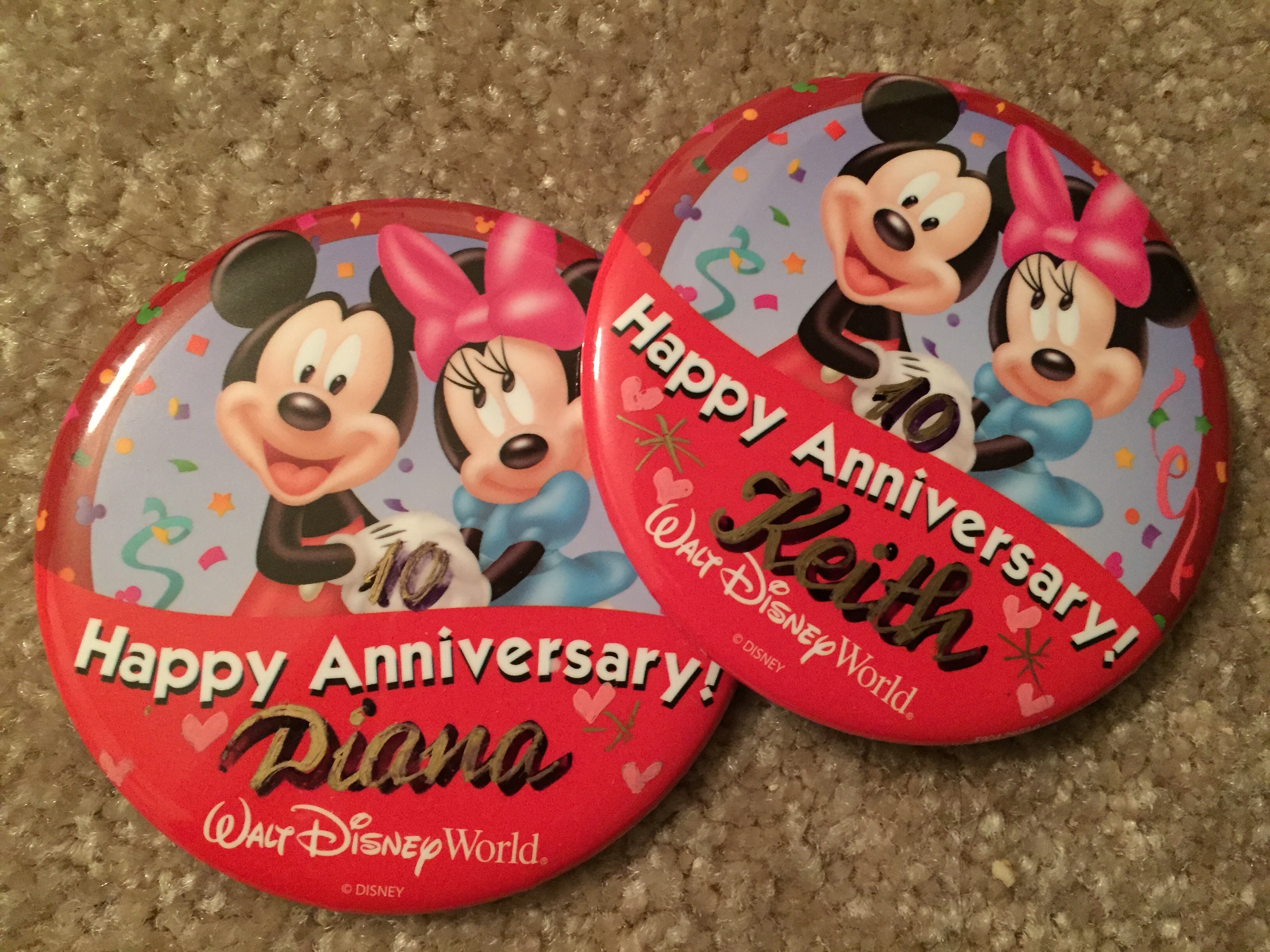
FullSizeRenderbuttonsI’m all about free stuff.  My husband and I celebrate every fifth wedding anniversary in Walt Disney World.  The resort staff knows we’re there for our special occasion–they know because we told them–so they give us large, cheerful Happy Anniversary buttons that we wear.  Because these days being married more than nine weeks can be an accomplishment, I tell everyone we meet “It’s our ##-year wedding anniversary.”  Compliments feel good. We get numerous congratulations, free drinks, special appetizers and special treats.  On our 2013 trip, a gift shop cast member took our buttons and surprised us with free personalization of our names and “10th anniversary” artfully crafted in gold calligraphy.  Those buttons were the most complimented, commented and coveted aspect of our trip.

The point is no one knows to celebrate you if you don’t share that information.  By telling people, you are celebrating you yourself.  Others will follow your lead and celebrate.

No one would have done anything if we weren’t bold.  Being bold is not egotistical or vain.  It is being proud of your accomplishments, whether they are personal or professional.

Think about the kids you know, yours or others.  Would you be hesitant to share the fact that one of them made first trumpet in the band?  Would you be embarrassed to brag that he or she won the science fair?  Would you volunteer that information?  If you don’t hold that back, then why would you hesitant to share your writing success?

To increase your success, you must promote your work.  Promoting can be as simple as telling people, “I am a writer.”  With every book I publish–three to date, all available through kindle on Amazon–I send an email out to my family, friends and acquaintances stating, “I published a book, (Title).  Go to (this link), please buy my book, and then leave me a review at (this link).  Thank you.”

When you ask, you may be surprised by what you will get.  With emails like that, I received reviews of Lessons from Dad: a Letter to You and a 4-star rating of my first fiction book, Jimmy the Burglar.  My most successful project publication to date is my first short story, Mom, Star Trek and Las Vegas: a Grand adventure with 10 reviews, two first place state awards and one third place National award. Give them a read yourself, and let me know what you think.

In order for people to know you’re a writer, you must tell them.  By promoting yourself, you are holding yourself accountable to others, thus motivating you to set goals and deadlines.  It also encourages you to write when you feel uninspired or stuck.  Will this generate sales?  Maybe and maybe not.  If sales are a part of your goals, then exposure is what you need.

Doing self-promotion can be intimidating.  I’m outgoing,–I get that spirit from my Dad–so it’s not as scary for me.  This does not mean I am not tentative. What if no one likes my writing?  If no one knows I exist, I’ll never know. And I want to know.

I promote myself on a variety of social media sites: Instagram, Twitter, Pinterest and, reluctantly, Facebook.  The more people who see me, the more I am noticed.  Those two statements are different.

Am I that important to merit or deserve all this media attention?  Yes I am.  I’m a talented wordsmith with three books, two columns staff for Michigan Scrapbooker Magazine and one award-winning blog.  However, some people may think these are modest successes and therefore, I’m not worth all this fuss.  I’m simply pretending to be more than I am.

But I’ll never be more than I am without believing I am.  You need that fierce approach to your writing.

If you’re not proud of your work and share your pride, why should anyone else be excited?  I won’t be.

Be strong.  Be fierce.  Be shameless.  Be successful.