Category Archives: Nonfiction

A Tale of 3 Bookstores in Seoul, Part I: Bandi Luni’s

In the course of my travels I’ve had the pleasure of visiting some special bookstores in the United States. So it’s an amazing experience to visit some in other parts of the world. While in Seoul, South Korea, there was an opportunity to visit three bookstores in one day. That’s quite a feat for an American with no knowledge of the Korean language. But with a map, directions to the subway from the hotel concierge, and truly helpful people on the streets, I navigated my way to some memorable experiences. I considered writing about all three stores in one blog, but that felt like a disservice to each of the locations. There are similarities and differences.

What follows is a trilogy about these intriguing bookstores, which when visiting Seoul you must visit all three. They are within 3 blocks of each other, and well worth spending an hour to a day in–no exaggeration. We’ll begin this journey with the shortest stop, and with each post, the stay will be longer–for reasons that will become quite apparent. All three are quality places as you’ll see.

Bandi Luni’s

반디앤루니스 종로타워점

South Korea, 서울특별시 종로구 종로2가 6

When taking the subway in Seoul to the downtown area, there are several stops that include stores underground. There’s shopping for clothes and food. Unlike some of the underground train stations I’ve taken in the US, the area is clean and free of any funky smells that you would not want near an eating establishment. Now before someone from New York City gets upset, Union Square is an exception that I was quite impressed with. I’d also include an underground shopping mall/subway in Washington DC. I don’t remember the name but I’m sure someone can help me out. Between those two, Washington DC rates higher because there is a major bookstore–Barnes and Noble. In Seoul, each of the stops I explored had sprawling stores–not just one location.

The first bookstore, Bandi Luni’s, on our list has an underground entrance from the subway. Entering the store, I was reminded of the Books A Million chain where there are books for sale, and many other products to purchase. Only this store felt more like an upscale department store. Books were the centerpiece. There were also sections of the store dedicated to other items such as tech accessories for phones, tablets, and laptops. Major bookstores like Books A Million, Barnes and Noble, and Schuler’s Books has the same, but this place had more than a couple of shelves. It felt like mini-department store spaces dedicated to merchandise other than books. There were two levels of this store to explore and find items that one would not normally find in a bookstore. The book genre selection could hold it’s own with any of the bookstores in the US. There is a small selection of books in English, while the majority are in Korean. Some of the staff spoke English, which made easier navigating the merchandise.

When you’re done exploring the two floors, step outside on the second floor on to the streets of downtown. Kitty corner and half a block away is the location of our next stop. A place that both elevates the bookstore experience, and takes it to a new level that I’ve not found anywhere in my travels in the US and Sydney Australia.

Have you been to a bookstore with far more amenities than books? What’s the name and location? What was your experience?

You Are Naïve, Mr. Park

Quietly Mr. Park closed the heavy blue steel door behind him to avoid waking his wife and four year old granddaughter. It was around 9:00 a.m. and they were still in bed. His son and daughter-in-law had already left for work.

As soon as the elevator hit the bottom from the eleventh floor he lingered. Where should I go today … art museum, city library, the eastern market or the Pagoda Park?

A modern art exhibition was going on at the art museum, including Picasso. He did not care for the paintings of Picasso and thought that Picasso was drunk when he touched the white canvas with his wild brush. The city library? No. The moss and yeast smells make his nose and arms itch. Also, he has read almost every book in the library about ships and submarines over the last five years. He decided to go to the Pagoda Park and play chess or cards with friends.

He got a free ticket at the subway ticket counter and went down the stairs for the Blue Line in the direction of city hall. The Pagoda Park is five blocks away from the city hall.

The transportation is free for people over 65 in Korea. Mr. Park is only 61 but he looks much older than 65 with wiry gray hair, sagging eyelids and deep wrinkles on his face. He is taking advantage of his appearance. Luckily, nobody asks him for proof of his age.

The rush hour crowds bumped his left and right shoulders at the subway station. Since the narrow escalator slid down with a load of people, he decided to take the steps. His legs were getting weaker, shaking and getting cramps. He stopped for a few seconds and slowly walked down to the train stop. With morning commuters and students, the inside of the train was quite crowded. There were people sleeping, reading papers and talking on the phone constantly but nobody offered him a seat.

He stood up among the businessmen who were reading “The Daily Economic News” while standing. He could read over their shoulders: “Bernard Madoff’s Ponzi Scheme”, “General Motors Bail Out Request”.

Mr. Park just shrugged his shoulders and murmured to himself angrily. There are a bunch of thieves, large and small anywhere, everywhere in the world. He continued to himself, Put them in jail, all of them, forever.

The city hall is seven stops away from his home. He still has lots of time to be at the Pagoda Park around noon. He continued to stay in the seat and went to the final terminal of the Blue Line at the Yonsei University. It took about one hour. He did not get off the train here. He rode on again in the same seat back in the direction of city hall. Now the inside of the train was almost empty. Several merchants sold goods. The first one was selling umbrellas for ₩2000 ($2.00) and the second one was a blind person selling chewing gum by holding it on his left hand. His right hand held a white cane and the recorder dangled from his neck with music of “I Will Tell The Story”. The next one was selling white socks, and on and on until inside the train was getting crowded again.

It was only 10:30 a.m. In order to kill time he took the Yellow Line to cross the Han River heading to the Incheon Terminal (suburb of Seoul). He was almost two hours on the train, and around noon arrived at the city hall stop.

He saw his group a few yards away but instead of joining them immediately, started to step on the cherry blossom flowers’ pods covered with white and pink colors under the trees in the park. He has never appreciated natural wonders; never counted the stars in the sky and never had any touching feeling in his heart about the flowers. He started to count pods, one, two, three, ten, one hundred … He was extremely happy, comfortable and relaxed. A big grin spread over his mouth. He mumbled, Why couldn’t I escape from my stress and concerns by using tools enjoying natural beauty and wonders before?

“Mr. Park, lunch is ready. Today’s lunch is kalbi tang (beef rib soup),” the loud, humorous Mr. Kim called. His voice was loud enough that everyone in the park could hear him. The cafeteria in the Pagoda Park serves free lunch to seniors. The group that Mr. Park belongs to is not impoverished seniors. They come here to meet friends and to cast off their anxieties about their families and relatives.

The park was crowded with small children running around. Several groups were playing cards and chess games. A group of merchants were selling cigarettes and lighters, makgeolli (Korean traditional opaque white rice wine) that is usually drunk from a bowl, egg rolls and seaweed sushi and others. The exercise groups, Tai Chi, and jumping ropes were seen.

Mr. Park joined this group after he lost all of his savings. He did not have a place to put his mind and heart. He ended up coming here and met Mr. Song and Mr. Kim. They became very close friends to Mr. Park, more than anybody else, even though they had known each other less than five years. He was not as close to his wife, his high school and college friends and, or his son.

Putting their heads together, they were looking at a picture of Mr. Song’s 37 year old nephew. Mr. Song and Mr. Kim were trying matchmaking with ladies in their neighborhood. Actually Mr. Song brought several copies of pictures and short personal histories of eligible ladies. Mr. Park thought matchmaking was the most silly thing in the world that they were doing but they were having a great time over the potential wedding and addition of new family members.

Mr. Park ignored the nasty comments they made about his appearance. It is a miserable life for Mr. Park, living with his daughter-in-law under the same roof. Much more than just oppressive. He had to be so careful about everything as a father-in-law. In the morning first he has to dress, because he cannot go to the kitchen in his pajamas. He has no private life at all. He thinks his daughter-in-law feels the same way. But now there is no alternative, no way he can leave his son’s house and live in a separate apartment.

Mr. Kim, who was the production manager at Daewoo, greeted him. “Hey, Mr. Park, you look pale like paper. It seems that last night you worked hard with your wife. You can hardly even stand up.” Mr. Park ignored him and did not look at him.

Mr. Song, who has a pharmacy across from city hall for 42 years and is semi-retired (handed the business over to his son) said, “Yes, what happened, Mr. Park?”

Mr. Park did not respond.

Rice balls, kalbi tang and kimchi were on the table as side dishes. They were busy eating lunch. Then Mr. Kim spoke with his mouth full of food. “Any news from your untrustworthy ex-partner, Mr. Lee?”

“Mmm … mmm,” Mr. Park tried to start to talk.

Quickly Mr. Kim interrupted. “Mr. Park,” still in a very loud voice.

“Shee. Be quiet,” Mr. Song warned Mr. Kim.

“Mr. Park, what are you doing?” shouted Mr. Song across the table.

“Oh… nothing,” Mr. Park murmured ignoring the two comments from friends.

“Look at this picture. She is so cute and sexy.” Mr. Kim put her picture in front of Mr. Park’s nose and continued, “She is like a live salmon on a chopping block flopping its tail, so fresh and lively.”

“Ohm,” Mr. Park nodded.

Mr. Park asked for a cigarette. He quit 20 years ago. He wanted all his evil memories to fly away in its smoke.

“If you catch him, Mr. Park, twist his neck like this and kill him.” Mr. Kim stood up and showed with a gesture how to twist his neck.

“Mr. Kim, sit down, calm down. Everybody is looking at us.” Mr. Kim sat down and put a spoonful of rice into his mouth.

Five years ago, when Mr. Park retired from the Hyundai Ship Construction Co., he got a lump sum as a retirement package. News spread about Mr. Park’s retirement and his lump sum retirement package throughout the town. Old high school and college friends approached him with great investment opportunities for his retirement money.

His wife insisted, or rather demanded that they put the money in the bank and collect interest for the rest of their lives but he felt that his age of 55 was too young to start collecting interest and stay home to babysit their grandchildren. With over 30 years of industrial experience he could start a second career. And with the additional income he dreamed of travel, going to the symphony and the opera with his wife. Also, he could buy the black pearl necklace for his wife’s birthday that she had wanted for fifteen plus years.

Mr. Lee was president and CEO at Kyundo Industries, Ltd. in Incheon near Seoul. He was a high school and college classmate and they had known each other for more than 40 years. Mr. Lee was a leading, prosperous businessman in Korea and abroad. He had a plant in Indonesia and in the Pittsburgh area in the U.S.A. Kyundo manufactured industrial boilers to supply the petroleum industry.

Mr. Lee promised Mr. Park a ten percent stock option and the director of marketing position was verbally offered. Because of over 40 years friendship Mr. Park naively accepted the offer without any signed paperwork.

Mr. Park did not get any official offer and hardly connected and talked with Mr. Lee for about one year. Mr. Lee was out of the country most of the time on business, especially in the U.S.A.

Mr. Park could not face his wife directly and started to avoid her. They spent more and more speechless moments. Many sleepless nights caused him migraine headaches and an ulcer. A couple of months later he found out that Mr. Lee disappeared and Kyundo Industries filed for Chapter 7. Later Mr. Park found out he was not the only victim of this untrustworthy friendship. His money was gone. He could not bear the reality of his friend’s betrayal.

Mr. Lee was gone. His apartment was locked. Nobody knew his whereabouts … in Korea or in the U.S.A. Mr. Lee had planned a new life for several years ahead and had made careful arrangements about hiding the money for his future. He transferred the money someplace and put his apartment and other valuables in his wife’s name.

Yesterday Mr. Park found out that Mr. Lee is in the U.S.A. He bought a house in Orange County, California and has enough money for the rest of his life.

Because of his anger, Mr. Park could not sleep at all. Last night he could not even lie down on the bed. He was looking for a cigarette. He had quit smoking a long time ago. He could not find one. Mr. Park blamed God. The world is not fair. His lifetime savings were gone like tissue paper down the toilet through his dearest friend. And this friend who gobbled money is living comfortably outside of Korea. Mr. Park wanted to blame somebody … God, his wife, his ex-company or Korean society, not himself. He did not even care why this successful company had failed or what the motivation was behind Mr. Lee’s disappearance.

If his wife knew, he would get more scolding. He has had enough of unbearable words from his wife. He must just be grateful that his wife did not divorce him or kick him out into the street. He wanted to commit suicide at the subway station, not just once, but many times.

Is this my fate? If it is, God, you are too cruel to me. I worked night and day for my family and dreamed that someday I would take my wife to Morocco to see the café made famous in the movie Casablanca, Venice boat riding, Athens and buy a black pearl necklace in Tahiti. She wanted to have this for her life. There is nothing I can do. Now I have to ask her for lunch money.

“That’s why I could not sleep last night,” Mr. Park whispered. You almost could not catch his words. He continued. “He is in California and bought a nice house and he will have a comfortable life with the hidden money.” Everybody was quiet from this unexpected story.

Everyone finished their lunch but Mr. Park’s rice bowl was still full. He could not swallow his food.

“Mr. Park, you have to think about yourself. You have at least another 20 or 30 years to live on earth. You seem on the edge of killing yourself.”

Mr. Song continued, “We are friends for four or five years now. It is a short time compared to other friends, college classmates, but our friendship with you is worth more than anything else. I cannot stand any more of your pessimism and miserable attitude. Nobody likes to be around someone like you.”

Mr. Song still continued, “Be brave and strong like a Spiderman. Think about it this way … you lost your assets, such as your house and everything by fire or hurricane or tornado and think that you are a lucky man to still be alive.”

This preaching did not appeal to Mr. Park. He liked to have another powerful comfort, he did not know what kind.

Hey, friends, you did not have an experience of betrayal from a trusted friend since childhood, he murmured and stood up quietly and left the hall.

“That guy is on the edge of killing himself,” Mr. Park heard this behind his back. It echoed in his ears.
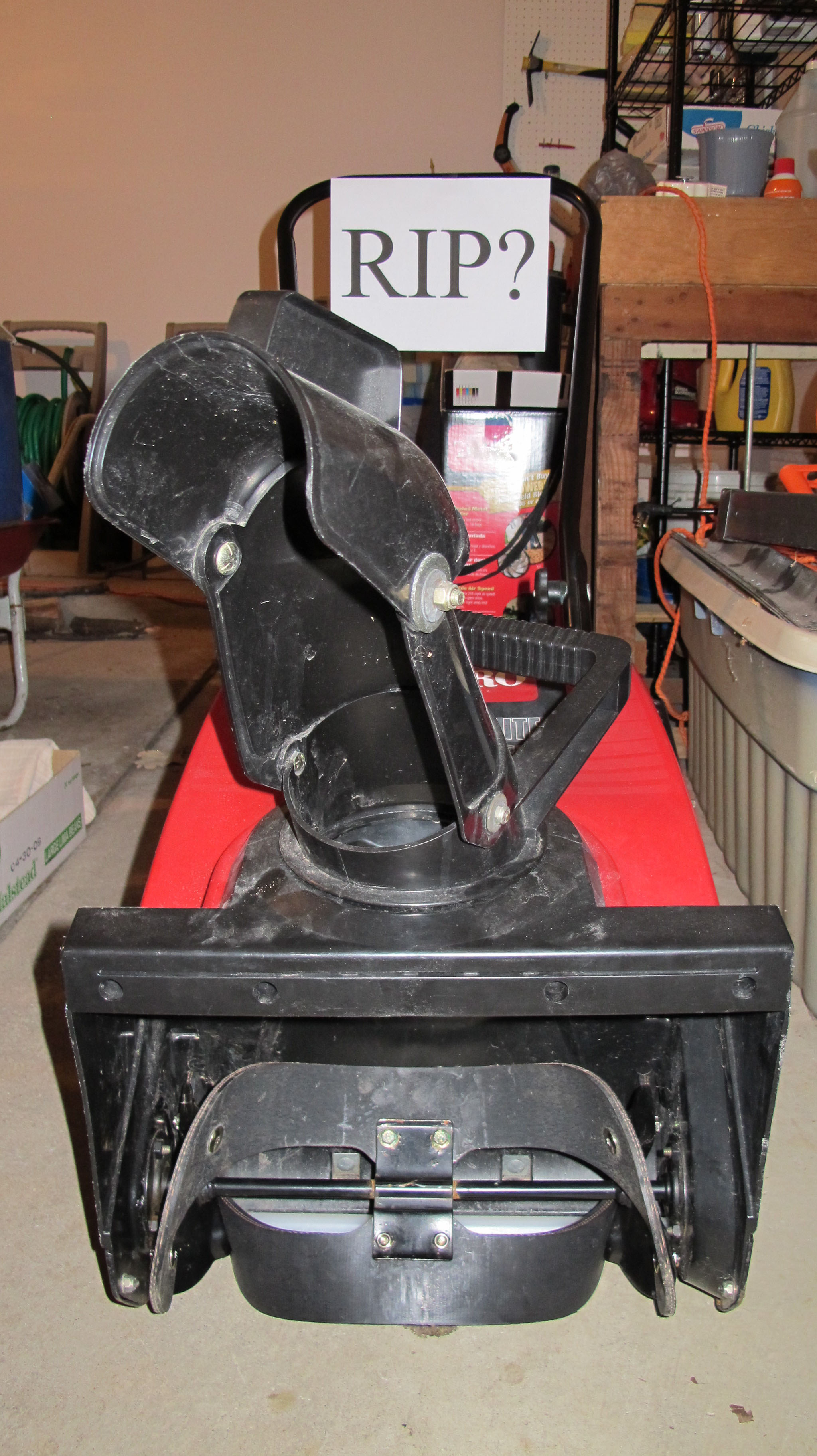
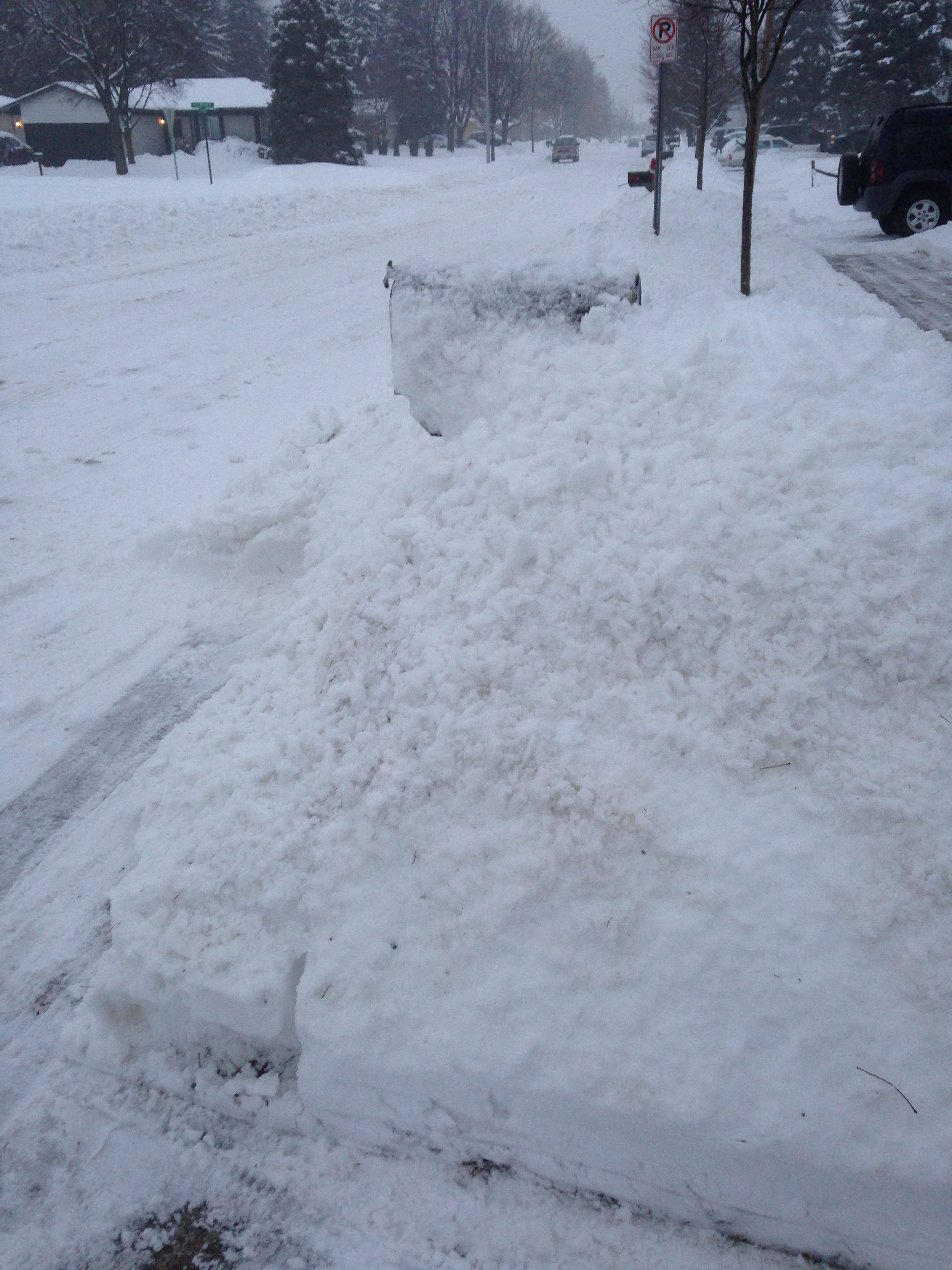
Me and My Dead (?) Snow Blower

2015-02 Pic 1I think my snow blower is dead.  Back in November, I changed the paddles and scraper then started it up to make sure it worked.  The engine turned over nicely and chugged right along.  If it hadn’t, I’d have a new one sitting in my garage today.  Instead, I didn’t know that would be its last breath.  It failed me the first time I went to use it, two months later in January, with the first significant snowfall of the season.  What a pain!

I haven’t taken it in for service, but I’ve tried everything else within my power to revive it.  I siphoned out the old gas and put in new fuel.  I changed the spark plug.  I’ve tried using starting fluid.  All efforts have been to no avail.

It’s not as if I should be surprised.  The machine is ten years old, and I’ve been a neglectful owner.  I let old gas sit in it, over the summer and fall, year after year.  And then there’s the day in 2012 when my neighbor, Don, came over to find out if I could use some parts from his old machine since he bought a new one.  “Have you changed the paddles and scraper yet this season?” he asked.

“No,” I responded.  “I haven’t changed them since I bought the machine.  I didn’t know they would ever wear out.”

To his dear credit, Don didn’t roll his eyes.  He just asked if he could look and then showed me the shreds of what remained of the scraper.  He pointed out how the holes in the paddle that warned you they needed replacing were long gone; that the edges of the snow blower were starting to be eaten away from dragging on the rough pavement.

Don took my snow blower with him that day and brought me back a hybrid between his old machine and mine, having to put my engine into the case of his old snow blower.  Don warned me that the scraper and paddles would need replacing soon and told me where I could get the parts.  He offered to help me if I needed it.

I am somewhat mechanically inclined, but not particularly motivated to work on equipment.  It’s just not something that I enjoy.  So with the 2012/2013 snow season being unusually light, I didn’t get around to changing the scraper and paddle until the start of the 2013/2014 season.  It was a good thing I did because Detroit had a record snowfall of 94.9 inches – more than double our usual average.

2015-02 Pic 2The fact that my little 16” Toro Powerlite handled all that snow is remarkable to me now.  Considering its age and history of neglect, it truly is on a par with the ‘little engine that could.’  It never failed me during that time and went the extra mile as I helped neighbors clear their sidewalks.

Now it sits in my garage awaiting its fate.  I thought I could make it through this season the old-fashioned way using a shovel and buy a new snow blower at the start of the next season.  The sixteen inches of snow we got on February 1st and 2nd has me rethinking that strategy.  Unfortunately, the pickings are slim in the stores right now and even online.  I have considered taking it in for service, however, I’ve heard that can cost as much as half of what a new machine will cost.

So I sit trying to make up my mind on what to do.  Crossing my fingers and hoping we don’t get another sixteen inch snowfall seems foolhardy.  Neighbors have been helping me out with the snow, but I don’t want to take advantage of their good nature.  Calder, my cat, shows no signs of wanting to get outside to help me.  My call for minions in last month’s post has gone unanswered.  Neither have I found a good reference for someone I can pay to come and take care of the snow for me.

I’m happy to hear your suggestions to help me decide on a solution.  For now, I’m watching the weather reports closely, stocking up on Epsom salts, and rooting for an early spring!

Insta-success with Instagram

Twitter is stupid, and Instagram is for people who can’t read.”–Max, 2 Broke Girls

I always think of that quote when I mention Instagram to others.  Instagram is a social site for sharing snapshots.  If you don’t like imagetaking pictures, this post won’t be for you, but you should read to the end just to make sure.

As a writer, or any business owner, you need to find social media platforms that work for you and your desired end goals.  The sites need to be ones that you will maintain and that are fun for you.  I think Facebook is a big time-suck with algorithms that don’t let me see the feeds of everyone I want to in the order that I want to.  Still, I have a Facebook Author Page that I modestly keep up with.  I have discovered informative people through Twitter and it seems to be popular for writers.  It’s hard to keep up with the news feed some days, but there’s some good interaction with my tweets.

What about Instagram?  I’m a scrapbooker and, by default, take hundreds of photos every month.  I’m surprised it took me so long to find the value in Instagram.  My first two photos posted the week of June 10-16, 2012 (138 weeks ago) when I was just playing around with some filters on my first smartphone.  They were pictures of teddy bears.  I didn’t know what else to do with it, so I trailed off and lost interest.  I picked it up again the week of February 2-7, 2014 (53 weeks ago, or just over a year) as an outlet to showcase my writing, initially my haiku poetry.  Now I use Instagram for my writing and…well, stop on over and check out my photos at @dwhirsch.

I use Instagram as a marketing tool as much as a social experience.  I don’t pretend to know everything about Instagram.  I read information from bloggers who have done the research, such as @jenns_trends, who is a goddess on Insta-information.  What I’m offering is my personal experiences and successes adapting those tools.

To use Instagram effectively, you have to decide what you plan to share.  This can change over time, but start with some initial rules.  My guidelines are the same ones I have for my personal blog.  I never post pictures of friends or family without first getting their consent.  I don’t post photos of my house because I have “location services” turned on my phone.  I don’t want people to know where not to find me when I’m out of town.  There’s nothing valuable, explicit, religious, political, controversial or anything my dad–were he still alive–would be disappointed to read about me.

image

Instagram is Insta-easy to use, and the site’s features are relatively uncomplicated and obsessively playful.  It’s free to set up, and I recommend you snag your profile information now: create your Name (generally your real name or business) and Username (what you’ll be known @as). Photos are posted in a square, and most smartphones have a “square” option in the camera settings. If not, or if a square cuts off some important part of your photo, there are many free apps that will shrink your photo and place a border around it. To post, just upload a photo or 15-second video that you take live or have stored in your smartphone library. You can alter your media with black-and-white, sepia or color filters, with additional tools to adjust the image’s brightness, contrast or saturation level.  Finish it off with a frame or vignette, add a caption and press Share.

Now that you’re live, how do people find you?  Your 153-character bio, along with your photo’s caption, and hashtags need to be creative, potent and relevant.  Going back to Max’s quote comparing Twitter and Instagram, the latter is not restricted to 140 characters.  Your photo or video should tell a complete story, but you can use about 440 words to explain that image. This comment section is vital because you can tell your story and highlight your image using crucial hashtags.

Instagram is hashtag heaven. People with similar interests will find you based on how you tag your images.  Common hashtags reflect those you find on Twitter, but you don’t have to be familiar with Twitter to use Instagram.  Think about what your picture is about and tag your image with common terms.  As a snapshot in the moment, you can showcase a twisted #tree branch, a royal #sunset, a #selfie in your awesome new #shirt, an art exhibit or the #bananabread you’re baking.  You’ll get a feel for tags once you start using them.  Tags have no spaces and use just alphabet characters with no suggestions, so type in exactly what you’re looking for.  Much like Twitter lists, you can also create hashtags to group your own images in a somewhat folder design.  Some of mine include #iamapoetess, #SnuffletFinse and #Champsp. Be sure to check out this group’s posts, which are under the same hashtag as on Twitter: #dwriters.

The Explore tab complements tags by suggesting people to follow based on tags you use, images you’ve ‘Liked’ and people or companies that your followers follow.

image

Oh, yes, companies use this.  Instagram is a successful marketing tool, a highly-used space to display products from #clothing to #cosmetics. Check out companies like @Bathandbodyworks, @Ford and @Applebees.

I sometimes stage my work because I want my followers to see the best of me.  I give my followers a peek into my writing, #Zentangle art and my overall creative process while infusing my quirky personality and personal interests.  Think about it: if I follow a particular author, I feel more connected to the “person” rather than to the “celebrity.”  Therefore, I’ve taken my book cover image and overlaid a part of a review on top of it.  I type up actual text from my latest #shortstory or #poetry.  Photo editing can be fun.

Given my goals, I show images of blue-inked-up work as I edit my current draft.  I show the #coffee shops where I #amwriting. I show the stages of my Zentangle #wip so people can see my creation from start to finish. I have too much fun with it on the go not to let it be organic.

Remember, social media is social. I share my work and myself because like Max on #twobrokegirls, the experience on Instagram is more social. I comment more than I Like because the image doesn’t always grab me but the story in the caption section does.
image When someone takes the time to comment on my work, I respond to every–and I mean every!–comment made to me even if that person replied with a smiley face emoji.  I appreciate the time that person spent appreciating me, similarly the gratitude when I receive a #bookreview on #Amazon or #Goodreads.  If nothing else, I reply “Thank you.”  People like you when you like them.

What are the benefits?  The most important is meeting people with similar interests.  I’m reading a #memoir recommended by a follower who is #writing her own memoir. I’m inspired by new #art and #painting techniques.  I’ve been challenged to take pictures in #blackandwhite.  I could meet any number of them for #coffee if I was in their area.  I have a connection to these people. You can do the same with your peers and have fun doing it.

Tall Tales

My husband’s grandmother, Roseanna, prominently displayed a picture of herself sitting atop a camel. The memory had been captured while she was on vacation in Egypt. The one time I visited her home, I noticed the photograph hanging on a wall. I silently admired her sense of adventure and her confidence in traveling alone to a far-away land. She reminded me a bit of the protagonist from the movie, Titanic. In that film, the main character, Rose, nearly froze to death in icy Atlantic waters. She survived and went on to experience life in a way most women of her time didn’t even consider. Passionate living and unconventional travel set these two women apart from others. “Am I anything like them?” I wondered as I examined my own interest in traveling.

During my childhood, my family and I went on summer vacations. The six of us woke before the sun, piled into our Oldsmobile Delta 98, and drove to our destinations. Early into each drive, Dad rolled his window down to let in crisp cool air. His maneuver to jostle us awake worked as we quickly shivered away our sleepiness. Our chattering coupled with the whipping wind to keep him alert.

On one trip, I squished beside my three siblings into the backseat of the car for a nearly week-long drive from Michigan to California to visit relatives. We didn’t have to wear a seatbelt back then. Frankly, I’m not sure cars even had them. Unrestrained, my younger brothers were small enough to take turns lying on the rear window ledge. That helped my sister and me because we had more room to stretch out on the cushy backseat itself. Before you scream, “That’s not fair!,” know that we girls needed the extra space so we could take turns strategically holding a white pail for those moments when our motion sickness couldn’t be contained. Besides, we were older and bigger than them, and I’m sure we had “Called it!” first.

Monotony made the drive close to unbearable. To pass time, we counted red cars to compare with the number of blue, gray, white and black ones. We played “I Spy.” We kept watch for different state license plates. There was no mistaking us as The Brady Bunch, however. We weren’t cheerfully singing any song but did manage to get through most of one, “99 Bottles of Beer,” after running out of other things to do.

We tried to come up with novel ways to have some excitement and fun along the way. Once, my family took a short break at a rest stop so we could stretch our legs (that wasn’t the fun or exciting part). After we got back into the car, my sister and I convinced my brother, Gary, to crunch down on the floor and hide, while we girls patiently held in and planned for an expertly timed exclamation. After several miles one of us yelled out, “Where’s Gary?!” LOL, right? It didn’t take long for Dad to find Gary and for all of us to see that Dad didn’t appreciate our joke. I can’t remember which of us took the most blame, but Mom swears that it was really an accident when I was lost on a later trip to an aquarium.

We eventually made it to Grandpa’s house where I met aunts, uncles, and second cousins for the first time. We visited Great-Grandpa who was a talented landscaper earlier in his life. In his backyard, we saw a tree that produced two different varieties of fruit. He had created his own hybrid by splicing a fig tree and grafting some different fruit tree onto it. I can’t remember what the second was. His peach tree, however, left a bigger impression on me. It was naturally free from pesticides and the peaches would probably be considered organic by today’s standards. I still wish I had known that before taking a bite and seeing little squirming, protein-enriched worms inside. For many years afterward, I couldn’t make myself eat another peach.

Dad risked his life on a number of different road trips. On several occasions, he’d spot turtles trying to cross the freeways we were on. He reacted by quickly veering off to the shoulder and parking the car. The rest of us would then watch as he dashed in and out of traffic to collect an additional traveling companion. The clean, emergency white bucket came in handy to hold our newfound friend. Dad always knew what kind of turtle it was. The sharp jagged edges at the rear of its shell gave away its identity as a snapper. A pretty red bottom meant it was a painted turtle. A box turtle was just that: boxy. It was never long before we released each back into the wild.

Another time, he picked up three fiddler crabs and placed them in a paper cup for Gary to hold on the car ride. “Don’t spill them,” was barely uttered before those little creatures toppled over and scattered for hiding places. My sister and I shrieked and squirmed to get out of the backseat as quickly as possible. There was no way we were getting back in that car until those creepy crawly things were recaptured. The problem was that Dad could only find two. He wasn’t afraid of getting pinched by the renegade, so he tried to find that third crab by reaching into crevices of the cushions. Eventually, my sister and I were forced to get back into the car and we all continued on our way. That was a long, worrisome ride, but we were never bothered by the phantom fiddler, which had proven to be a great escape artist.

Dad had flown in tiny airplanes as part of the Air National Guard, and he vowed to never go on a larger commercial flight because he wouldn’t be given a parachute. If I were ever going to experience flying, it wasn’t going to be with him and the family. Therefore, my first plane ride was with friends on a trip to Florida for Spring Break. For several years, I could recall the handful of times I had flown. Most often, I dreaded air travel. Turbulence made me tense. I fervently reminded myself that flying really was safer than driving and that nothing was better than arriving at my destination in hours instead of days.

My interest in traveling grew after I married. My husband and I looked forward to annually visiting his brother and sisters who lived in California. After he and I had children of our own, I could no longer remember how many flights I had been on and my nervousness about flying was easing. Our children actually helped me get more comfortable with that. Their take on air turbulence was far different than mine. When we hit a rough patch for their first time, they squealed with delight instead of holding onto their armrests for dear life. What I feared, they loved.

When a friend of mine recently asked if I had a favorite vacation spot, I admitted that I didn’t. Each place I’ve been to has offered something unique and charming. Soon, I’ll tell you about them. You see, I’m afraid if I wait too long, I won’t be able to recall the details very well or that my perceptions will evolve into tall tales. While trying to verify some facts about Roseanna and her inspiring photograph, I found out that no one in the family remembers her having gone to Egypt…or having posed for a picture on a camel.