Category Archives: Nonfiction

Write What You Know

When I first started writing for Deadwood Writers’ Voices a few months ago, I agonized over what I was going to write about. Then I went to California. There I read some letters that members of my family, who I’d heard about but never met, had written long ago. The letters brought them to life. I could hear my relatives speaking in their own words. I felt that we’d finally met.

I started writing their stories. That was very helpful, besides being enjoyable. I didn’t have to ask myself each month, what am I going to write about? I knew. I was going to write the next part of the story.

Now the series is finished. I need to find something new to write about. This morning I decided to try a different approach. Instead of panicking, I was going to do what all the books said: Write what you know. To be honest, I didn’t have much faith in this approach, but what did I have to lose?

I decided to go swimming. It’s my favorite form of exercise: 45 minutes in the warm water pool going back and forth. I feel so good afterwards, relaxed, happy, stress free. The icing on the cake is I’ve actually lost a few pounds along the way.

It was a perfect day. The sun was shining. It was still cool outside. I felt energized.

I threw my swim bag in the front seat, popped into my car and started driving. It’s eight minutes from my garage to a parking spot at the WCC Health Club.

I drove out of the condo and turned left to go down Dixboro Road. Wow! All I could see on my side of the street was a line of red taillights and not one of them was moving. Ugh! It was five minutes to nine.

The first intersection was exactly one mile south on Geddes. It handles all the cars of people going to work coming down Dixboro and those exiting from I-23 to go down East Huron River Drive to get to Washtenaw Community College, St. Joseph Mercy Hospital and, most important to me, the Health Club.

It’s always busy this time of day but never like this: One mile of taillights and no one moved. This was a first! Then I remembered last night’s storm. The stoplight at the corner was probably out. And, knowing the Ann Arbor police, they probably hadn’t sent anyone to direct traffic. Their philosophy is, “Let them work it out.”

In the distance, I could see the headlights of three cars coming toward me. Suddenly the two cars in front of me made very fast U-turns and went up Woodridge Avenue to my right.

Mmmmm. If I’m quick, I could do the same thing. That would take me to Earhart, which would bring me to Plymouth Road where I could get on #I-23 and go south around this mess to Washtenaw Avenue. Then I could turn up Golfside and, voilà, I’d be there. In other words I could make a circle going west around the whole area, come in from the east side and have my swim after all. It shouldn’t take more than about ten minutes.

Congratulating myself on my quick thinking, I turned onto Plymouth Road and drove across the top of I-23 so I could get on the ramp going south.

“Ugh!” was all I could say. Looking down at the southbound lanes I wanted to cry. No one was moving there either. It was just one long parking lot.

O.K. now it’s time for another brilliant idea and this one better work. I could go south on Green Road, then west a little to Huron River Parkway. I could still make the western circle and I’d be down on Washtenaw, which hopefully would be moving.

Then I looked up. Straight ahead, Plymouth Road was stopped. The light was red. The intersection was clogged. No one was going in any direction and it didn’t look like anyone would be anytime soon.

Suddenly, although the sun was still shinning and the air was crisp, it wasn’t such a beautiful day anymore.

Luckily I was able to maneuver myself into the left lane and turn into the strip mall. I drove past Zamaaman’s, the Korean Restaurant, and turned left past Busch’s. Now I could skip the sea of cars at the light and exit onto Green Road.

Heading south on Green Road, I started to smile again: no traffic. The same was true on Huron Parkway. I just floated along and made a left onto Washtenaw and even that wasn’t too bad.

Best of all, every light was working all the way east to Golfside. I turned left at East Huron River Drive, drove past St. Joe’s and into the WCC Health Club’s parking lot at exactly 9:33. Not bad, only 38 minutes to drive what should have taken eight!
The Java Script: Where Genres Come to Life

The following post is one of several reasons I love my job. Travel can be tough, like the time I worked in 3 different states in one week while fighting flu-like symptoms. Then there are times like this trip that introduced me to The Java Script. I met people who love their job, running a unique and impressive bookstore that I happened upon via Yelp. It’s stores like these that gives me hope that the independent bookstores can thrive. As I continue these journeys I’ll be adding more pictures to my Pinterest board, and tweeting about them at @jmccarthyeds. There are many precious gems to keep alive. Here’s another one. Enjoy.

The Java Script: Where Genres Come to Life by John McCarthy

JavaScript_storefront

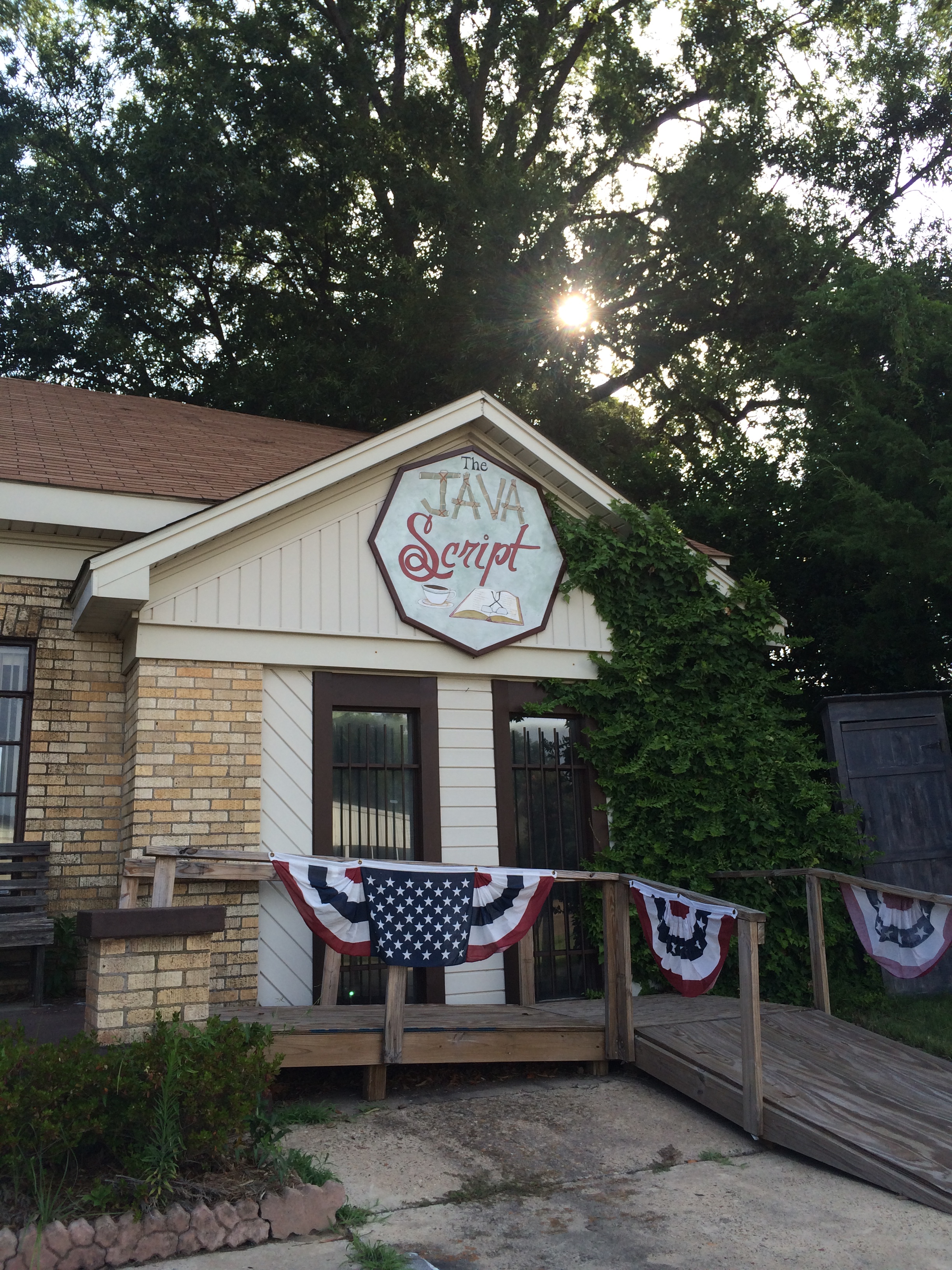
Texarkanna is a tale of two states shared by one city. Three hours away from Dallas, its distant cousin—Texarkanna is a center where all roads must pass through. Some might look upon the city with its many pawn shops and see what might have been. This would be an error of lack of vision. Like any urban community, the city has many worthwhile places to stay, eat, and visit. One such gem is The Java Script, a mom and pop (literally) bookstore on the Arkansas side, a block away from one of the main thoroughfares.

Owners

The bookstore name implies a café that serves coffee. No coffee is for sale as of this posting, although if you ask Debra Hall and Gene Keller, the owners, for a cup, they might provide one, given their hospitable nature. When I entered the store, they treated me like an invited guest, and I’m sure that’s how everyone coming to the store is made to feel. Debra Hall gave me a tour of the rooms—each decorated to fit the genre theme of the books it housed. I felt like I was on a journey inside the worlds of Western, Mystery, Science Fiction, and others. My favorite was the YA & Children’s room. Carpeted in fake grass and a picnic table, the bookshelves lined one wall in the brightly lit room. In the main room there is a bookcase of books by local authors and books signed by authors.

The store once held antique typewriters and other artifacts. Unfortunately, a week prior to my visit, those items were stolen. When you visit this store, and it is worth a visit if you are within 3 hours, such as  Dallas or Little Rock, you’ll realize how depraved a robber must be to intrude on the lives of these people. I arrived at the store with an hour to spare before they closed. That day was Debra’s birthday, which they did not mention until I was ready to leave. Had I known, I would have left sooner, but such is their hospitality.

This is the first bookstore that I’ve explored that did such a brilliant job of designing the rooms based on the genres they sold. Amazing! The selection is modest, yet substantive enough that I found 5 books to enjoy.

When passing through Texarkanna, Texas, visit The Java Script. The experience will be better than a caffeine boost. What gems of bookstores have you discovered?

The Java Script

1313 Hazel Street, Texarkana, Texas 75501

http://www.javascriptbookstore.com/about-us.html

Here are pictures from some of the rooms. Can you name the genre for each room? Post your guesses in the comments 🙂

1.ReligionPhilosophy 2.SciFi 3.Western 4.YAChildren

What Happened to Abram’s Money?

What did happen to Abram’s money? He never made it to Switzerland so he couldn’t have taken the money out or sent it to America. I used to wonder, when I was a child, and my Mom entertained us each night before bed by telling us stories about her two trips to Europe and how hard it was trying to bring Abram to America, what happened to the money?

As I got older I understood that, in those days, once you put money in a Swiss bank account, you only needed to know the account number to take your money out. No account ever had a name attached to it. People put their money in Switzerland’s banks because their laws allowed depositors to keep their accounts secret and anonymous.

Then I remembered Maximillian, Abram’s younger brother. He had come to America twice with Abram, in 1919 and 1929. From Mom’s stories the two seemed to always be together. According to the letters I read, they were both together in Beirut, Lebanon in the early part of 1941. Abram was thinking about money at that time because he wrote to my grandparents that he was almost without funds and so he couldn’t stay much longer.

Did Abram give Maximillian the account numbers then? Just in case something bad should happen to him?

I talked to my Mom, who’s 101, and asked her why Maximillian didn’t go with Abram when he started out for Switzerland? It seemed strange that the two of them would separate at that point.  She didn’t know. But the two did separate with Abram traveling to Switzerland and Maximillian going to Romania.

She remembered that at some point, when Maximillian was in Romania, he was captured by the Nazis and put in a German concentration camp. She didn’t know which one. He escaped once. But then he was caught and imprisoned again.  At the end of World War II the Russians liberated the concentration camp. He was out for a while. Then the Russians arrested him and put him in one of their camps. Some time later, he tried to escape and this time he was successful.

Maximillian contacted the Red Cross. They were able to connect him with my grandparents. He told them that he was out, but he needed money desperately. I remember that for years my parents and grandparents talking about what they were sending to Maximillian to sell. At one point he wanted material to make men’s suits so he could sew and sell them. My grandparents wanted to send him ready-made suits. It would have been easier for them. But, no, he insisted they send him the material instead. Why? We never found out.

Another time, they thought he could make more money, and it would be cheaper for them to mail, if they sent him watches. He was very angry. Apparently, the Russians or the Germans, I’m not clear which, beat him. They thought the watches contained some type of device to make a bomb.

Then there was the period when they would send him jeans. American Levi’s were a big hit in Europe after the war. He could sell them easily on the street.

Somehow, during this time, he made his way from Bucharest, Romania to Dusseldorf, Germany. I don’t know how he did it. I just googled his journey. It’s 1,221 miles, the distance from San Francisco, California to Denver, Colorado.  He had to travel through Hungary, Austria and halfway across Germany to reach Dusseldorf.

One time, when he was in Germany, in1955, Grandma sent him a copy of A Star of Hope, the poetry book Papa had written and dedicated to her for their 50th Wedding Anniversary. Maximillian wrote back. He was furious. Apparently the German censors, or someone in authority, thought it was some secret code and he was in serious trouble for a while.

Time went on. More packages were sent to Europe with things to sell. Then, at some point, Maximillian wrote to my grandparents and parents. He thanked them all for their help and let them know that they no longer needed to send him things to sell. He was fine. Life was good. He was working in a bank in Dusseldorf, Germany.

My parents and grandparents always believed, after they got that letter, that he had found a way to access Abram’s money. They were so close. He was his younger brother. It seemed only logical that Abram had told him the numbers of his Swiss bank account. We always believed that that was the money he lived on. The job in the German bank was helpful but the salary wouldn’t have been enough for the life he was living.

“Well, time marches on,” as my mother says.  My parents and grandparents wrote and Maximillian wrote back. Many years passed. Grandma and Papa were no longer here. One day my Mom got a letter from Dusseldorf, Germany, from Fanny. Who was Fanny? She wrote to my Mom that she and Maximillian had married shortly after the war. Maximillian had just died. She wanted his family to know.

My parents were stunned. Maximillian had never mentioned a wife. They had no idea. To this day my Mom says, “Why? Why didn’t he tell us?” They would have been so happy to know he had somebody.

Mom and Fanny corresponded. It was complicated. My Mom would write a letter. Fanny would get it. She didn’t speak English. So she would take several buses to a friend’s house who did. The friend would translate Mom’s letter for her. Fanny would write an answer. The friend would then translate it into English and Fanny would mail the letter to Mom.

This would happen once a month for many years. Then one day Fannie wrote that she was very old. All the traveling by bus and transferring from one bus to another to get to her friend’s house so the letters could be translated was too much for her. She couldn’t do it any more. My Mom heard nothing more for a while. Then Fannie’s friend wrote that Fannie too had died.

In the end, Abram’s money did a lot of good. Knowing how generous he had always been in life with his family, I think he would have been happy with what his money accomplished after he was no longer here: It helped Maximillian and Fanny have a nice life and allowed Fannie to live comfortably all the years after Maximillian died.

I’m Nothing Without You

A writer is supposed to write with a particular audience in mind. My editor tells me that just about every time she reviews my articles. I know. I know. I know. It’s something I’m sure I learned in grade school and have been striving to put into practice every time I sit down at my computer. When I type an e-mail, it’s to someone specific. A thank you note, it goes to someone specific. Why then, do I find it so hard to figure out whom I’m trying to reach through each of my blog posts? Can’t I just love to write, without having to please anyone other than myself? Of course not! Unless I’m writing in a diary, I hope to be interesting to somebody else.

My problem is not simply a difficulty in identifying an audience. It’s complicated by my desire to not exclude anybody. When my kids were young, I enforced a house rule that “everybody plays together or your friends go home.” No hurt feelings; no one left out or sitting on the sidelines. Honing in on just one specific target audience is hard for me, because by focusing on one group, I’m afraid I may alienate the others out there on the fringes, whom I also care about. Fourteen years of experience with Vacation Bible School shows me that the ever important audience varies according to one’s perspective.

I once thought VBS was only for children. In 2000, my family and I joined a relatively small church of about 200 members. We spent the first year getting acquainted with the worship services and the people. We weren’t expected to serve in any capacity. It was our time to settle in and get comfortable. Summer came, Polar Escape (a winter-wonderland program) was being promoted, and I had to ask, “What exactly is VBS?” and “What do you do at VBS?”

I was given standard answers: VBS is where children come to learn about God in a fun, creative, inviting environment. They often make crafts, participate in games, eat snacks, learn dance moves to songs, and hear Bible stories. I’ve since discovered that, beyond those things, a great experience depends upon who hosts VBS, the curriculum they purchase or create, and the amount of energy people involved with the program are willing to put in. Each unique presentation is limited only by imagination, time and a budget.

At St. Timothy Presbyterian Church, where I had that first year to relax, our VBS accepted children as old as sixth-graders and as young as three-year-old, potty-trained preschoolers. The kids were dropped off by their parents for a few hours each morning, Monday-Friday, for five days. Every child, regardless of denomination or church affiliation, was welcome. Older youth and adults led the young children through each planned activity. Unconventionally, the church absorbed all costs. Pastor Janet Noble-Richardson was adamant that money would not interfere with a child being able to attend. She insisted that the outreach would be free to the community. For some parents, VBS offered a perfect time to run errands without the kids in tow.

When I arrived to register my seven-year-old son and nine-year-old daughter for their first VBS, I was surprised at the transformation my church had undergone. We walked through hallways full of artificial snow, life-size penguins, and elaborately painted backdrops. The kids weren’t just going to attend VBS, they were going to experience it through all five senses. It was impressive, but I really didn’t know all that I was missing until the next year, when I was recruited to teach the preschoolers.

My twin boys were about to turn four and would be with me in class. I had been forewarned that the preschool teacher’s role was probably the hardest, due to the children’s short attention level, their possible anxiety in being separated from their moms, and the fact that our group didn’t rotate to other classrooms like the older children did. If nothing else, I was well-prepared with patience, a schedule of activities, and supplies to keep us busy. My room was staffed with three other parents, which gave us a ratio of about one adult for every four children. Yet, just minutes into our day together, my son was bit on the arm by a child I didn’t know. Eric cried. The boy cried. Eric bled and I held him on one hip as I tried to stick to the plan. I delayed a trip to the doctor’s office for antibiotics, because I had a class to manage. When I explained the incident to the boy’s mother, at the end of the morning, she wanted to know what my darling had done to antagonize her son. Day one couldn’t have ended soon enough.

The following year, I volunteered to once again teach the preschoolers…and the director let me. Thankfully, everyone was fine, we enjoyed our time together, and I fell in love with my VBS audience of boys and girls.

For nearly a decade, I took on an additional role and helped decorate the church in preparation for our guests. Other members and I painted, sewed, sawed, hammered, designed, glued and came up with intricate ways to amaze. We built outdoor classrooms: first a whale, then a hut, a burro to crawl through, even a ship. A stuffed lion, giraffe, buffalo, horse, cow, puppet theater, costumes for the closing plays. Heavy jobs often went to the men, but ladies weren’t shy about wielding hammers and staple guns too. Painting was popular for anyone, between five and seventy-five, who could hold a paintbrush or sponge. Forget the budget. Dozens of us donated time and money to finish our jobs. The only things slowing us down were our need for sleep, occasional illnesses and injuries.

Here was a whole other audience, men and women of all ages working together, committed to serving. VBS was for us too. We formed unforgettable memories and lifelong friendships.

Kelly Bixby photography

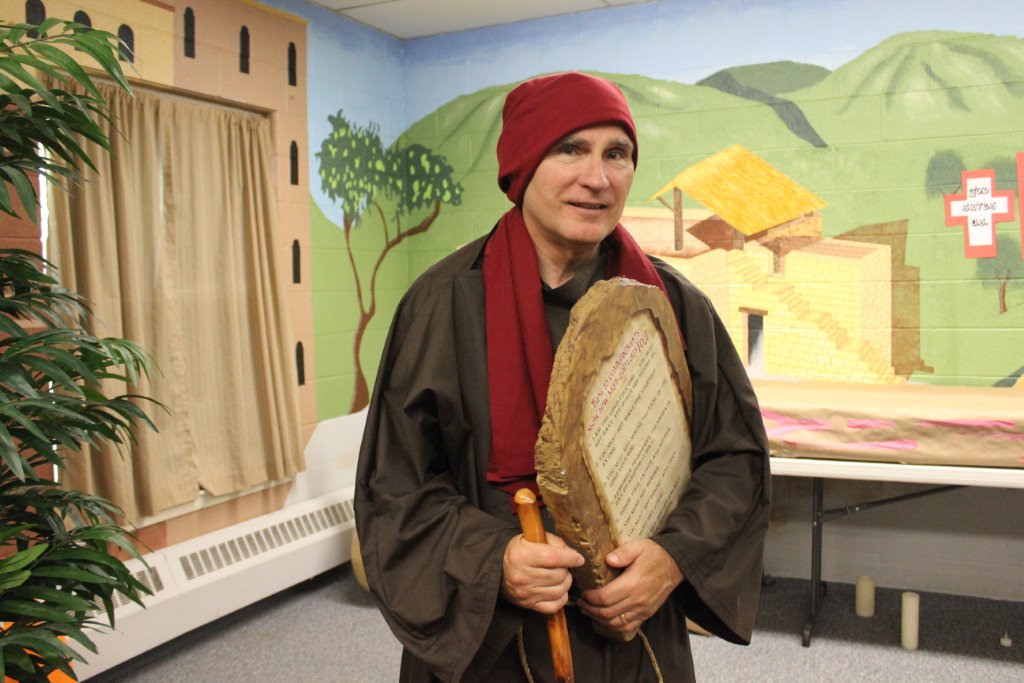
Annually, I’m still involved with VBS at a different church. Now, the audience has become easier for me to single out. It’s expanded to include the grandparents who enjoy watching their grandkids perform a song, the retirees who step into new roles as musicians, camel herders, weavers and rope makers, and the visitors who are in awe as they admire and smile at the scenes I’ve helped create. VBS is for my friend who called to find out what she had missed on the day the children roasted marshmallow Peeps over a pretend fire. It’s for my current pastor who I recently found hiding in a storage room. He was dressed as an ancient Israelite and eagerly awaited his entrance into a skit. It’s for everyone I’ve had the pleasure of dancing with as we sing praises to God.

There are some people who don’t understand the hype. They think it’s totally absurd to spend time and resources on temporary decorations. They say that Vacation Bible School doesn’t require hours of cutting, pasting, hanging, and gluing. Hallways and classrooms don’t have to be elaborate. Buildings don’t need to get dressed up with palm trees and waterfalls or rocket ships and aliens. I’ll admit that all of that is true. Getting children excited about God and helping them get to know Him better are the goals. But, the cynics have a totally different perspective than I do. At least I’ve figured out Whom the extravagance is really for–finally, I’m sure of my audience.

Let’s hope it doesn’t take me another decade to identify who I write for…

Entering the Ogre’s Cave: Book Castle’s Movie World

Metaphors can be a tool for building strong visual connections and entertain. I’ve thought often about this gem of a store that I found hidden in the most unlikely place. What follows is my attempt to bring to life the emotional links to a place worth visiting if you’re ever in downtown Burbank, CA.

Book Castle’s Movie World in Burbank, CA by John McCarthy

There was once a bright shiny kingdom where the homes and castle were pristine from the care by the townspeople. The farms resided along a river that sparkled at night and provided crisp cold water for crops and an abundance of fish to feed everyone. But one day an ogre ventured into the area. It devoured the crops, drained the river with it’s insatiable thirst, and gathered all the fish for it’s personal store. The townspeople pleaded for help, and the King’s son, a brave and well loved protector, rode from the castle on a great stead, and an army at his beck. At the ogre’s cave, half hidden by a garden of flowers and thick trees, the prince shouted,

“Monster, I challenge you to single–”

The ogre, stung by being called a monster, roared, “Combat!”

“No.” The prince was no fool. Fighting this gigantic monster would likely mean his own death. “I challenge you to a drinking contest. Winner gains all that you have stolen.” At the sweep of his arms, soldiers rolled forth two large casks.

The Ogre laughed. “I’ll not be tricked into drinking poisoned ale.” It thundered forward, swinging a mammoth club carved from some of the hardest oak.

“Ah monster, you wound my honor. I shall drink from both casks to prove that both are the same.” The prince quickly poured a cup from each, and with a flourish, drained both mugs.

The Ogre paused. It’d been long since he’d had such fare, and the victory was assured given his greater mass. “I accept, and after I’ve won I will grind your bones into my fish soup!”

The Ogre ripped a hole into one cask and drained it before the prince could finish his next cup. “I win.” The Ogre roared, before draining the other cask.

“As do I. You shall sleep deeply for a thousand years,” The prince said.

“But you drank it too.” The Ogre thumped to it’s knees.

“Aye. And I took the antidote before coming here. Now sleep without dreams,” the prince commanded. The Ogre fell forward, deeply asleep.

On exploring the cave, amidst the piles of bones from fish and beasts, the prince and his soldiers recovered the crops and found many hidden treasures that helped the kingdom recover.

. . .

Downtown Burbank is a trendy area with a mix of stores and restaurants ranging from trendy to local hangouts. Less than a 30-minute drive to downtown LA—depending on time of day and traffic—it reminds me of being the little sister to downtown Berkley where the museum quality space of Book, Inc. resides. Great weather for walks through a nice area. It’s a couple of blocks away from a mini-outdoor mall that is anchored by a Barnes and Noble (BN). BN maintains a standard spacious two story storefront with pristine shelves filled with the current titles across many genres, and the sound of the blender draws you to its café where you can get a drink and a snack, while reading from your literary selection. The real adventure is found several blocks away.

IMG_1802

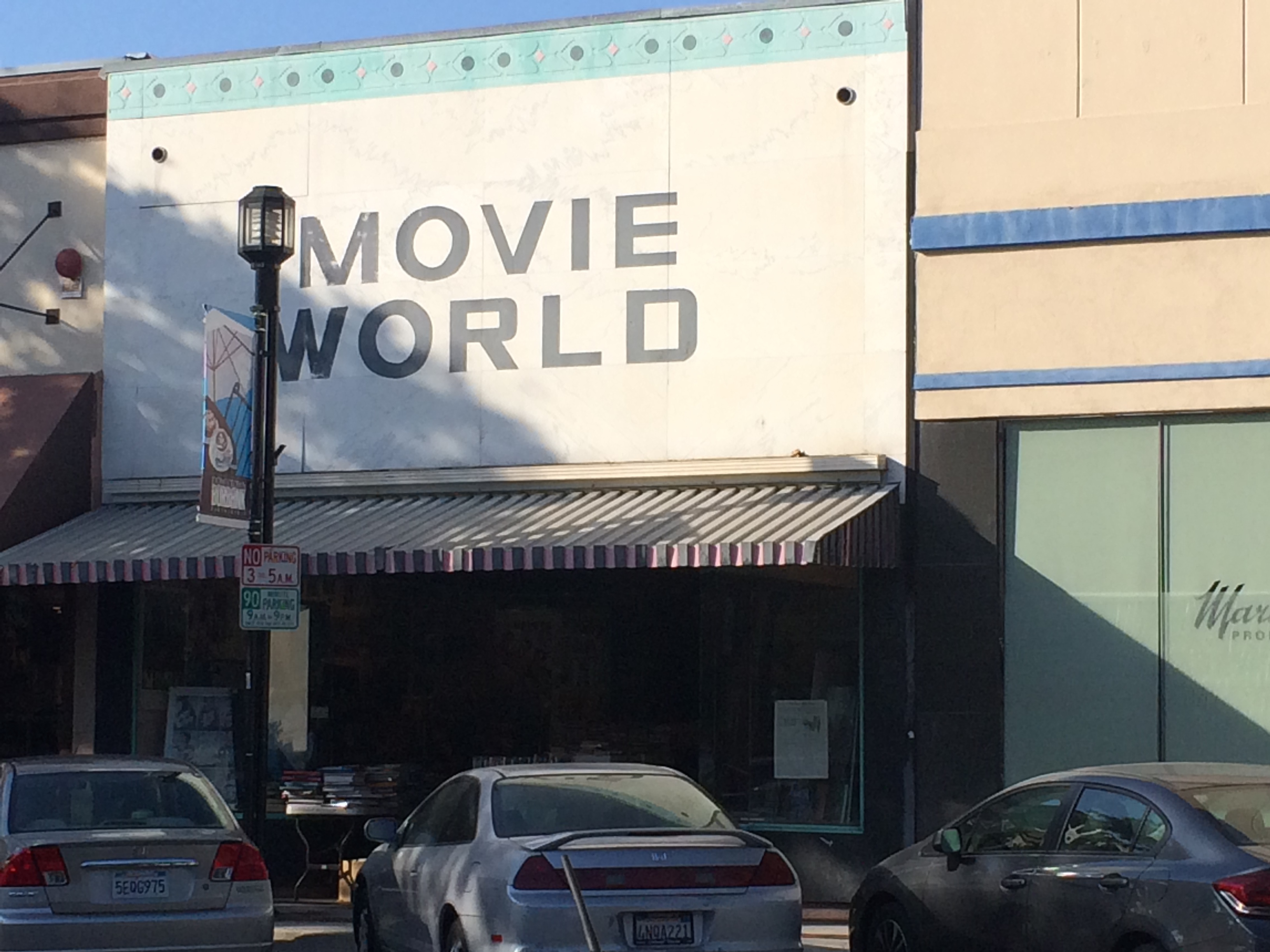
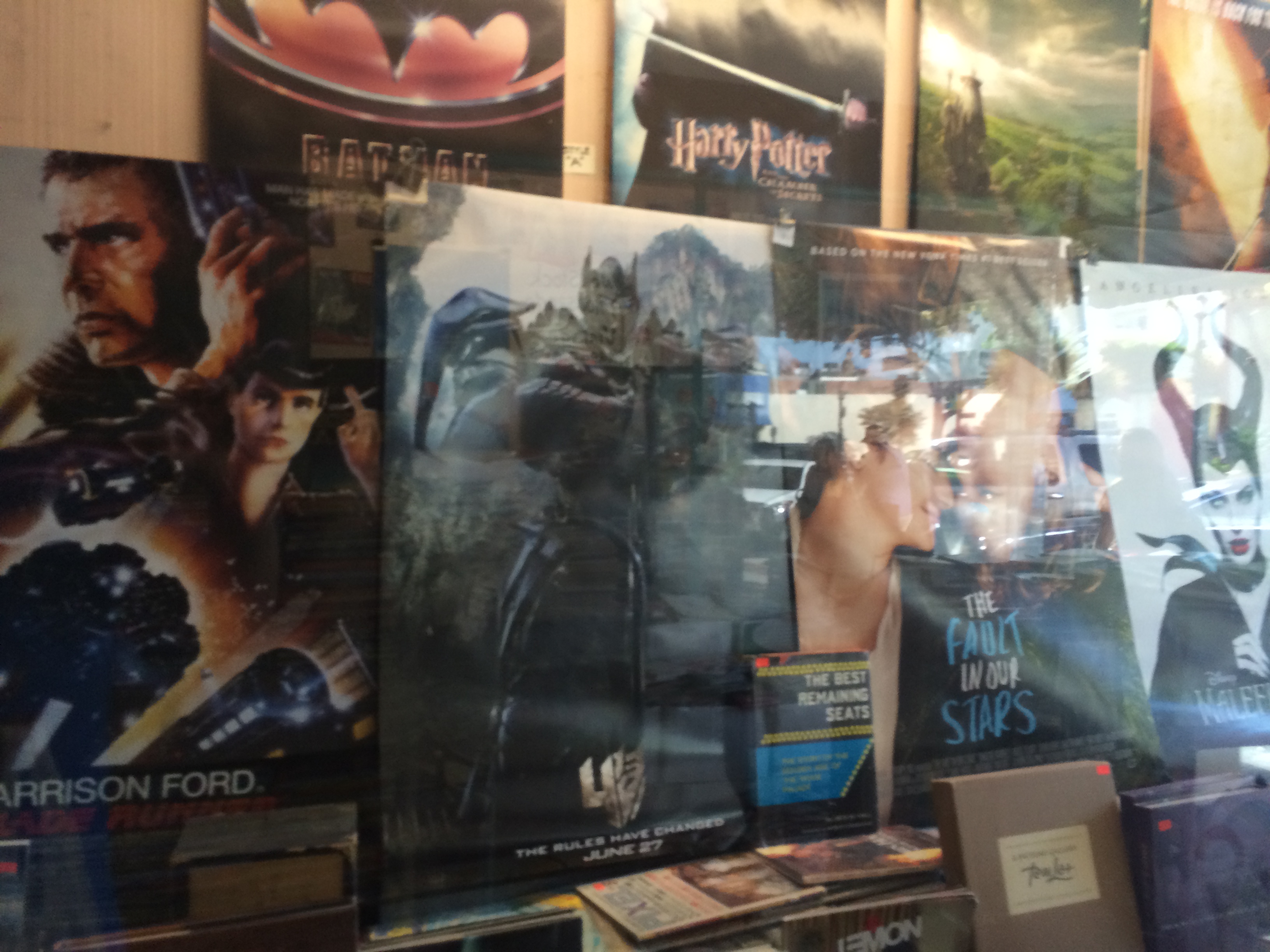
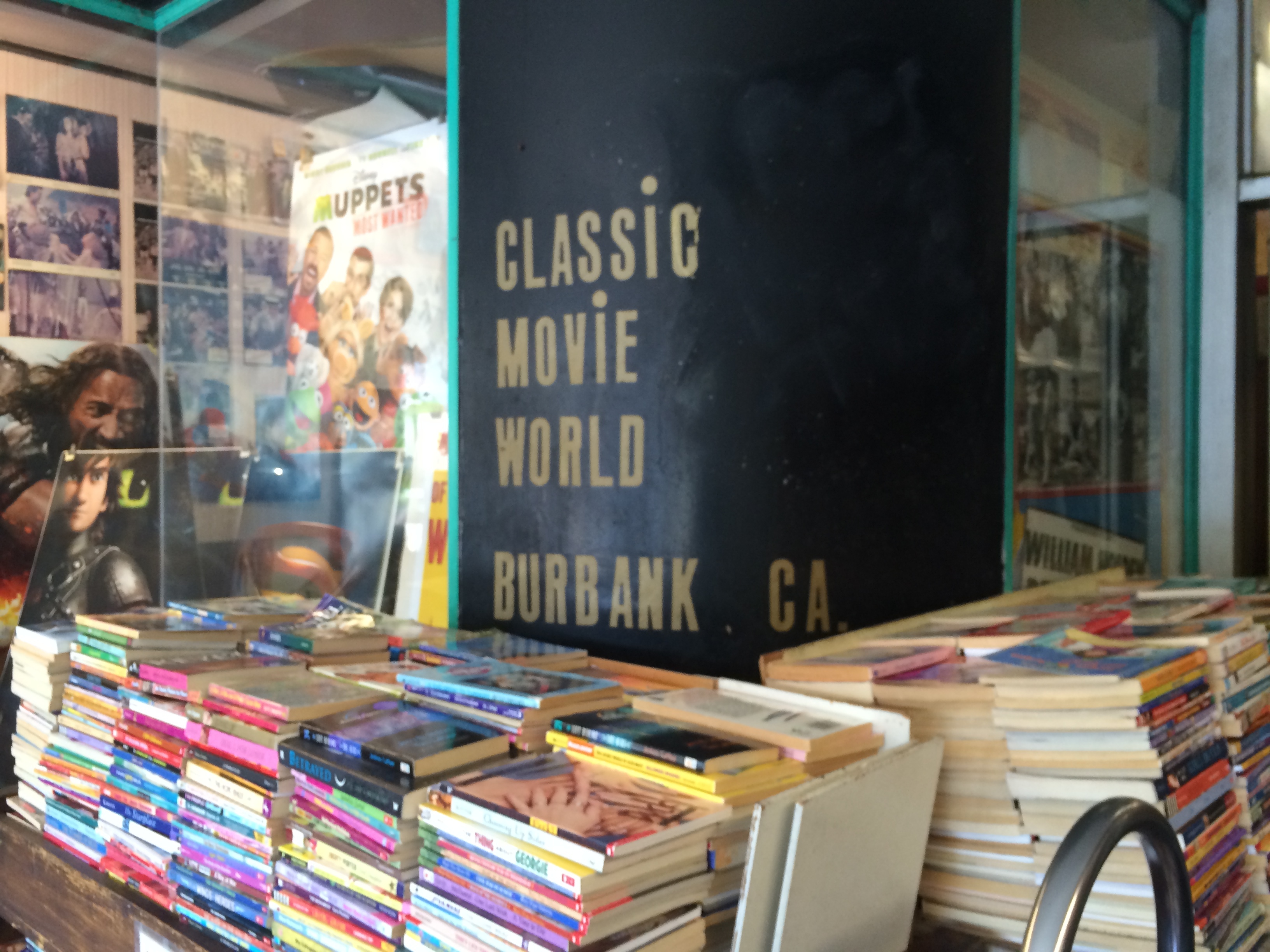
Almost hidden in plain sight is a dark space between two stores. From a distance it looks like a store that’s been closed, yet is cluttered with movie posters from an era of beta and vhs cassettes. A sign reads Movie World. Tables piled with books sit outside of the store like guardians of a dark cave that—in such a trendy neighborhood—draws one’s eyes away from the store like a magical protection ward that transmits the psychic message, “Pass this place by. There is nothing of interest for you.”

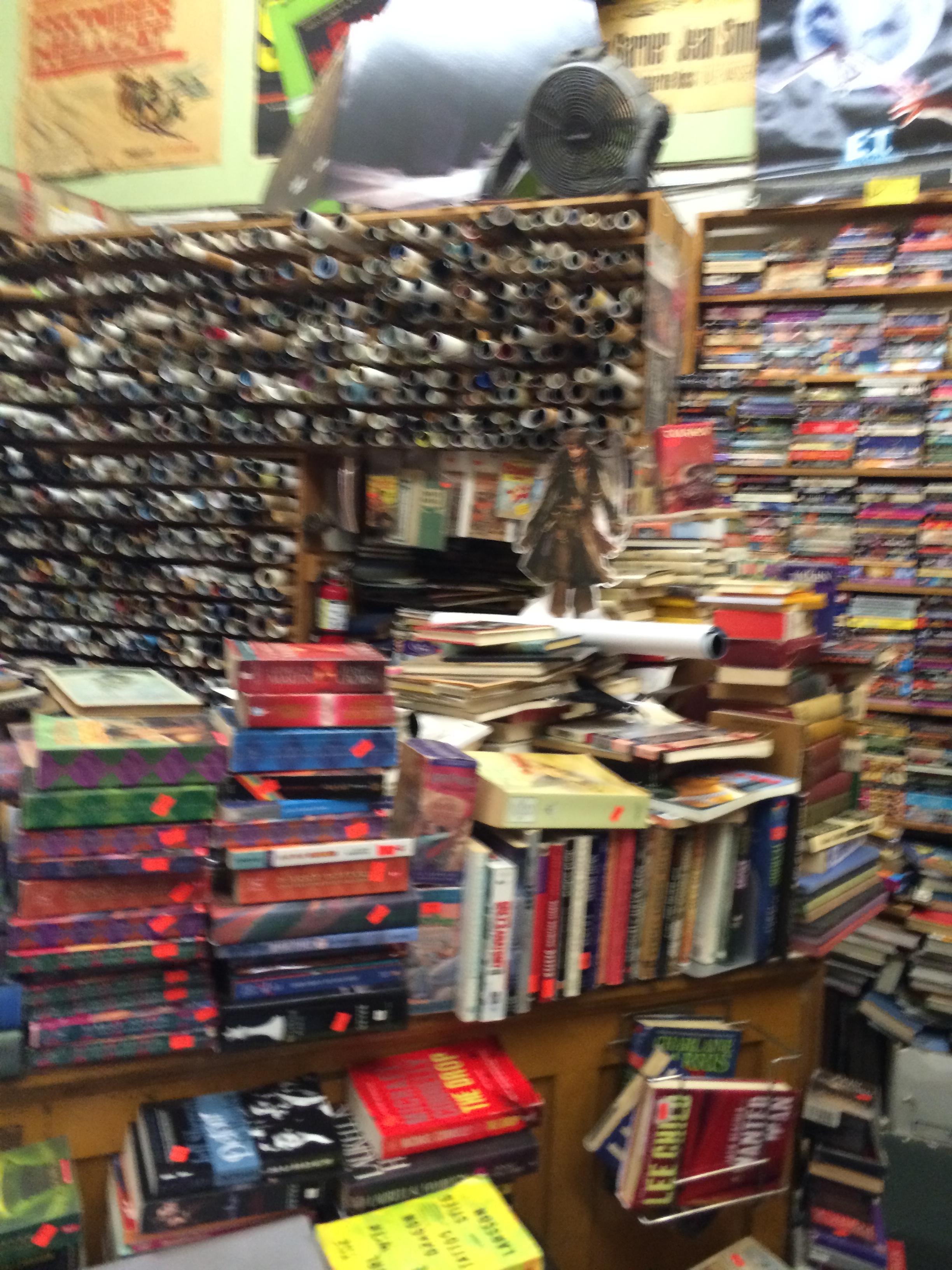
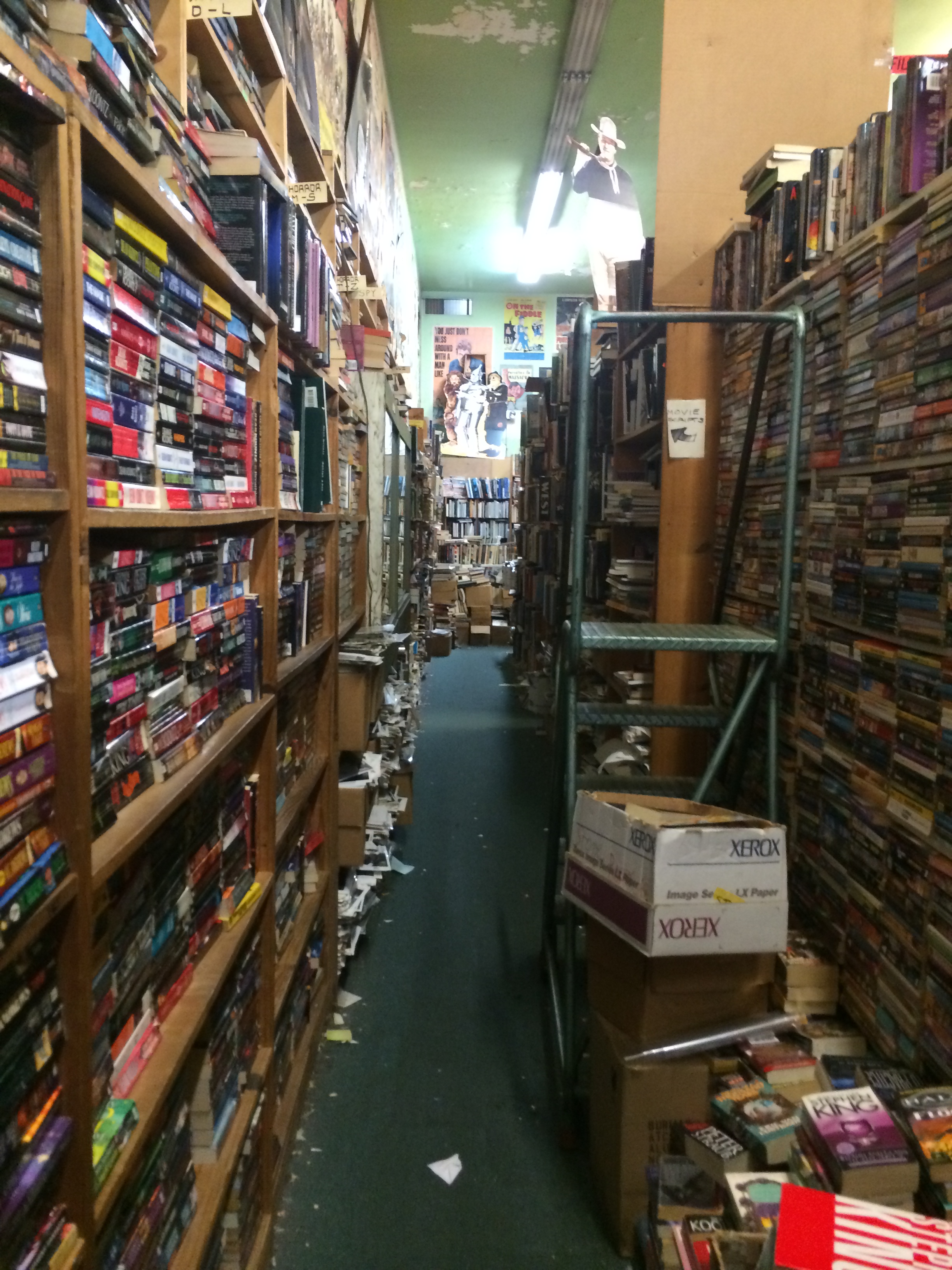
I ignored the warning and peered deeper into the shadows to find an open door where more books lay. Curiosity pulled me inside to find a world, vastly different from the outside. The ogre’s cave had tall bookshelves that carved narrow labyrinths to the back of the store space.  Like piles of bones left by the ogre, books are stacked on the floor and crammed into shelves, thus creating narrow paths to explore. All genres are present and grouped accordingly. The books are in good condition, despite the untidy piles and tightly packed shelves.

IMG_1792

It’s best to be like an archeologist who explores a past civilization than a treasure hunter. If you know what author or title you seek, you have a better chance of making great finds than to scan and hope to stumble on something special. There is simply too many books in a system that appears composed of random piles of books grouped by genres.

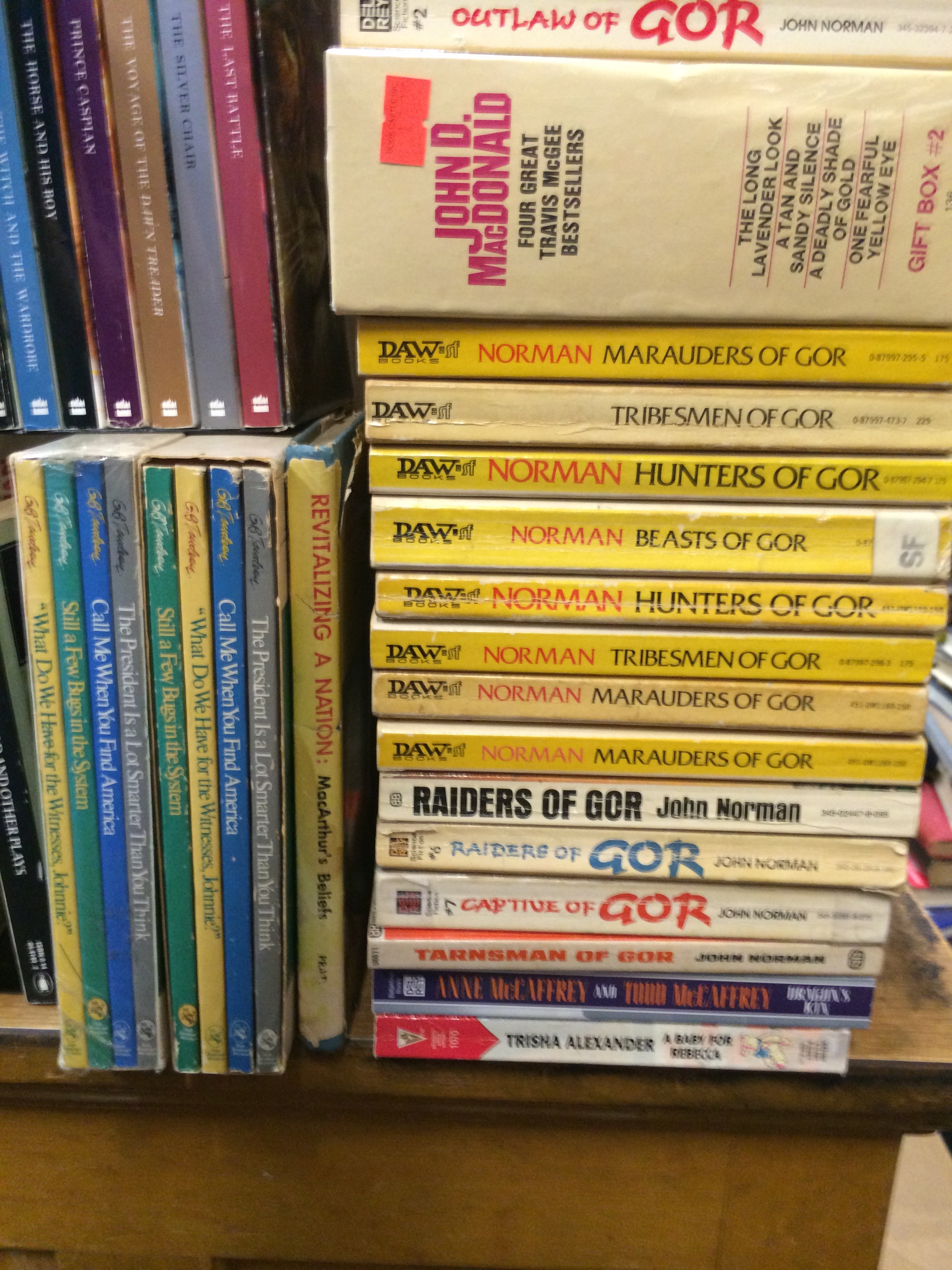
The smell of paper and bindings is strong, like the breath of the ogre—but lacks discomfort. Hunters of books in their earlier printings will make interesting discoveries, such as a boxed set of C.S. Lewis’ Chronicles of Narnia next to a stack of John Norman books from his Gor series, or many movie posters from movies that you may not have heard of before.

IMG_1795

There is much to find in Book Castle’s Movie World. If you can get past the Ogre’s magical ward, you’ll find treasures well worth the experience. But beware, the labyrinth of books and artifacts can suck you in for many hours, in which time, the Ogre could awaken.

2014-06-09 17.53.48 2014-06-09 17.37.24 IMG_1798