Category Archives: Travel

Rodeo: Where USDA Prime Meets America’s Pride

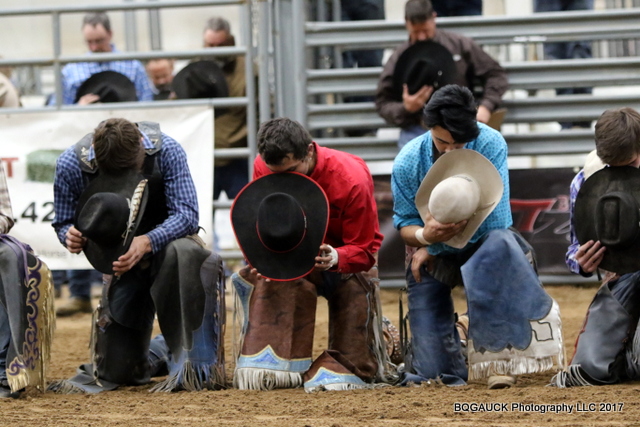
Photo of cowboys kneeling during prayer is provided by BQGAUCK Photography and used with permission.

Humbleness is just one strength of our American cowboys.*

I’ve fallen in love with cowboys. Not Louis L’Amore’s country-drawling, quick-on-the-draw, old-time Wild West fictional characters. Not the iconic John Wayne hero-types who were popular with past generations. I’m enamored with real-live, adrenaline junkie, God-fearing, patriotic, chaps-wearing, bucking-bull-riding men. In ten-gallon hats or protective helmets, these guys—who individually race the clock astride a two-thousand-pound-angry bull that could quickly maim and easily kill—are themselves a bona fide US prime cut of the finest. National treasure.

Displaced from Michigan, I embraced Western culture by attending “The 5th Annual Castle Rock Bull Riding Show” at Douglas County Fairgrounds in Colorado. Forty-seven courageous men and four equally bold youth came prepared to test their strength and endurance against the unleashed roller-coaster-like forces of agitated and intimidating four-legged opponents.

One by one, the cowboys enter the competition ring and are introduced. The audience applauds continually, and the line of bull-riders grows. Seeking support from family and friends, the brave contestants search for familiar faces among the crowd and wave. There’s hootin’ and hollerin’ all the while, until the four mini-bull riders make their way to the end of the line.

The announcer invites active military and veterans to stand. Respectfully, cowboys remove their hats and place them over their hearts. The men and boys on the field join the applauding audience in cheering. I feel thankful for the men and women who are being acknowledged for their service. I think of the young men from church—twins who graduated from West Point and are now stationed in Afghanistan. Alec and Anthony are about the same age as my eldest son, whom I get to hug and kiss hello when he comes home from work each day. I miss my own twin boys who are away at school, and they’re only an hour’s drive away from our suburban neighborhood. I’m not sure I could manage my worry if any of my children followed a calling to serve, like Alec and Anthony have.

Instilling additional honor and respect, four members of the Fort Carson Mounted Color Guard enter the ring. Their horses increase the number to eight. The soldiers wear replicate uniforms from the 1800’s, although in my inexperience I think they look like they could be from the American Civil War period. The front and rear army representatives each carry a saber over their right shoulder. The US Flag is on the second mount; the Colorado state flag is with the third. A recording of “Proud to be an American” by Lee Greenwood blasts throughout the arena. I’m overwhelmed when I consider the number of men and women who have fought for our liberties and freedom. Throughout our long history, generations have pledged their allegiance to and risked their lives for the USA. The army soldiers stop behind the center of the cowboy line and face us spectators.

We sit and the announcer leads us in honoring “the most beautiful flag ever flown, our Stars and Stripes, our American flag.” A bugle plays in the background. I’m impressed by this introduction of our flag. “Think about the blood that has been shed for Old Glory. The Americans who have lost their lives and those who put it on the line every day for us so we can have this amazing thing called freedom.” The announcer’s booming voice gets louder and stronger as he dedicates the rodeo to “the greatest fighting force the world has ever known, the United States armed forces: the army, navy, air force, marine corp, the coast guard and the national guard!”

For several years, I’ve been disheartened by the lack of respect shown to our country’s flag. It seems to me that when you disrespect it, you’re disrespecting all the people who have sacrificed for our country: People like my nephew who serves in the army and my great uncle who served in the navy. Veterans I never knew, like the Tuskegee Airmen. Fallen marines, like my friend’s son who was honored with a twenty-one-gun salute at his funeral. People I dearly love, like my dad who was in the air national guard and jokes that he won’t ever fly again because airlines don’t give out parachutes.

I’ve seen overwhelming indifference to the flag first-hand, most often during the singing of our national anthem at public events as big as Major League Baseball games and as common as high school soccer matches. Why do some not care to honor the very symbol that represents our country and should be a source of pride? I naively like to assume that people just don’t know or remember how to honor our Stars and Stripes. Is the protocol even taught in schools anymore? Or has it become taboo, like professing faith in Jesus? Cowboys won’t tolerate neglecting God nor Country.

A pastor is introduced. He instructs us to bow our heads in prayer. I sneak a peek at those darn cowboys. The sight of them on bended knees surprises me. It’s rare to see such unity of spirit outside church or other Christian gathering, but cowboys get it. They know a successful bull-ride and walking away uninjured is in God’s hands. Many wear a symbolic cross on their chaps to remind themselves that He is with them. These men of faith understand their very lives are dependent upon God’s will, and so they show reverence for Him. Seeing that is alone worth the price of admission.

The sound of bagpipes fills the stadium as the pastor leads us in prayer for the military who fight for “freedom in every country where their boots hit the ground as they stand against tyrants and terrorists.” We pray that the cowboys will “keep their weight in the middle and their spurs moving fast” and that the bulls will “jump high and hard.” We pray for the safety of the bull fighters, the bulls, and the workers in the pens and chutes.

Cowboys go beyond the basics of knowing what to do during “The Star-Spangled Banner.” They hear the music of our national anthem, they stand, they turn to face the flag. They remove their hats from atop their heads and—placing their hats over their left shoulders—cover their hearts with their right hands. But that’s just the beginning to their outward expression of respect. Properly honoring God and expressing love for the USA are two ideals that are so important they are made a priority in rodeo and in everyday life. The real men of Colorado have their priorities straight.

____________________________________________________________

*As a Professional Rodeo Cowboys Association Photographer, Brian Gauck captures bull-riding stories by preserving the calm, quiet, reflective moments as well as the heart-stopping action of competitions. He covers many other events too. View more of Brian’s work by following this link: https://bqgauckphotography.smugmug.com/. You may also visit his Facebook page, BQGAUCK Photography. Note that Brian’s photos are copyright protected and I’m thankful he granted me use of this one! 

More about Brian: He’s retired from the U.S. Navy and has been living in Colorado since 2002. Besides being a PRCA Photographer, he’s a volunteer coach for the United States Air Force Academy Rodeo Team. He’s also a Pikes Peak Range Rider and has been married for nearly thirty-three years to Kelly Gauck.   

Back to the Keyboard

A lot has happened since I started my hiatus back in June. Our new Dodge caravan has trotted over 14,000 miles since then, taking us from Massachusetts to Arizona. “Us” being my wife, Maureen (Mo), and me on the eastern journey, and my Son, Ben, and his girlfriend, Stephanie, on the western jaunt. Both trips were a lot of fun! With Mo, it was our first vacation without the kids in 25 years. We spent ten sun-filled days in July on Rhode Island beaches with family and friends. We rented a furnished home while there, complete with a large back yard and twin picnic tables.


One night, we hosted a lobster fest and cooked 25 lobsters for 21 guests, complete with corn on the cob, potato salad, beverages, pie and ice cream.  And we fed everyone at one sitting. The secret, besides paper plates and plastic flatware, is to cook the lobsters a few hours in advance and then serve them chilled over ice with bowls of clarified butter to dunk the bits in. That was the night I came up with a short story idea that became my September blog, Dining Here Tonight.


The western leg of the summer trips was just as much fun, although I did make a few business stops in Chicago and Pueblo to justify writing off some of the travel expenses. Ben, now almost 21, has been after me since eighth grade to take him to the Grand Canyon. Stephanie set out on our trip as Ben’s girlfriend and came home his fiancé. That was certainly the highlight of our trip and we welcome her into our family with open arms and hearts. This trip also gave me a chance to spend some extended time with Laura, my daughter, whom I haven’t seen in a few years. Laura has lived in Southern California for almost 30 years. She drove out to Kingman, Arizona where we were staying at my friends John and Mary Ann’s winter home for the week. From there, it was a short drive to the Grand Canyon’s Western rim and its cantilevered glass bottom “skywalk” that extends over the ledge; breathtaking doesn’t begin to describe it. Expensive does, though. If you want to walk out there you’ll first need to pay $75, and no selfies. All cameras must be left with someone else or put into a locker. You’ll need to pay again to have your picture “professionally” taken out there. Barf bags are free, though. Ben went, Steph and I saved the coin.

The four of us also spent a fun evening in Lost Wages (that’s Las Vegas to those of you who have never been) just people watching; not gambling. It’s much more fun. All you need to do is stand there – anywhere – and a circus-full of pimps, pretenders, hustlers and faith healers will eventually parade past you, all shamelessly hawking their wares. You can get anything you want in Sin City, even instant redemption! Laura has been to Vegas many times on business trips, as have I, but her trips have been much more recent. She knew right where to go for the best steaks, cheapest drinks and most dazzling displays, as well as where to watch the weirdest people in the world.

In other news…

Time to get back to writing. I’ve been working on some stuff for a new novel, just in my head, I haven’t thought anything through enough to want to put it down on paper yet. I’m the type of a writer who needs to know where I’m going before setting out on the journey. Once I know that, I can figure out all the scenic, psycho and suspenseful bits. If only there were an app for this… Siri, plot me the fastest, most exciting route from Chapter One to The End.

Still no luck with finding an agent to represent BROKEN STRING. I’ve sent out 31 query letters so far, of which about half the agents responded with sugary variations of no. Finding an agent is tops on the list of things to “keyboard” in the new year, but I’m only giving it a few more months before I start considering the self-publish route. I’ve been looking at Kickstarter again, comparing notes with the last time I thought about it a year ago. The prospects seem even dimmer now, based on the even larger percentage of books (other than children’s books) that go unfunded now. Need to research it more.

Anyway…

I turned 68 in October and promptly retired. Thank you very much. I sold both of my internet businesses to longtime friend and business associate, Steve Hyer, and IGD Solutions of Clarkston.  Steve and I have worked dozens of deals over the past 15 years and I am fully confident that my customers are in good hands. That was important to me in this sale as most of them have been with me for over ten years and now feel like family. Many customers receive my blog: Thanks, and my best to all of you!

This frees up my time to write and to do the antiquarian book business, maybe lose a few pounds. Mo and I want to move into a ranch-style home, some place with enough property where the dogs can run free, maybe with a small barn and a couple of turnout paddocks. That means fixing this place up to sell next summer. To that end, we finished the deck on the back and brightened up the kitchen with a new stone backsplash and fresh paint. The problem lies in all the other rooms. Bookcases take up so much space in every other room, the rooms don’t “show well.” To help get some of those bookcases gone, I turned the garage into a 20 by 20-foot library and that’s helped. But now Pugster, my Mini Clubman, will be hibernating outside this winter. Sorry, Pug. Someone’s gotta lose.

More to blog about in the New Year, but for now, Merry Christmas and happy holidays, everyone!

Read on!

-Phil Rosette

PhilRosette.com


Available in paperback on Abe, and on Amazon in paperback & ebook.

Freya available in hardcover and limited edition from the author. Quantities from Countinghouse Press.


Writer in Residence

I’m planted in a comfy chair. Sitting at my writer’s desk, I try not to slouch as I strategically reconstruct the finest details of Janet’s life. I attack her biography as if I had won a coveted position as a writer in residence, focused only on finishing her story.

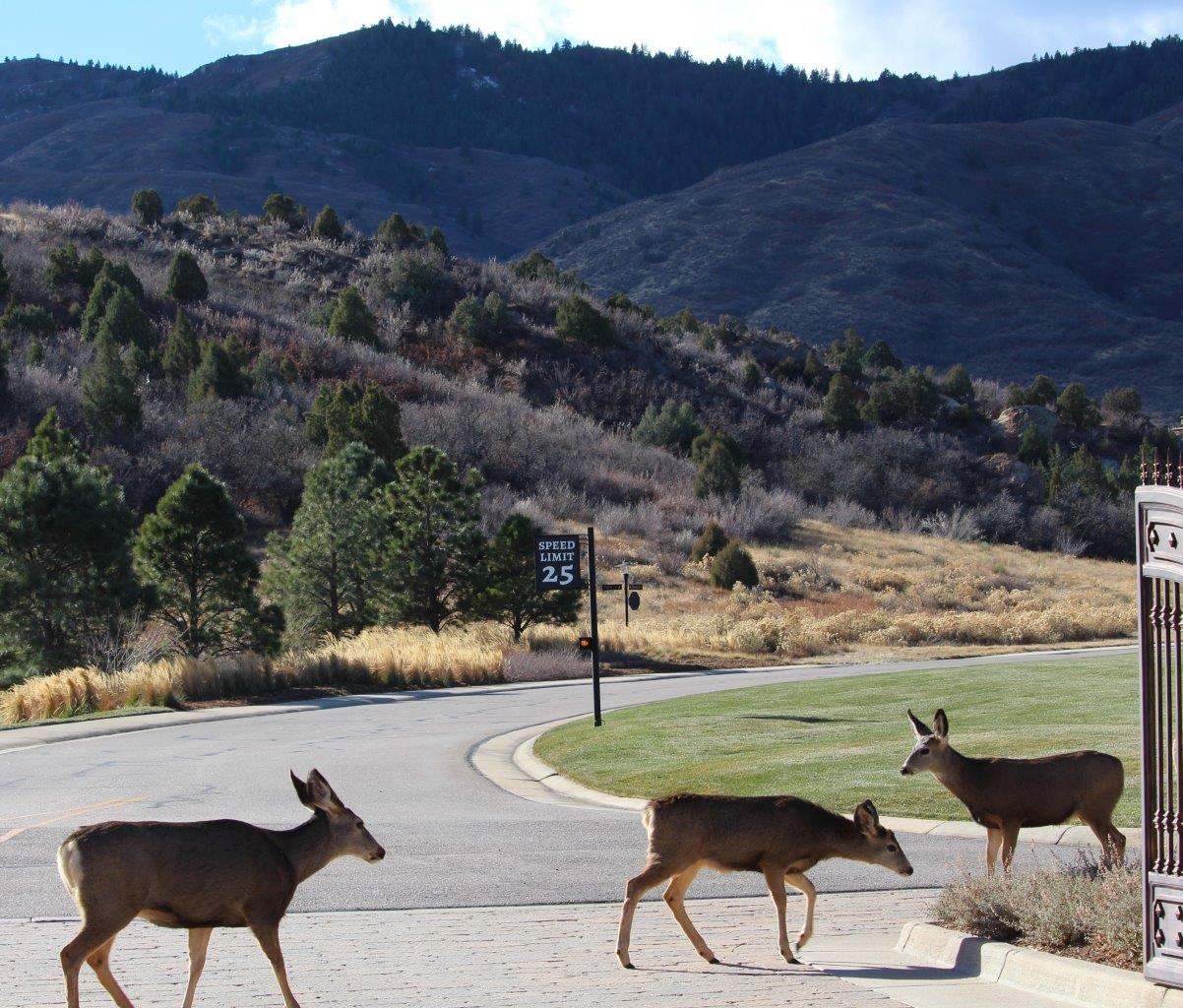
Sunshine comes streaming in through the window and coaxes me to look away from my work. I gaze outside to admire the winter scenery: blue skies muted by white clouds; pine trees lined upon rolling foothills; grass, dried and yellowed, but interesting none the less. There’s snow at higher elevations, and just a short twenty-five feet from my vantage point, I spot several mule deer as they tiptoe their way to the stream. I don’t think I’ll ever tire of watching them.

A new housing development shares space with these mule deer. Black bear and mountain lions are at home in Colorado’s foothills too.

Despite all this natural beauty, the setting before me doesn’t quite represent the perfect place to write that I had once romanticized. The window glass doesn’t muffle sounds of waves as they crash upon the shore. In fact, there are no waves; there is no sandy beach. My longed-for sanctuary by the sea has been exchanged for this home, a mile-high fortress in the mountains. With land spreading out so far and wide, I conclude that Colorado may afford the perfect compromise between metropolis and wilderness. Even Green Acres’ Lisa Douglas could be happy here.

But this Rocky Mountain imagery is also just another daydream. I haven’t yet moved from my home state of Michigan. That very real adventure will be underway, however, by the time you read this.

Throughout twenty-eight years of marriage, I’ve promised my husband that I would go wherever he needed to go. “We’re a team. Together, we’ll do whatever we have to do.” Now, for the first time, Greg’s accepted a job that requires us to leave family and friends, our church, and well-established routines. He and I are relocating to the Wall Street of the Rockies. We need to find a place to live; discover new, favorite restaurants; make friends; try to fit into a different cultural environment; and learn the traffic patterns that allow for shortcuts in and out of an unfamiliar city.

Do you know what people say when I tell them that we’re moving to Denver?

“Oh! It’s so beautiful.”

Colorado’s official slogan is “It’s our nature.” I can’t wait to see the state show off its colors in the springtime.

Even people who have never been there promote that claim as if they have first-hand knowledge of the truth.

“Have you ever been there?” I’ve started asking.

“Well, no. But that’s what I’ve heard . . .”

Ah huh. Blue skies and sunshine, over three-hundred days a year. That’s what I’ve heard. For a born and bred Michigander who thinks “g-r-a-y” spells a nasty four-letter word, I immediately feel energized by Colorado’s reputation. The problem is that the statistic I’ve come to love and embrace isn’t true!

When I was in college, a journalism professor ingrained in me the need to cross-check facts. The rule of thumb was that if I could find the same information in three or more reputable places, I didn’t necessarily have to cite the source. For example, I could state that cigarette smoking leads to lung cancer without the need to reference a specific finding of the American Cancer Society. Many independent and credible reports support that statement, now considered common knowledge.

So, when this writer from the lower peninsula of Michigan is being displaced to one epically gorgeous and Colorful Colorado, she wants facts, not fancy, to guide her expectations.

Enter Colorado State Climatologist, Nolan Doesken—also known as Senior Research Associate; Director of Fort Collins Weather Station; and past American Association of State Climatologists President. He has the credentials this girl is relying upon. Doesken explains that Denver’s 300 days of sunshine are a bit overstated. “Only about 115 days per year fit the classic definition of ‘clear,’”[1] he says.

That’s better than the 75 days the greater-Detroit area squeaks out. One point for Denver. And yes, I’m keeping score. You can’t expect me to leave the only home I’ve ever known and not compare it to what will be my new one. Michigan may be gray from time to time, but it’s breathtakingly beautiful too.

You know, we Michiganders are surrounded by the Great Lakes. They’re as vast as Coloradans’ mountains are high. When I long to kayak Lake Superior’s Pictured Rocks, I’ll try to conquer Mount Evans instead. When Sleeping Bear Dunes is calling, I’ll make a point to visit Colorado’s Great Sand Dunes and try not to favor the National Lakeshore over the National Park. And when family and friends cross two time zones to visit me, I’ll prepare for their overnight stay by gently placing a Sanders chocolate on each of their pillows . . . alongside a little bit of legalized Kandy Kush.

Before you judge me, dear readers, let me say that of course, I’m only joking. I wouldn’t be so cruel as to leave pot on your pillow and not include an entire box of chocolates also.

Heaven help me! I’m moving to Denver.


[1] http://climate.colostate.edu/questions.php, accessed Dec. 1, 2016.

Hiking Isle Royale

 My father, brother, and I climbed Isle Royale’s 1,394-foot Mount Desor in June of 1959 in the process of hiking the island’s length. That first night, we were half-sleep in a three-sided lean-to with distant flashes of lightning reflecting off a dark, wind-rippled lake. A sudden storm was sweeping in and the loon calls were eerily sorrowful. An eight-foot moose waded offshore, almost invisible in deepening dusk. Quiet campfire flames had died to glowing embers as I drifted off thinking about the day. 

Earlier that afternoon, atop the island’s highest mountain, I could see Canada fifteen miles away in the distance across Lake Superior. We were exhausted and soaked to the skin, having hiked and climbed five hours through rain from Windigo Bay on the island’s western tip. I had never gazed across such a great distance. This was my first mountain hike into primitive wilderness on hallowed ground only Native Americans and fur-traders once traversed. There were no humans for miles. We had been told to avoid a pack of fifty wolves and several-hundred moose roaming about, but how one does this was never clear. 

My father was rummaging in a backpack, my brother and I crouching with aching limbs, out of breath, facing opposite directions. I had never heard Dave so deeply tired exclaim, “Hey, you won’t believe this, but there’s a coyote or fox, or maybe a wolf-pup, staring at us only twenty yards away. Take a look.” I was too worn out to turn around. Wolves had crossed from Canada on an ice sheet years earlier. We weren’t in a hurry to come upon wolves, or moose, armed with only jack knives. But a wolf pup might belong to a wolf pack. I finally turned around to see what it looked like, but it was gone. 

Unclipping a canteen of water purified with Halizone, I took a gulp, forgetting I had also added a fizzy grape-flavored Kool-Aid tablet to kill its taste. The result was something between grape juice and battery acid. I poured a bit into a cupped hand, discovering flakes of metal. Either the Kool-Aid tablet or the Halizone was corroding the inside of the metal canteen, but I needed water and didn’t care right then. 

After Boy Scout camping, hiking the length of Isle Royale was a real challenge. We planned to traverse its 55 mile length on the Greenstone Ridge Trail in five days, the same distance south to the Keweenaw Peninsula across Lake Superior. Two days before, we had departed Copper Harbor crossing the world’s third-largest fresh water lake that would later sink the ore-freighter Edmund Fitzgerald. But we were on a 40-foot under-powered launch unimaginatively named the Isle Royale. A five-hour rolling ride had us sea-sick long before the island’s eastern end at Rock Harbor. 

After setting up base camp and boarding a daily launch to the island’s west end, we headed up the trail planning to descend each night to a shelter at a remote lake. We left Windigo Bay with full canteens, but they were empty by mid-morning. Personal water-filtration systems had yet to be invented, so we planned to boil our water each night. By that first mid-morning, we gave up and simply filtered stream water through a handkerchief before adding more tablets of Halizone. Although Giardia Lambia intestinal parasites must have been in the water, they were unknown at the time. So, fortunately, none of us became ill. To carry less food and reduce pack weight, we planned to fish for dinner so our packs were heaviest before we began using canned food. Climbing Mount Desor with 65-pound loads on our backs didn’t begin well, plagued as we were by a fine drizzle and swarms of blood-sucking black flies. We hadn’t planned on a muddy trail and poor footing, trying to ascend a mountain before mid-day. We thought we had conditioned ourselves, weeks before, by carrying fifty pounds of boulders in backpacks around the neighborhood but, no, we were woefully out of shape. 

Two hours before Desor’s summit, still carrying our heaviest loads, my father came upon a moose antler on the ground, a perfect hiking memento. To our astonishment, he decided to carry the extra weight and hang it on his office wall. The black flies were driving us mad, circling just out of reach before alighting and drawing quick bites. Blood was running down our faces despite spraying ourselves with ineffectual Citronella bug spray. That was before we donned last-resort beekeeper’s hats and tried to protect our hands with gloves. 

Skidding on a slippery trail for hours in rain and growing darkness, a twisted ankle or broken leg would have been disastrous. We were days from help if we mishandled a knife or hatchet, much less burned ourselves in a campfire. We might apply a tourniquet or bind a cut before dragging someone out, but no one was coming to help. Cell phones hadn’t been invented and there was no way of sending messages. Boy Scout training never included Indian smoke signals, and there was no one around to read them anyway. The nearest a seaplane could land was Windigo Bay, weather permitting, and that wasn’t going to happen unless my father had a heart attack, in which case it would be too late. 

We were on our own now, in the first bug-infested three-sided lean-to by Lake Chicken Bone. It wasn’t all that inviting with a leaky roof and muddy dirt floor. Too dog-tired to care, we needed food and warmth, but had outsmarted ourselves with only a few cans of food to eat. We couldn’t fish for dinner because the shoreline was overhung with underbrush. By minimizing pack loads and bringing only canned food, we couldn’t start a fire anyway with wet firewood to cook nonexistent fish. Without a campfire, our father lit a tiny camp stove with heat pellets, and boiled life-restoring, dried-package chicken noodle soup. That was before everyone realized, all too quickly, soup made with Halizone-laced water leaves something to be desired. 

1930’s Civilian Conservation Corp’s boys hadn’t put much effort into Isle Royale’s three-sided lean-to construction. We spread our sleeping bags on dirt, thankful it wasn’t muddier. In the 30’s, there were only a few depression-era hikers to stay in such a jerry-built construction. Besides, there wouldn’t be anybody to complain to three decades later. Our father apportioned out our chicken-Halizone water soup and we were ready to slide into sleeping bags when a Tarantula-like spider appeared atop mine. It was hairy brown with shiny black eyes and totally unafraid. I was readying a knife attack when my father simply shooed it away. I immediately fell asleep despite knowing it might well climb inside sometime in the night. 

We awoke the following morning to more loons calling across the water and no sign of moose or hairy spiders. Scrambling into bright sunlight, we breakfasted on dry cereal and canned orange juice without bothering with a morning fire. Wanting to hit the trail for a long day ahead, we shouldered backpacks and left to ascend Mount Desor once more and gain the Greenstone Ridge. 

The path runs the length of the heavily-forested island and, from Desor’s summit, appears to be the spine of a long green animal basking in a cold blue expanse of Lake Superior.

We had been looking for semi-precious greenstones, found in only two places on the globe, Isle Royale and 180 degrees away on the globe in South Africa, but found, instead, a field of wild strawberries and feasted on them for lunch. 

Our day ended at a second lake-side lean-to and another fight with wolf spiders. This second batch were more determined to stay comfortably dry inside the lean-to, apparently thinking it belonged to them and not itinerant hikers. However, we weren’t putting up with any spider-nonsense and attacked them with sticks and knives while they scurried about. Too late to fish, we used more precious canned goods; Spam, peaches, and baked beans. 

At the end of the third day, more than 30 miles northeast of Windigo Bay, we finally caught three pickerel for dinner. Slipping them on a stringer to stay fresh, we lit a campfire to fry them. No sooner had we turned our backs than seagulls swooped down for their share. We chased them off with more sticks, before dining on a great dinner of fresh pickerel. That night, there was another moose wading offshore in purple twilight. Although we had been taking pains to hang our backpacks on overhead branches so they wouldn’t attract animals, my brother somehow left his atop a picnic table this time instead of overhead on a tree branch. When we were fast asleep, campfire long dead, a fox tore into his pack and ate everything foxes like. Dave’s candy bars must have attracted it but, with all of Dave’s food gone, the next few days meant a reduced diet for everyone. 

We finally finished the fifty-mile, five-day adventure trek to Rock Harbor, having learned how little we knew about wilderness hiking. Anything more challenging would need better planning.


Up from Under the Bridge, Eh?

Pure Michigan campaign ads had persuaded trolls—residents of Michigan’s lower peninsula, like me—to crawl out from our homes south of the Mackinac Bridge. It was Labor Day weekend, the last chance for many families to head up north before the start of a new school year. For my family, this was the perfect time to explore the beauty of our grand state’s upper peninsula. Our adventure began in the city of St. Ignace at the area’s number one, Trip Advisor rated, hotel: the Best Western Harbour Pointe Lakefront.

kellysept-2016-macbridge

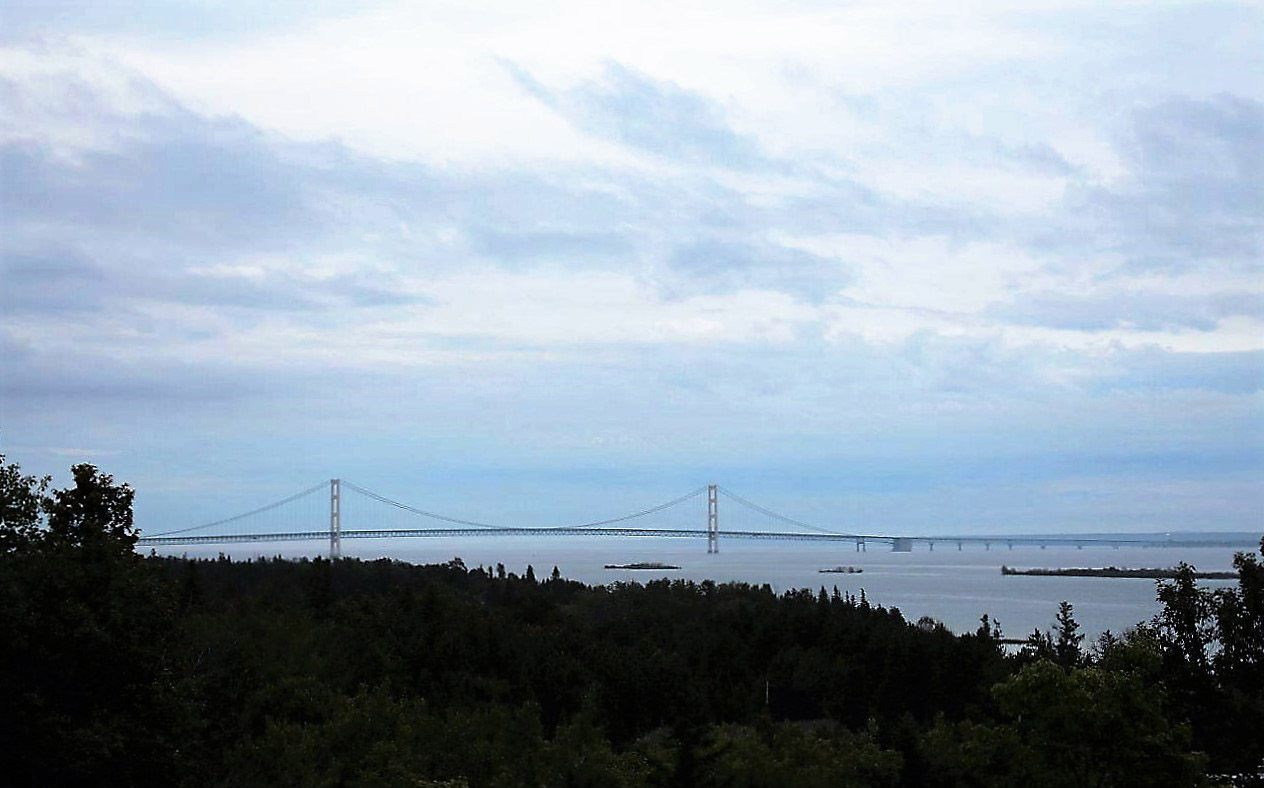
Nicknamed Mighty Mac, the Mackinac Bridge is the longest suspension bridge in the western hemisphere and fifth longest in the world.

After dinner, my husband, four children, and I sat around a bonfire with other hotel guests. I asked Zach, who was part of the hospitality staff, if he knew any ghost stories. He was busy unloading wood for the fire but sat down for a few minutes to share some of the rumors he was familiar with. I light-heartedly listened to Zach’s fanciful stories. What I didn’t know at that time was just how much this discussion would affect my psyche and influence my decisions throughout the rest of the trip.

Zach recalled the tale of a woman who had an extramarital affair. Townspeople killed the unfaithful wife by dunking her repeatedly underwater in what is known as the drowning pool, a twenty-feet deep, seaweed-infested lagoon on nearby Mackinac Island. The ghost of the woman reportedly now haunts that area.

Intrigued by this story, I later looked online for more information. I read through pages and pages of creepy hauntings that had frightened local residents and visitors, but I couldn’t find the exact story Zach had referred to. I discovered one other, however, that best fit his account.

Haunts of Mackinac author Todd Clements described the unfortunate outcome for seven prostitutes who were accused of being witches. The ladies were subjected to a test in order to determine their innocence or guilt. A large boulder was tied to each lady. Then they were thrown into the drowning pool. If the women floated, they would have been found guilty—considered witches—and subjected to further punishment: death by hanging. Since every one of the accused actually sunk deep below the surface of the water, they were vindicated of sorcery but had drowned in the process of proving their innocence. The women now make appearances as eerie, shadow-like figures floating above the lagoon or as huge, larger-than-life splashes on the surface of the water.

Other stories also indicate that the drowning pool is haunted by ghosts. But Zach didn’t seem to believe in ghosts at all. He preferred to talk about a story that was based upon measurable, physical evidence. He said that hundreds of bodies had been uncovered during construction of the Grand Hotel. “There were so many bodies, they eventually stopped trying to retrieve all of them, so there are still hundreds, maybe thousands, lying beneath the building.” That’s not a fact the hotel advertises on its webpage, but Zach was confident of its authenticity. He emphatically added, “That’s a true story.”

The unique history of Mackinac Island may support that claim. Indian chiefs were buried there; soldiers died there. Other people committed suicide and murder. Death is nothing abnormal, of course, but it does produce an odd result on Mackinac. The island is considered to be one of the most haunted places in Michigan.

kellysept-2016-bigfoot

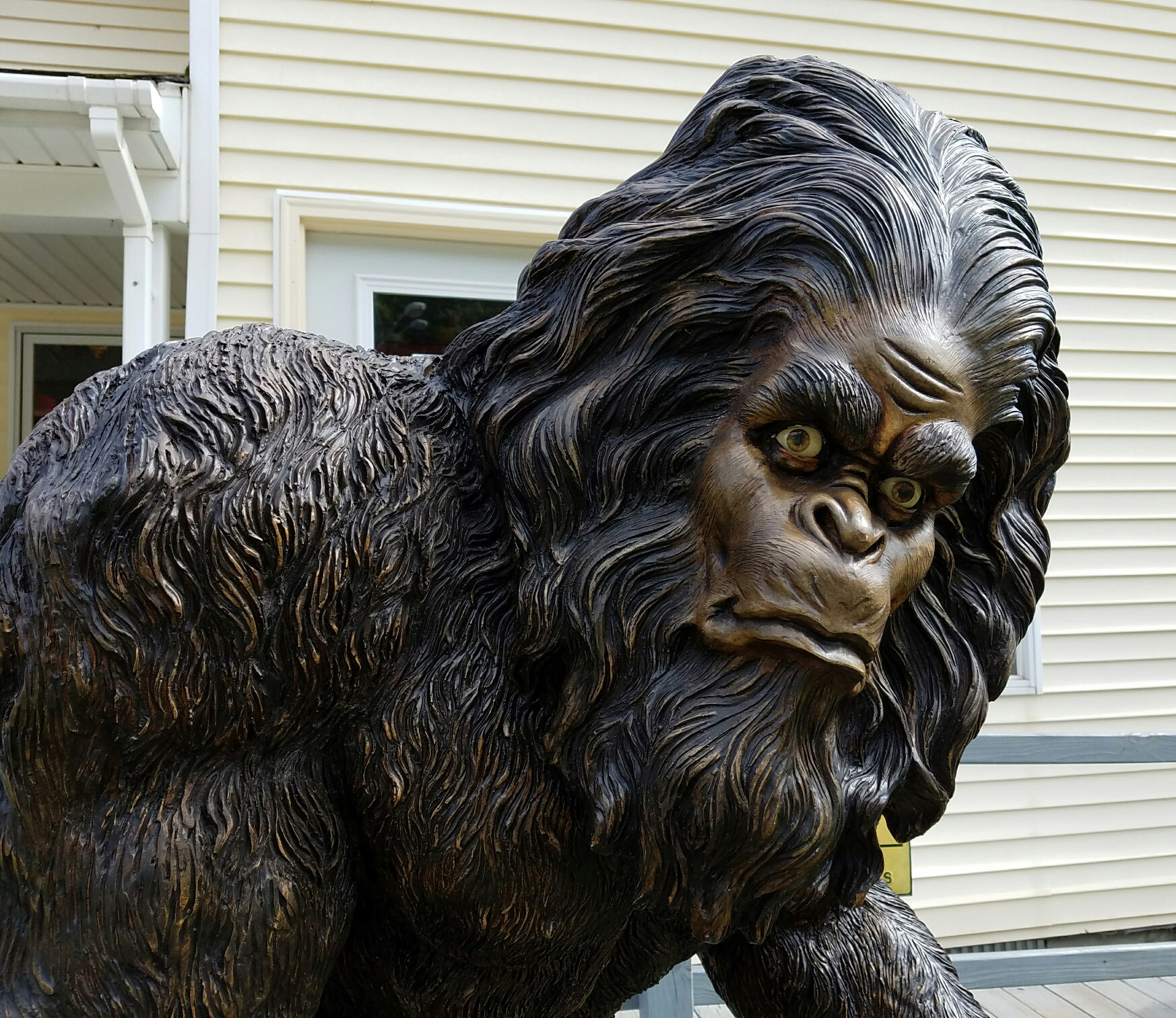
This Bigfoot sighting occurred right in front of Muldoons’ restaurant and gift shop in Munising.

I suppose Zach has never seen a ghost, and so he finds it easy to dismiss the paranormal. But how do reasonable people like him react to legends of animal-like creatures such as Bigfoot?

Animal Planet’s popular television series, Finding Bigfoot began its eighth season in January 2016. Enough people watch the show to keep it on the air. Does that mean they believe that these creatures actually roam the earth? Or are they watching only to be entertained? Arguments run rampant in online forums as people seriously debate the question “Would you shoot a sasquatch?” Some believers say “I couldn’t kill it” and skeptics respond “You can’t kill something that doesn’t exist.”

Zach is probably a skeptic. He joked about having seen a similar phenomenon, the Dogman. It’s described as a large dog that walks upright on two legs and terrorizes the northern part of Michigan. Because Zach had laughed, I knew he didn’t want me to think that he truly believed in the werewolf-like animal.

But people in our remote towns are seeing mysterious things they can’t easily explain away. Documented reports are so convincing that I admit this: As my family and I hiked through the U.P. wilderness, I was on guard against two specific entities besides ferocious cougars, man-eating black bear, and venomous Massasauga rattlesnakes. I looked deeply into the thicket of the forest and wondered just what I would do if I crossed paths with the gruesome Dogman or the iconic Bigfoot.

kellysept-2016-wlakingsticks

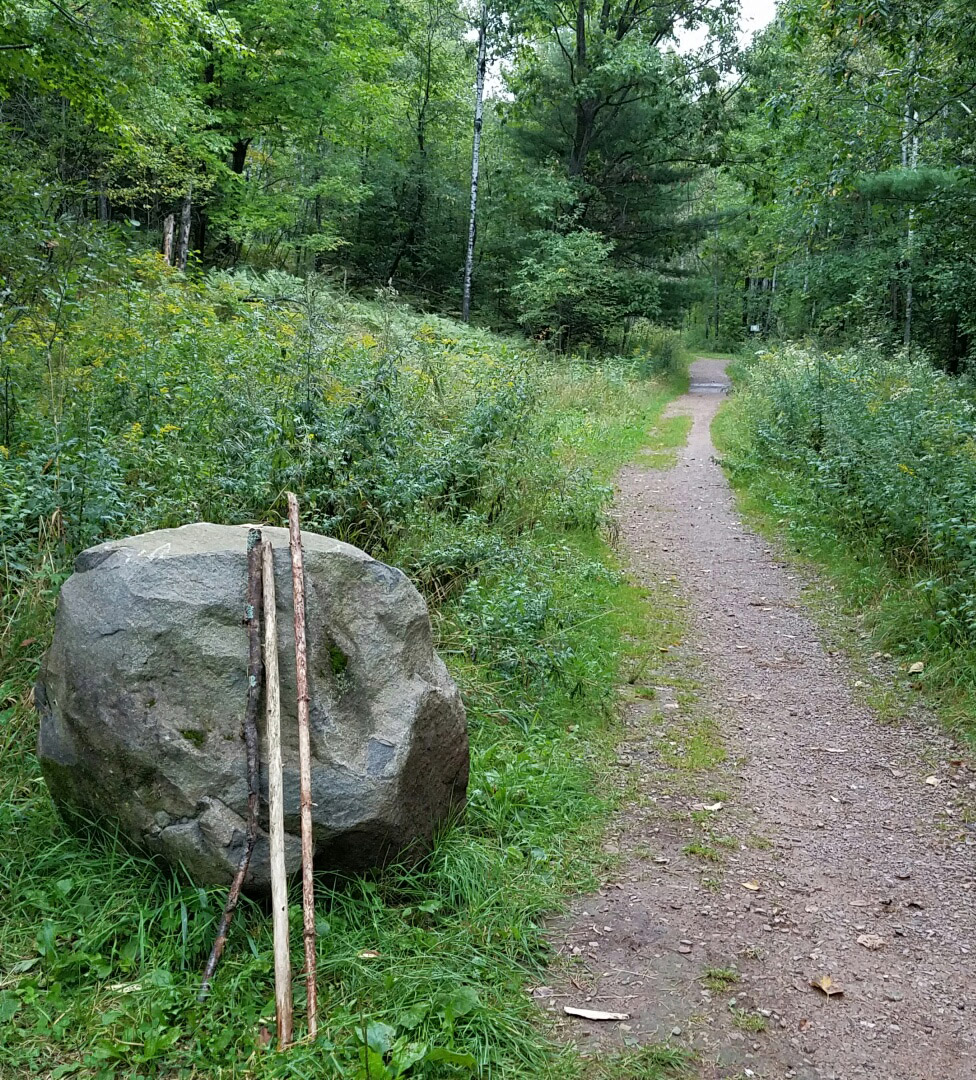
Preparation for our hike included selection of the right-sized walking stick. Luckily, we found these at the trailhead.

I stayed on the trail best I could and kept searching for anything out of the ordinary. I quickly dismissed non-threatening deer tracks. I counted the number of toes in common dog prints and made sure to find four paw prints in stride with one another. I listened for evidence that my family and I were being studied and stalked. Were our feet the only ones to be thudding upon the ground? Why were the birds in the trees suddenly taking flight?

In one hand, I tightly gripped the three-foot long walking stick I had selected at the beginning of our hike. I used the stick to brush the tall grasses that lay ahead of me, hoping to roust camouflaged critters. Occasionally I practiced twisting the knobby branch up and out in front, like a jousting pole or a sabre.

The fingers of my other hand delicately wound around another item that empowered me with confidence. I reasoned that I wouldn’t use it unless the risk to my family was too great not to. Could I actually do it? I wondered and considered alternative scenarios. I knew that I might very well be faced with no other choice.

I was convinced at that point. Determined. If the worst should happen and a feral beast were to get too close, I would swiftly raise my arm, take aim, and throw my treasured, tasty, chicken pasty at the creature. No Yooper would let that staple go to waste. By the time he finished it, my family and I would be long gone and safely out of the woods.