Author Archives: Claire Murray

Why Is Conversation Important?

Everywhere I go today, I see people on their cell phones. If they’re not talking, they’re texting, checking Facebook or one of their other apps. I’ve seen couples in trendy restaurants doing this between courses. It’s like everyone is with someone else, just not with the person they’re sitting with. I’ve started to wonder, is this affecting our personal relationships?

Sherry Turkle, author of Reclaiming Conversation: The Power of Talk in a Digital Age, says, “We know that for children the best predictor of success later in life is the number of meals shared with their families.”* Why? It’s because of the conversations that take place. Children learn to listen, speak, and see the affect their words have on others. Parents have the opportunity to share their day, find out what their children think and offer guidance. This is all done through conversation. Even the silences can be helpful as children learn they can be comfortable with others when no one’s talking.
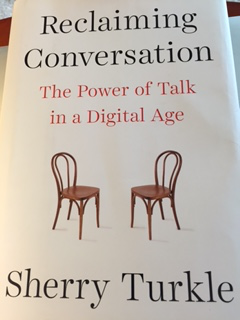
Reclaiming ConversationToday family meals are harder to arrange because of all the activities different members are involved in. A family has to be really committed to the importance of family meals for them to happen. And when they do, frequently the parents bring their cell phones to the table. The children have theirs in their pockets. Someone starts to talk. Another person goes to Google to check to see if they have it right. Now it’s become a competition for the right answer rather than the sharing of experiences.

Or, there’s a “No Cell Phone” rule but one of the parent’s phones vibrates. Now they’re curious. Is it important or can it wait? They try to peek and see. Their children notice that their parents are distracted, not really listening to what they’re saying, so they stop talking. Now there’s no conversation or it’s very light because everyone realizes no one is really paying attention. Gradually everyone brings out their cell phone. Now, no one is talking.

Conversation brings people together. Cell phones at the table push them apart.

I’m not against cell phones. I have one and use it all the time. It makes my life go more smoothly. But, and this is a BIG but, there’s a time and place for everything and the place for cell phones is not at the table.  Conversation is too important.

Reclaiming Conversation: The Power of Talk in a Digital Age by Sherry Turkle, Penguin Press, N.Y., 2015, Page 47.

Chautauqua?

ChautauquaWhat do you think of when you hear the name Chautauqua, Chautauqua, New York?

The first thing I thought of was an Indian Tribe. Was I wrong! Wikipedia says, Chautauqua was an adult education movement in the United States, highly popular in the late 19th and early 20th centuries. …The Chautauqua brought entertainment and culture for the whole community, with speakers, teachers, musicians, entertainers, preachers and specialists of the day. Former U.S. President Theodore Roosevelt was quoted as saying that Chautauqua is “the most American thing in America.”

I first became interested in the Chautauqua Lectures when I was driving home from work in Chicago. I’d tune in to Public Radio and frequently the announcer would say they were “live at Chautauqua”, carrying a speech by someone well known in their field. I felt very fortunate to be able to listen in! So when I read that Road Scholar was offering weeklong trips there, I knew we had to go.

Today Road Scholar, an educational travel organization for anyone 50 and over, offers weeklong trips to Chautauqua. They are filled with lectures on various interesting topics from 9:00 to 12:00 each morning. The speakers are interesting and well prepared.

The afternoons are for yoga, nature walks, relaxing or exploring on your own.

After dinner there’s live entertainment. One night we heard a singing group, another night it was a jazz trio and the last night was a musical performance by a one-man orchestra!

My husband and I went for the week starting May 15.

I’m not sure what was more enjoyable: The lectures, the Athenaeum Hotel where we stayed or the town of Chautauqua itself.

We stayed at the Athenaeum Hotel, a few yards from Chautauqua Lake. The view was lovely. The hotel had been built in the 1880s and modernized. It had large front and side porches with rocking chairs for reading and chatting and tables for eating outside or playing cards.

This is the view from our room, #22.

After this experience, I agree with Theodore Roosevelt, Chautauqua is “the most American thing in America.”


Memory?

Memory has always fascinated me. Why do I remember some things and forget others?

Whenever I hear “Bring Flowers of the Rarest”* from Queen of the May, I’m transported back in time to my nine-year-old self, wearing my white communion dress and walking in procession down the aisle of St. Thomas the Apostle Church in San Francisco. The sun is shining, a cool breeze is blowing in from the ocean and my family is watching. I’m worried if the dress is too short because my Mom told me this is the last year I could wear it, as I’d grown so tall.

Why do I remember this scene so clearly, but can’t recall much else about that year? And though I was in that same procession every year I was in grammar school, I hardly remember the other ones.

When my grandson was first learning to drive, his parents sent him to a Drivers’ Ed class. Just hearing about it brought back the memory of my first accident.

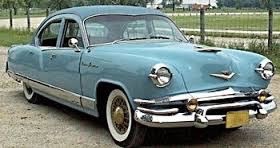
Our house was on a flat, dead end street and the blue Kaiser was parked in front. I wanted to practice putting in the clutch and shifting the gears. I didn’t have the keys because I hadn’t gotten to the actual driving part of the class yet.

claire car

After mentally rehearsing what I was going to do, I released the parking brake, put the car in neutral and got ready to shift into first. The car suddenly rolled back a few feet and hit the car behind. My first car accident and I hadn’t even turned the ignition on!

I hadn’t thought about this in YEARS! Yet, in that moment I remembered every detail as if it was happening right now.

This is what has always fascinated me about memory. A song, a chance comment by someone, and I’m in a movie of my own life, remembering everything. But other times, when I try to remember, I can’t.

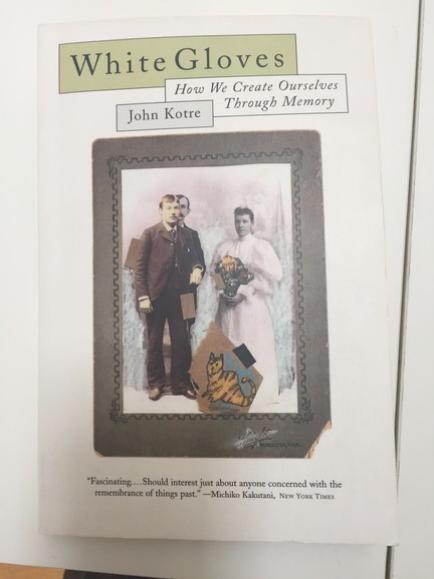
Recently I heard of an adult education class on memory. I immediately signed up. The required reading, before class starts, is White Gloves: How We Create Ourselves Through Memory** by John Kotre. I just finished reading it.

claires old photo

Fascinating book! He talks a lot about how memory works and the different types of memory. I was surprised to find out that over time, we can change our memories. This is why different people, present at the same event, can recall the situation very differently. That’s why eye-witnesses in court cases can be so unreliable.

Class starts Tuesday!!!

*Bring Flowers of the Rarest is a well-known Marian hymn written by Mary E. Walsh. It was published as the “Crowning Hymn” in the Wreath of Mary 1871/1883 and later in St. Basil’s hymnal (1889). 

**White Gloves: How We Create Ourselves Through Memory by John Kotre, W.W. Norton & Company, New York, London, 1996


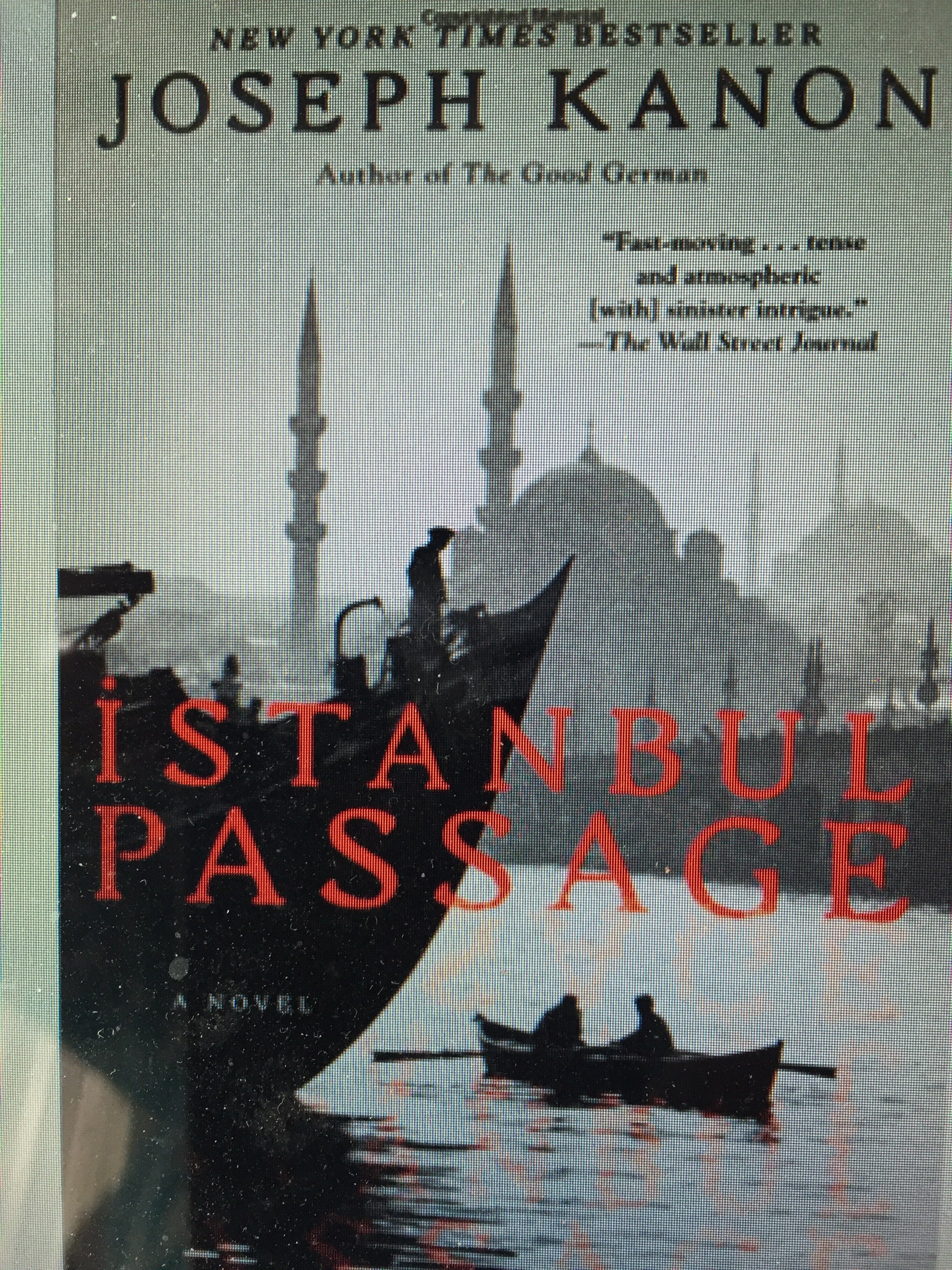
Istanbul Passage: A Novel by Joseph Kanon

IMG_1233

Outside it’s rainy and chilly and it seems like spring might not make it this year. There’s not much I can do about the weather. What I can do is stop wasting time and start focusing on what I’m going to write about for this month’s blog.

I just finished reading Istanbul Passage: A Novel by Joseph Kanon. It’s an international spy thriller that takes place in Turkey at the end of World War II. It kept me mostly sitting on the edge of my chair afraid to breathe. I kept wondering: What was going to happen next?

One of the most interesting things Joseph Kanon did, from a writers’ and readers’ perspective, was make Istanbul, the city itself, come alive. It’s a character in the story and a very important one. This is an example from the beginning of the book. Notice how the city gradually comes to life, like a person almost:

“During those first weeks they didn’t see the old wooden houses, listing and creaking from neglect, the backstreets with clumps of garbage and mud, cracked fountains seeping moss. They saw color, heaps of spices, everything that wasn’t Germany and water everywhere, a city where you took ferries just to be out on it, looking at domes and spires, not the crooked, dirty streets. Anna wanted to see everything, the famous sites, then things she found in books, the Camondo Stairs, twisting down Galata Hill, the cast-iron Bulgarian church, the Byzantine mosaics out near the old city walls where they could eat picnics on the yellow grass, looking up at the giant stork nests in the ruins.”**

Reading the book was like stepping back in time, into the Istanbul that existed in late 1945. Joseph Kanon makes it possible for you to walk down streets, up hills and through back alleys. You feel the rush of flagging down a taxi or running for the tram. Coming down a steep hill in the funicular took my breath away.

“They caught the ferry back to Eminonu and wandered through the spice market like tourists, looking at the tall cones of ground spices and piles of dates. At a nougat stall . . . But then the man turned, eating candied pistachios, just another fat man, and Leon realized he’d been staring and looked away. They went out the side exit, past the bird market, cages noisy with song and fluttering.”***

IMG_1239

I loved visiting the mosques, the bazaar and out to dinner to a nice restaurant. I became fascinated by constantly having to take a boat from the European to the Asian side and then back again.

What I took from this book is that it’s possible to make a city, any city, a character in your story. If you do, it could be a lot more interesting! Have you tried this technique?

*Istanbul Passage: A Novel by Joseph Kanon, Atria Books, 2012.

**Location 345 of 6,447.

***Location 3,301 of 6,447


Freedom’s Daughters

Freedom’s Daughters

FreedomsDaughtersI read somewhere recently, if you want to really re-experience a past event in your life, listen to some music from that era. I know whenever I hear Happy Birthday Sweet 16 *, I’m immediately transported back in time to my sixteen-year-old self.

Recently I read a book that did the same thing. It took me back to the 1960s with all the dreams and hopes that I, and many others, had for the future. Freedom’s Daughters by Lynne Olson tells the stories of “the unsung heroines of the Civil Rights Movement from 1830 to 1970”.**

She talks about the fact that most people, when they think about slavery, the Civil War, Negro, Black or African-American people standing up for their rights, think of men. There’s Nat Turner, Frederick Douglas, Booker T. Washington, Martin Luther King, Julian Bond and Maynard Jackson to name just a few.

Very few books have been written about what women did, the risks they took, the boycotts they organized, the sit-ins they participated in and the many, many times they were beaten, arrested and sent to jail.

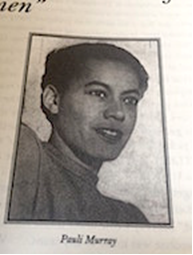
Freedom’s Daughters tells the stories of more than 60 of these women. There are the ones we all know about like Eleanor Roosevelt, Marian Anderson, Mary McLeod Bethune, Rosa Parks, Fannie Lou Hammer and Eleanor Holmes Norton. But how about Pauli Murray, who on April 22, 1944, organized and led a group of 50 Howard University students to sit in at Thompson’s Cafeteria in downtown Washington, D.C.?


Diane Nash

Pauli Murray

Diane Nash

Diane Nash


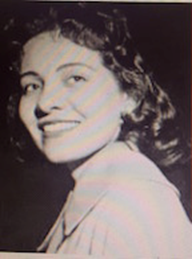
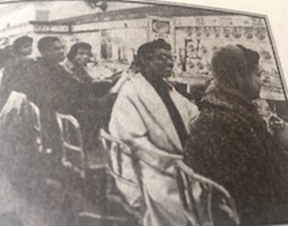
Have you heard about Diane Nash, who as a student at Fisk University, in 1960, led a successful sit-in of the lunch counters in Nashville, Tennessee? She went on to become a leader of the Freedom Riders, co-founded SNCC (Student Nonviolent Coordinating Committee) and helped organize the Selma Voting Rights Movement.


Penny Patch

Penny Patch


Lunch Counter Sit In

Lunch Counter Sit In


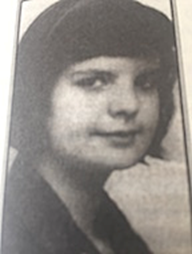
Does the name Penny Patch ring a bell? As a white Swarthmore student, she sat in at a segregated Pennsylvania roller skating rink and at whites’ only restaurants on Maryland’s Eastern Shore. She was arrested, spent the weekends in jail and then returned to class on Monday mornings.

Freedom’s Daughters tells their stories as well as many others. The book jerks you back to the past and puts you in the moment so powerfully that it’s almost impossible to put it down before you’ve read the last sentence.

* Happy Birthday Sweet Sixteen, music by Neil Sedaka, lyrics by Howard Greenfield, 1961

** Freedom’s Daughters by Lynne Olson, Copyright 2001, A Touchstone Book, Published by Simon & Shuster