Tag Archives: editing

Clarity

When I dream of becoming a published author, I see myself as a stand out amongst a large populous of romance authors. My books sit alongside those written by authors I’ve admired and learned from by reading and being absorbed by the characters they’ve created and the stories they continue to roll out year after year. I want people to get thrilled when they see a new release date, from author ,Wendi Knape, and automatically click the to read category on their goodreads.com account, so I keep moving forward. Nonetheless, in my writer’s life, there are days when things weigh me down, a little voice whispering I won’t succeed no matter how many edits. However, I never let myself forget my end goal and always remember that I have a lot of encouragement from writer friends, plus all the resources in books and blogs regarding the writing craft.

With my first manuscript I didn’t stop writing to try to publish, I jumped to the next manuscript, and the next, and so on. In my experience, through writing and wise words from other authors, it’s best to leave a completed manuscript alone and come back to it to see what needs fixing.

When I moved on and was about halfway through writing book two, I went back to my first manuscript and tackled editing it several times so I could enter the RWA Golden Heart contest. All along, I’ve felt there’s been something missing from its pages, even after several edits. That I didn’t place in the contest let me know it still needed work, but now I had scores to lead me in the right direction. But still, it wasn’t a decisive critique it was just numbers relating to content.

I kept asking myself, where’s the spark that encourages the reader to turn the page? The spark was elusive, as if it was a living thing, hiding in the dark, just waiting for me to come to its rescue. I was becoming more and more frustrated each time I sat down to edit, mired in words that had gone blurry, lost in a sea of plot. The characters got what they wanted with little conflict. I couldn’t find my way out of the editing fog. Until reading, Make a Sceneby Jordan E. Rosenfeld, and nearly at the same time, a blog piece titled, The Difference between Idea, Premise and Plot, by Janice Hardy on Janice Hardy’s Fiction University website, things didn’t click. When I combined the two ideas, I got excited. Now I held the flickering spark and watched it dance on my fingertips. Fixing problems wasn’t going to be easy but it also wasn’t going to be like Atlas holding up the celestial sphere.

First, let’s look at The Difference between Idea, Premise and Plot. My idea was a good one, the premise was simple and strong, the plot was tagging along like a good pet, but it wasn’t quite pulling me forward like an excited puppy. When I got to story–which Janice Hardy added after a comment from a reader–the emotional element, the internal conflicts my characters would have to overcome, they easily overcame the problems. When I say easy, my hunky hero quickly decided he wasn’t afraid to take on the vampire protagonist–really an alien that needed to feed off human blood–to his home where he would help her find her mentor. Not only in the beginning did the protagonists acquiesce to circumstance, it was throughout that they jumped in feet first and fell in love in a blink. Usually, the reader is at the halfway point before the first love scene. Three quarters through, the protagonists discover they love each and still are keeping it from each other. The declaration of love is a highlight near the end.

If readers know what happens so soon, why should they turn pages?

What was missing?

Janice Hardy’s article allowed me to see that, though my idea was a good one, it wasn’t a complete story. Her break down from Idea, to Premise, Plot and finally her addition of Story, gave me a clearer vision as each consecutive step built on the other leading me to a stronger story concept. I even went on to develop other story ideas that I want in the series based on characters I love. When I got my hands on Rosenfeld’s book, Janice Hardy’s article only enhanced my start-up thoughts as each story came to life.

Half way through Make a Scene, I can tell you that I’ll re-read this book. It’s that good. I’m not saying this is the only book out there to help improve my writing, but Rosenfeld has a way of telling the reader, through examples and clear explanation, how to take my writing to the next level. Butterflies were flitting around in my stomach, my excitement palpable again. What Rosenfeld reiterates throughout is, “plot and character cannot be separated”[1]. I saw the holes in my story, now I could fill them.

The fixes came to me like magic causing me to write like the Mad Hatter at teatime. Narrative and dialogue I wrote, that included thoughts and actions of my protagonists meeting in opposition, help push the plot forward while still building a crescendo as the two characters come together and fall in love, simultaneously dealing with outside forces pulling them apart. Without tension, the reader will put the book down, and I definitely don’t want that to happen.

In my first draft and up until my latest draft of, A New Life, I was telling the reader some of Miseeka’s, my female protagonist’s, back-story. She already knew she would need to drink human blood. Here is an excerpt.

Her parents were blinded by their need to place her on the throne, to pass down their legacy to her. They thought him a wonderful influence on her and the Liti people. But Miseeka knew what a twisted soul he harbored. He was evil. She wouldn’t be beaten or manipulated by him again. So, her plan to flee Liti had formed and she looked for help from Healer Bacchius and other’s he trusted still on Liti.

The problem with the plan was that she would have to feed on humans. He said that Earth’s atmosphere was made up of oxygen, which the Liti could not breathe. Therefore, to survive, any Liti that resided on Earth would have to consume the blood of humans directly from, based on a human’s anatomy, the carotid artery.

It repulsed Miseeka to think she would have to feed off humans. She feared consuming all the human’s life blood. Would she have to kill to survive? She had to contact Bacchius as soon as she landed, if she survived. There were few canisters of Liti air, and it wouldn’t last for long.

While Miseeka dreamed, she could barely get her lungs to work as the escape pod, programmed for Earth, moved through the vast silence of space.

Being a first draft, this is a mess. I use passive voice, I’m telling instead of showing and the tension is nonexistent.

Now look at my latest draft, the one I wrote after reading Make a Scene. I’ll let the section of manuscript speak for itself. Just know that Miseeka has crashed on Earth and realizes she’s no longer near her ship.

Miseeka came awake, blinking and confused.

She slowly got up, swaying in the darkness, as if she was drunk. Looking down to take stock of her form, she saw a sticky wetness smeared over her hibernation suit. What happened?

More aware of her surroundings, she noticed her lungs working efficiently. Miseeka took another breath and suddenly the most delicious aroma filled her renewed lungs and her hands automatically lifted to her mouth as her nose followed the scent to meet them. She swiped at her chin and mouth, and began to lick the unfamiliar treat from her fingers without conscious thought. At one point, she groaned aloud. There was an instant reaction to the liquid she consumed, making her heart pump faster and her desire for more reach a new high. What was this ambrosia, she wondered? She moved to find the source, stumbling, losing her balance toppling onto something.

Miseeka’s mind screamed at the horror of what she had fallen upon. Dear goddess! A human. She scrambled off the male, caught in his limbs, kicking out to get away. “Let me go, let me go?” She screamed, falling over on her belly. She clawed at the undergrowth, the pine needles pricking her hands, digging into her knees, the earth turning over to reveal it’s pungent smell, when she proceeded to vomit onto the forest floor everything she had stolen, until she felt hallow and her breaths became labored once again. Her stomach cramped with the emptiness.

What is happing to me?

Her mouth gapped and sucked in the atmosphere as she tried to remain on her hands and knees, but her lungs continued to burn and her surroundings started to darken as she became lightheaded. Why couldn’t she breathe?

She fell to her side and rolled to her back. Miseeka turned her head toward the human. The man was dead. I am a killer. Her mind went wild with the repercussions; the line of thinking that suddenly came upon her caused the shakes to start riddling her body deep within. She had torn the man’s neck out and fed on him. She was a monster.

Miseeka wanted to laugh. She was now the monster she was trying to escape. She lifted her red hands blackened by the night and realized the only source for her survival, human blood.

With that painful truth, she gave in to the darkness and passed out.

Can you see the difference? By withholding information that I had given Miseeka in the first draft–she would need to feed on human blood–I’ve added a slice of heart pounding tension that ups her internal and external conflicts. Now Miseeka is worried about killing the next human she encounters plus becoming a monster, adding complications. This also bumps up Miseeka’s character development letting the reader know that she has good morals and doesn’t want to hurt anyone. I want the reader to care about her so they’ll keep reading.[2] To complicate her life even further, Kyle, my leading man, comes upon Miseeka just as she stirs from unconsciousness needing to feed. That adds even more tension. What will she do next? The reader will have to turn the page.

Between my first draft and the latest one, a lot had to change. I still want to change more. The lesson? Staring at my own work can leave me hitting my head against a brick wall with an impression of said wall on my forehead. We as writers’ sometimes need to take a step back and reevaluate, so we can get our book on bookstore shelves next to our favorite authors. If we need to find help to see how, the good, the bad, and the downright ugly really look in our manuscripts, a book about writing might do the trick. All writers’ occasionally need is a refresher course in their writing life. So why not find it in one of your favorite books on writing.

What’s your favorite go-to book on writing?

Happy writing!


[1]Jordan E. Rosenfeld, MAKE A SCENE Crafting a Powerful Story One Scene at a Time, (Writer’s Digest Books 2008) 106.

[2] Jordan E. Rosenfeld, MAKE A SCENE Crafting a Powerful Story One Scene at a Time, (Writer’s Digest Books 2008)21-28,63
Perfect Endings Belong to the Quotation Mark

Picky Penny said, “I’m studying The Chicago Manual of Style.”

Misplaced Mark replied, “I hope I never have to read that”.

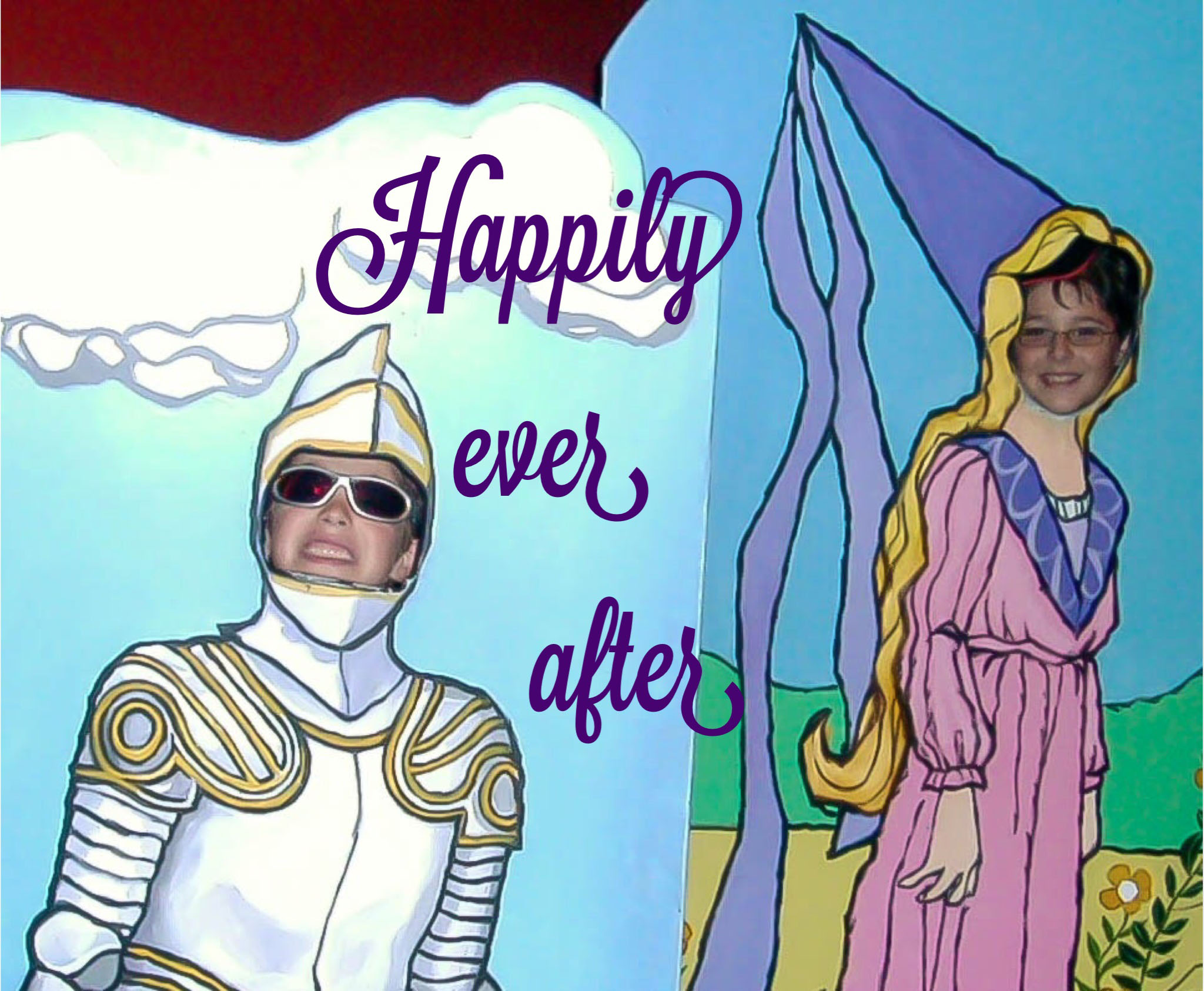
Penny is attracted to Mark because of his gifted story-telling. He’s prolific with his ideas. Mark thinks Penny is really cute, and he likes that she always seems to know how to spell words without having to look them up in a dictionary. He notices that she’s good at applying the rules of grammar, too. Their common interest in writing is what first brought them together. Each realizes that, if they were to blend their talents, they would have a beautiful marriage in which they create compelling stories through clear, consistent communication.

Before they can live happily ever after, however, our two lovebirds have some issues to overcome. Penny is a stickler for the rules that she studies so well. In her quest for perfection, she corrects punctuation errors, fixes parallel construction flaws, and battles to avoid inconsistent verb tense while she’s composing first drafts. Her compulsion to be exact gets in the way of production. She would notice the mistake in the opening dialogue above and abruptly stop to fix it before moving on with another thought. Heaven help her; she can’t let anything go.

Mark is overly distracted by his surroundings. He keeps a notebook on hand to jot down tidbits from the conversations he hears, peculiar behavior he sees, and story lines that come to him. When he writes, he knows what he wants to say and how he wants to say it, but he has little patience for Penny’s nagging about following the rules. In his opinion, those are really just suggestions that slow down his creative process. To Penny’s horror, he finds revision to be cumbersome. He wouldn’t care to change anything in the same opening sentences above.

KellyDeadwood-20147July-PrincePrincessPhoto

Penny and Mark’s relationship is complicated. Both have strong opinions and skills in different areas. Is there a way to help the couple get along despite their individual styles and abilities?

I relate to both of them. As a writer, I admire Mark. He is comfortable with his craft. He’s confident, capable, and inspiring in his creativity. He knows how to set a scene, develop characters, and engage audiences. He paints entertaining images, even with discrepancies in protocol. From him, I’m learning to let the rules go for awhile, write what I need to write, and fix the grammatical issues later.

At least I try to fix them later. When I’m revising, I’m aware that I’ll never master all of the idiosyncrasies that pertain to good writing. There’s just too much information to remember. But certain things pop out to me. Either I know how to make those items conform better to the rules, or I have to look up advice in a style guide. Taking a cue from Penny, I most often rely on The Chicago Manual of Style for three main reasons. First, it’s widely recognized by writing professionals as a reputable, Standard English resource. Second, each subsequent edition evolves to keep up with changes in the writing industry. Third, through my online subscription, I can get answers to questions that stump me.

Generally, I’ve heard it said that once you know the rules, it’s okay to break them. This applies to writing. For instance, consider the difference between conversational language and more formal communication. Suppose you draft the following e-mail to the high school composition teacher: “I am wondering to whom I should forward the paper.” Doesn’t it just feel a little awkward? It sure sounds that way to me. Few people, often not even the English teacher, talk like that. In relaxed, everyday conversations, I think most people simply bend long-standing rules and ask, “Who should I send the paper to?” It may not be perfect grammar, according to Penny, but it’s perfectly acceptable, as Mark will point out.

While I’m okay with text that reflects the way people naturally talk, I’m increasingly concerned about certain grammatical mistakes that are making their way into e-mails, messages, and online articles. One of the most common offenses I’ve noticed is misplaced quotation marks. Having seen so many, I started to doubt my understanding of the basic punctuation rules.

I went back to the books to brush up, and I’m relieved to say that some things never change. We still only have three rules to consider when determining where to place our ever popular quotation marks: inside, outside, and sometimes inside/sometimes outside.

Of those three, the rule I wish Americans would agree with and apply is: periods and commas always go inside quotation marks. The Chicago Manual of Style, Associated Press Stylebook, and MLA Handbook for Writers of Research Papers say so. Purdue University’s Online Writing Lab (OWL) concurs and further notes that this punctuation is standard in the United States but not necessarily in other countries.

For many reasons, we just don’t do things the same all throughout the world. Consider the following ways we in the US differ from the English. Here we write gray versus their grey, and practice instead of practise. We go on vacation, and they go on holiday. We can try to emulate the accent in their speech. But we don’t follow a king or queen and we shouldn’t follow foreign punctuation rules. We simply don’t want to confuse our American audience.

If you look back at Mark’s statement to Penny, you may notice that it’s improperly punctuated for those of us in the US. I should have written: “I hope I never have to read that.” The ending quotation mark is now correctly placed outside the period. Whew! Hopefully, I’m not the only one breathing a sigh of relief.

I recognize that it’s difficult for us writers to come to consensus over all the little details we face. Even within our own U.S. borders, we are bombarded with inconsistencies in how things are done. For instance, I used to cringe every time I read an article on Wikipedia that looked to me to be incorrectly punctuated. That organization has American roots and computer servers located in the US. So, why are its articles littered with periods and commas flagrantly outside quotation marks?

After a little research, I realized that the mistakes weren’t due to inexperienced contributors. The errors weren’t missed during half-hearted attempts at revision. They weren’t accidents at all. Wikipedia had established its own style and its own rules—which, as noted, are unconventional for us Yanks.

My Picky Penny tendency pushed me to get an explanation from Wikipedia itself. Why was a basic standard compromised? In an e-mail response, I was told that, “All of Wikipedia’s policies and guidelines are developed by community consensus…Wikipedia’s users are all over the globe, not just in American-English speaking places.” Yikes! That seems like a pretty big compromise to me, but I suppose if you make up your own rules, then you can rightfully claim that you’re really not breaking any.

I do concede some flexibility in what we’ll consider guiding principles. Remember my favorite resource, The Chicago Manual of Style? It discourages the use of italics for emphasizing words placed at the end of sentences, like I did in Mark’s statement to his betrothed. I could have written, “I hope I never have to read that.” The prevailing thought is that my readers would have naturally put emphasis on the last word, without a prompt from me. Was I wrong or breaking a rule to help the readers by forcing the emphasis and putting the final word in italics? Not exactly. The rule that applies is a pliable one. Not a hard and fast rule, like where to place an ending quotation mark. In this example, I was given flexibility to exercise a preference.

The hard part for writers is discerning between unbendable rules and suggested guidelines. It’s a daunting task. I’ve counted 35 different style guides used by just as many different groups of people. Lawyers, librarians, journalists, musicians, government officials, students, scientists, researchers, geologists, businessmen and editors all have their own style guides. No wonder writers struggle in deciding what to do under specific circumstances. Every industry, even every company, has the potential to do things differently.

If you pay attention, you’ll see how other writers address grammar issues. Be forewarned that they bring their own knowledge and personal choice—right, wrong, or just different—to their work. Personally, I have quite a bit of fun discussing fundamental principles with my father-in-law. He’s known to have a quirky way of punctuating sentences. Eventually, he convinces me of his unique logic, and I in turn try to persuade him to find a style guide that supports his view. (I’m beginning to think he’s British.) Picky Me suggests that if he can’t find one, then it’s time to conform to some published criterion. Heaven help me if he chooses Wikipedia or writes his own!

Let’s think back to Penny and Mark. In trying to help them blend their different writing worlds, I suggest that they, too, agree on one basic style guide. It’s less distracting to readers if there is uniformity amongst us writers. That’s one reason publishers and online sites post submission guidelines or indicate the manual of style they would like writers to comply with. At the very least, we don’t want to alienate or irritate their editors by ignoring the very tool they want us to utilize. We want our submissions to work for us, not against us.

Following the rules can be considered one of writers’ most basic job requirements. Consistency in applying them will make us look credible. Accuracy will generate respect; compliance may generate a paycheck. And Mark and Penny will have one less thing to argue about on their way to a fairy tale ending.

Express Yourself with the Perfect Word

I remember being a child and responding to my (now beloved) sister’s taunts with the phrase, “Sticks and stones may break my bones, but words shall never hurt me.” How anyone ever thought that was an effective way for children to deal with ridicule is a mystery to me. Today it’s more commonly understood that youth and adults on the receiving end of verbal attacks aren’t always able to fend off the pain of negative comments. The problem is so prevalent that the Centers for Disease Control and Prevention has studied it and identified name-calling and teasing as a form of bullying.[i] Words are extremely powerful.

Considerate communicators, particularly authors, have to choose words purposefully. Words act as building blocks to a story. Stacked together, they impart feelings, inspire or motivate. They determine action, setting, and point of view. They convey conflict and emotion. And they should compel readers to rush ahead one page at a time, one word at a time, to discover the surprises that await them.

As we’re writing our manuscripts, the goal is to be clearly understood. The skill, however, is difficult to achieve, because writers and readers don’t always interpret things the same way. Compounding the problem is that a word usually has various definitions associated with it. Consider sanguine. The word means confident, which may be interpreted as a positive trait. It also means bloodthirsty and depicts a more sinister quality.[ii] When writing an article, the author needs to make his intent as clear as possible for the reader. At times, he may actually need to specify the correct attribute—for example, self-assured as opposed to homicidal. My friends who write fiction will not entirely agree. For their creative process, it’s more effective if they show, rather than tell, readers what they mean. They create this understanding through meticulously scripted action, scenery and dialogue. Regardless of the type of writing we do, the underlying premise is that we pay strict attention to the words we use for each of our given scenarios.

History gives us a concrete look at the significance of word choice. Biblical scholars examined Sacred Scripture and identified many different names the Hebrew people used when they referred to God. Each name revealed something important about God’s character. He wasn’t just addressed as God. He was Creator God and they professed thanks to Elohim; He was God Most High and they humbled themselves before El Elyon. He was God Almighty and they praised El Shaddai.[iii] Faithful Hebrew people found one word was inadequate in describing the many qualities of their provider and their relationship with Him. They selected appropriate words as needed—words which reverently reflected their view of God’s sovereignty, omniscience, and love in precisely the way intended.[iv]  Although not everyone will identify with these ancient terms of endearment, I’m certain that God is still adored by many present-day believers with these highly expressive names.

So how does a modern writer figure out which word is best for his given situation? Experience, education, and intuition are part of the answer, and I believe that a good dictionary and thesaurus are essential tools for the author’s toolbox.

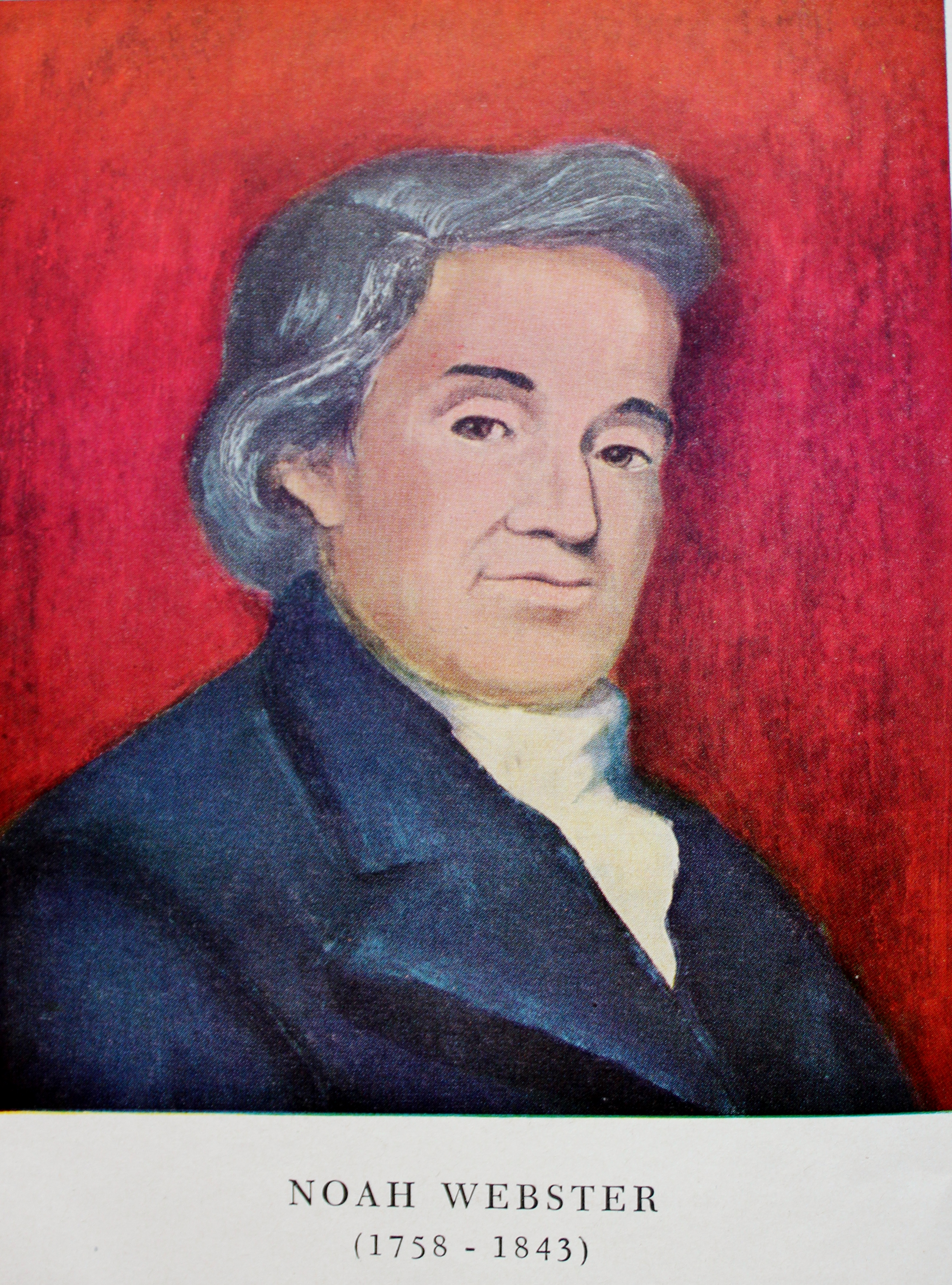
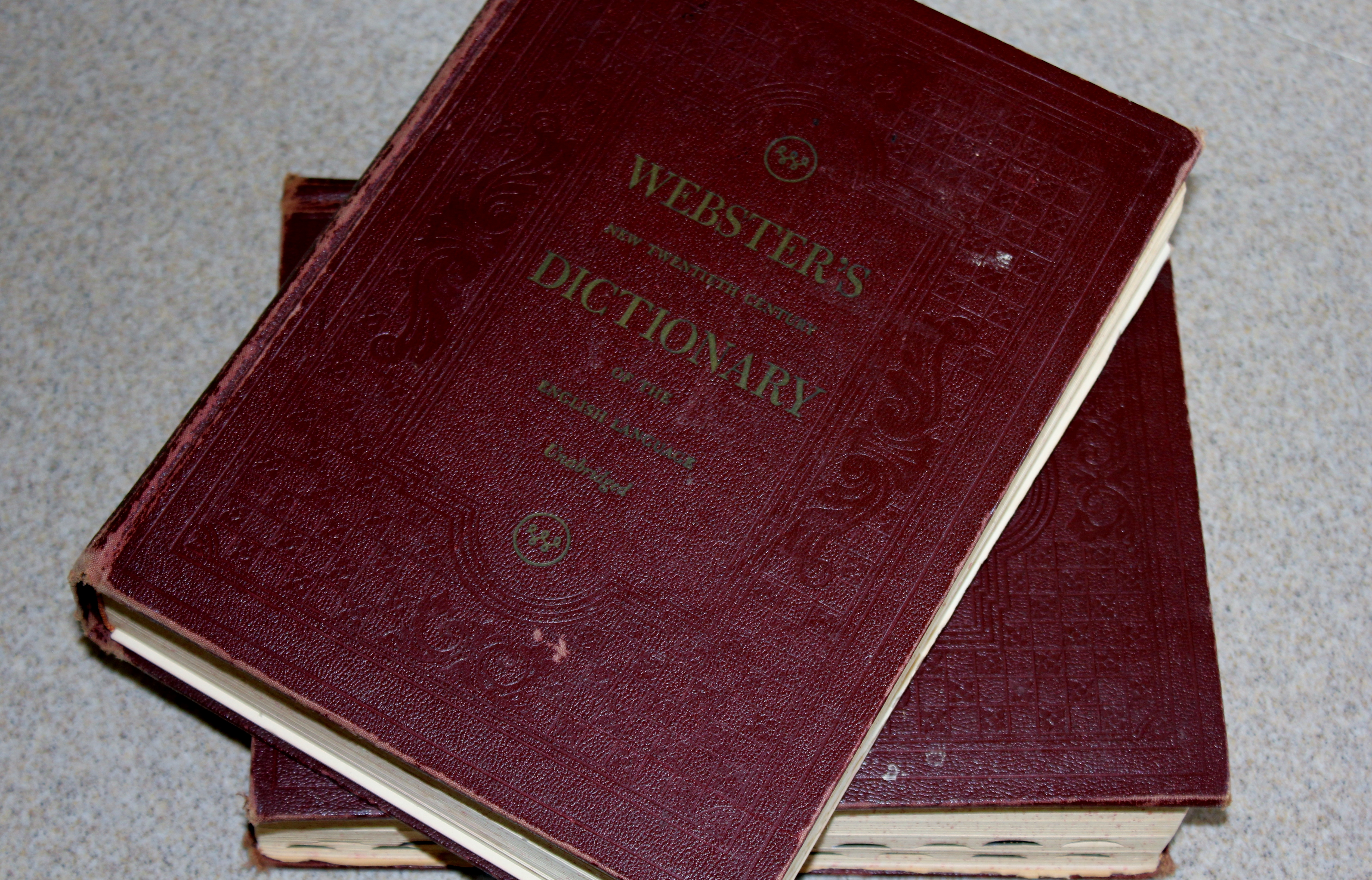
DWV word choice articleOne of my favorites is a double volume Webster’s dictionary published in 1951. I bought it secondhand. The burgundy binding appears to be leather, but it’s so worn I can see threads of fabric beneath. It smells a little musty. The spine of volume II has suffered and is a little loose. It’s possible that someone dropped it or simply overused the extra features in the back of the book, where little tabs with descriptive labels are so hard to read that they are no longer useful in identifying the subject matter lying beneath. My treasured reference book simply looks old and feels old. There’s even an image of gray haired Mr. Webster tucked opposite the title page. The whole thing is wonderfully frail, and I appreciate the ambiance and feel that go along with opening the cover and delicately turning the pages.

For DWV articleSince I’ve known Noah Webster all of my adult life, I can’t seem to bring myself to recommend any other dictionary source (although many other good options, including convenient smart-phone apps, do exist). I won’t give up my hardbound set, but I have to say that I most often use the free online version available at Merriam Webster. There you will find expected features, such as spelling, definitions, and synonyms, and some additional perks not available in printed versions.

Interesting online features allow you to answer quizzes, play games, test your vocabulary skills and view video tips addressing common language and writing issues. “The Awkward Case of ‘His or Her’” takes a look at a popular, long-standing dilemma. I also recommend “Ghost Word” to those of you who would like to learn about a non-word that made its way into a 1934 edition of the Webster’s dictionary.

A thesaurus is part of the online site also. It’s extremely helpful during the final stages of your writing, when you’re revising. Look over your manuscript and identify words that you’ve repeated. Don’t tire the reader with redundancy–engage him by finding other terms that describe the same thing. With just a click of your mouse and a few taps at the keyboard, you instantly discover new, more interesting ways to express yourself. The online method is so quick, I have to concede: it negates the “Easiest to use!”[v] marketing claim emblazoned on my 1989 paper thesaurus.

In the creative process, don’t work so hard at being original that you end up compromising your voice. Pick words that you are familiar with and that sound natural to you. Your choice should reflect your personality and reveal subtle information about yourself to the reader. For instance, by reading this article, you should be able to tell that I greatly respect Noah Webster’s legacy.

So whether you prefer books that you can physically rummage through or you enjoy the ease of using electronic tools, make sure you have good reference materials on hand. Then, when you want to entertain your readers with extra pizzazz, you can find the perfect word.

Notes


[i] “Understanding Bullying,” Centers for Disease Control and Prevention, 2013 Fact Sheet, Atlanta, 10 April 2014 <http://www.cdc.gov/violenceprevention/pdf/bullyingfactsheet2014-a.pdf.pdf>

[ii] Merriam-Webster Online Dictionary and Thesaurus, 10 April 2014 <http://www.merriamwebster.com>.

[iii] Michal E. Hunt, “The Many Names of God,” 2003 AgabeBibleStudy.com, 10 April 2014 http://www.agapebiblestudy.com/documents/the%20many%20names%20of%20god.htm>.

[iv] Beth Moore, The Patriarchs: Encountering the God of Abraham, Isaac, and Jacob (2005; Nashville: LifeWay Press, 2006) 11-39.

[v] The Merriam-Webster Thesaurus (Springfield: Merriam-Webster Inc, 1989) spine.

Fig1: Noah Webster, image from Harold Whitehall, ed., Webster’s New Twentieth Century Dictionary of the English Language (Cleveland: The World Publishing Company, 1951) frontispiece.

The Writer’s Life

I have been a writer since age 5, but it has taken years for others to realize that.

I was always a writer, or, more directly, I was always writing.  The act of writing does make one a writer, but the subtleties of that are profound.  Writing is an activity that kids do as a school assignment or what adults do in their serious job.  Writing is an element of something else, not a stand-alone profession.  Why should writing be considered anything more than a hobby?  It is for the reader.

I was a child who was not good at sports and had no siblings to annoy or be annoyed by.  I had the time, and I recognized at that early age that I was creative.  My parents encouraged me or at least positively tolerated the hours I spent hunched over a pad of paper.  I kept diaries of thoughts, personal struggles, observations, conversation snippets and story ideas.  My middle school English teacher let me write stories for extra credit.  I continued that in high school, writing one teacher-acclaimed sequel to some book we read in class, some sort of social commentary combining 1984 and the character K-9 from the British TV show Doctor Who.  Then came the big moment: I was editor of my high school newspaper.  I made it; I was a writer.

I guess I was.

Wanting to learn more about the craft of writing, I took enough college poetry, creative nonfiction and fiction classes to obtain an English Writing minor.  Despite this, in my mind I was just a kid writing words.  I was not a writer.

Non-writers defined–and still does to an extent–that a “writer” is someone who earns enough money writing to pay the bills and put food on the table.  I had a full-time “real job”, but I did not define myself by that.  When people asked what I did, I said, “I write.”  Inevitably, the next question was, “Ooh, what do you write?”  My reply was always a bit choked: “I write in my journal.”  Because I could not point to a genre much less an actual published anything, people’s eyes glazed, they gave me a polite “oh,” and then looked over my shoulder as if at a dinner party looking for someone more interesting to talk to.  Society dismissed me.  It’s hard to argue with that; they’re right.

A coworker mentioned that she knew someone at a newspaper who was looking for writers.  The editor and I connected on the phone.  After an introduction and some discussion of my experience, the editor asked, “We really need someone to write a singles beat for us.  Do you know where all the 20-somethings go for fun?”

I was 20-something.  I was single.  I wrote.  “Absolutely!” I said.

No sooner did I hang up with the editor–my editor!–with an introductory article assignment, than I picked it up the phone, called my friend, and asked, “Hey, where do single people hang out around here?”

With a foot, or at least a pen, in the door, that first assignment led to another and then another.  My name was in print in a real publication, a free weekly newspaper.  Yes, you did not pay for it, but the paper had advertisers as well as columns on local news, sports and event.  I was legitimately published, and got paid; therefore, it counted as real.

I wanted some of that non-singles writing action, so I approached the Arts editor.  She gave me an assignment, and suddenly, I had a writing portfolio.

She called me after I submitted my third article and said, “Let’s discuss this piece.  You need to make some changes in your writing.”  She proceeded to take me through my article, line-by-line, and pointed out where my writing needed improvement.  She told me where a verb should be more active (she gave an example), where sentence length should be tweaked (gave example), where a description could be tighter and stronger (gave example) and so on.  I learned more about writing in that hour than I did all my years in college.  I followed her invaluable, free advice, and my writing got stronger.  I noticed it and so did she.

I’ve since written award-winning articles for newspapers and magazines, all a bit of luck, opportunity and skill.  I’ve had my queried ideas accepted, giving me freedom and confidence in my skills.  I published my first eBook in 2013, the first of many.  I’m here to share my perspectives and the struggles I have.  I hope you’ll learn with me as I continue my journey of writing.

I mean, my journey as a writer.