Tag Archives: resources

Using Social Media to Overcome Writer’s Block?

Writing takes practice.

Sure, we all know that, but too often, we are frozen by the blank screen or paper we call Writers Block. At least, that’s the excuse we tell ourselves.

The only way to break down that wall is to write.

And that brings us back to the beginning. How do we begin writing? Where do we find ideas?

Blog Writing Challenges

 Whether you have written or write for a blog, you need some social media presence to maximize this option. People are sharing their creative arsenal to battle the widespread war of writer’s block across the webisphere. These challenges are sites all across the Internet. Your journey is to find them.

I’m a fan of the social media site Twitter. Unlike Facebook, it’s an open media without memberships or restrictions. Connecting with writers and readers and celebrities is a Follow click away. Unlike LinkedIn, it’s not business-focused. Unlike Google+, this is not a new, unknown experiment. Twitter is established, creative and short to swallow with its 140-character limit in each Tweet. It’s easy to find similar topics and groups with a simple #hashtag search.

On the day I wrote this, I found an array of challenges with directed yet general hashtag searches. Some of these lead directly to the moderator’s website, while others simply group posts together under that specific hashtag.

Searching the Twitter hashtag #challenge showed writing and non-writing Tweets.  Scrolling through feed, the most relevant ones came from users like @convince to post a photo with every Tweet for one week, @RonovanWrites with his weekly haiku prompt  and @lettrs posing a #WordOfTheDay challenge.

One of my favorite hashtags is #6WordStory, a challenge posed by @Kelsye. Other searches relevant and directed to writers include: #WritingChallenge; #poetrychallenge; #FiveSentenceFiction; #haikuchallenge; and #fictionchallenge.

Twitter is not case-sensitive, so upper- and lower-case usage is personal preference. The words get you to the same location. I like to capitalize some of the longer hashtags to make them easier to read.

The beauty of Twitter is the prompts are provided, and the ideas out there are bountiful. Once you find an inspirational idea, attack that challenge with all your creative energy. Many people link to their personal blogposts, but you don’t need a blog to participate. Create a separate file on your computer and dedicate 15 minutes a day to play with words. Do an email exchange with a friend or family member. If you are uncomfortable sharing, choose a journal to write in for your personal enjoyment.

If you want to publicly share your accomplishments submit these, or parts of it, on your social media or link posts to your personal blog. If you want to make a visual expression of your art, use a smartphone app like InstaQuote or Notegraphy to create a graphic to share with others or save to your camera roll.

Using photos allows your social media reach to increase. The Twitter user @asilartist tied her #9WordStory challenge together by cross-posting from her @reclaimed poet Instagram account. The same hashtag exploration applies there. I found creative posts with the tags: #WritingChallenge; #PoetryChallenge; #threewordstory; #poemaday; #flashfiction; and #4WordStory.

Beware! Most users will use more than one tag, adding several related hashtags so their post can reach various audiences. As your curiosity increases, you will find yourself winding through a maze of related hashtags so that you can forget the original hashtag you started searching for. It’s glorious. It’s frustrating.

There are worse things than being lost in a new tag that connects to a newer tag that inspires you to search for a personal interest of yours. It’s the only way to drag yourself over that tall writers block wall.

Amazon, Hachette and “the wretched $9.99 price point”

Print is dead.

At least, that’s what the Big Five publishing houses fear. One company is fighting the potential loss of sales and its possible demise in a public battle that affects readers and writers alike.

Before 2007 or so, the only way an author’s story was read was through a print copy in brick-and-mortar bookstores. The only way to get into a bookstore was through a major publisher. Knowing their control, these large publishers chose the stories and genres people read, the prices at which books were sold and what the authors got paid.

Now that snippy digital upstarts like me are snooting our way in and circumventing the system they so strategically designed, publishers are no longer needed. With digital formats, there is no gatekeeping; I can write and publish any book at any length in any genre I choose and at any price.

Without hardcover or paperback books, the publishers’ choking grip on the market disappears with the turn of a page. The Big Five lose all public prestige, respect, expertise, control and sales. Especially sales.

Welcome to the battle between Hachette and Amazon.

Hachette wants to charge high e-book prices to discourage electronic sales and boost paper sales. Amazon wants to keep prices of e-books favorable to consumers. This dispute has been going on for years. To understand the impact of today’s feud, let’s go back in time for a brief history….  (Shout out thanks to J.A. Konrath’s timeline for the format inspiration that I use.)

NOVEMBER 2007

Amazon releases the company’s Kindle e-reader.

NOVEMBER 2009

Barnes & Noble introduces the company’s Nook e-reader.

Retailers continue buying books and e-books using “wholesale pricing,” an agreement in which publishing houses charge half the printed cover price to those retailers. The booksellers then compete with each other by discounting books or offering sales. At this time, hardback book prices range from $15-30.

Amazon is a large company with a large share of the e-book market. They rarely sell at full price, offering book titles below the printed cost, even as far down as $9.99 for bestselling novels. The Big Five publishers make a lot of money through the sales of higher priced hardcover books, and this consumer-friendly price point might encourage more digital sales than paper. These companies didn’t want that to be the standard that consumers would expect to pay.

JANUARY 2010

Apple prepares to release its iPad, but if they offer books in their iBookstore at a price to compete with Amazon, the company will lose money. A publishing executive blames Amazon’s “wretched $9.99 price point.” Apple and the Big Five publishers work out an agreement that benefits everyone. The publishers switch book distribution away from wholesale pricing to the new and improved “agency pricing” model. In this agreement, publishers control the price of the e-book rather than the retailer. Sales percentages are split favorably, as well: 30% to Apple and 70% to publishers. In this scenario, consumers who choose to buy e-books instead of physical copies are, in a sense, be punished for affecting paper sales.

The only caveat is that all publishing houses have to sell this way to all of Apple’s competing retailers, including Amazon. Amazon pushes back, but with everyone else agreeing to this method of distribution, the company has to accept these terms. Book prices on Amazon’s site rise to $12.99 and $14.99. The term “colluded” is later used when referring to this agency pricing arrangement.

APRIL 2010

Apple releases the iPad.

JULY 2010

Amazon reports that digital e-books outsell hardcover books for the first time in history. The agency pricing continues for two years before the U.S. government steps in.

APRIL 2012

The U.S. Justice Department (DOJ) accuses Apple and the publishers of conspiring to raise e-book prices and filed a civil antitrust lawsuit. By developing and utilizing agency model, “the publishers prevented retail price competition resulting in consumers paying millions of dollars more for their e-books” especially for the most popular titles by big-name, best-selling authors.

Three of the Big Five publishing houses, which include Hachette, settle immediately. Retailers resume discounting and offering sales. The publishers pay financial restitutions to consumers and are “prohibited for two years from entering into new agreements that constrain retailers’ ability to offer discounts or other promotions to consumers….” The DoJ settled with two other publishers and Apple by 2013, yet Apple appeals the decision.

Now fast forward to the present year. Apple’s appeal is ongoing as of this post.

JANUARY-FEBRUARY 2014

The 2-year contracts are ending, so new ones need to be negotiated or extended. Amazon sends a contract to Hachette. Because they do not receive a response from Hachette, Amazon removes the site’s pre-order buttons and stops discounting Hachette titles.

MARCH 2014

Hachette’s contract to sell books with Amazon expires, but Amazon extends it into April while both sides negotiate. Because the outcome is uncertain and shipping dates cannot be guaranteed, Amazon reduces the print inventory of Hachette titles.

APRIL 2014

There is now no longer any contract for Amazon to sell Hachette titles on Amazon. Hachette finally makes counter offer, Amazon rejects it.

MAY-JUNE 2014

Hachette authors notice slower sales, so Amazon makes several proposals that they and Hachette offer financial provisions for the authors during negotiations. Hachette declines all of them.

JULY-AUGUST 18, 2014

Here’s when media runs wild with statements, press releases and proposals, oh my!

Hachette compiles its press releases and statements regarding Amazon here.

Propaganda or perspective? Article from Random House editorial assistant Alison Herman with intriguing links at the end.

Big Five authors want print to thrive. Who can blame them? Without physical books, bestselling authors like Stephen King, John Grisham and James Patterson lose their dedicated personal assistants and vacation beach houses. They each become “just another little writer” in a writer’s ocean.

There is a letter from Douglas Preston, a Council Member of the Author’s Guild, signed by authors supporting Hachette. As of August 9, the letter had approximately 900 signatures, published as a full 2-page $110,000 advertisement in the New York Times as “A Letter to Our Readers.”

There is a petition by Change.org urging readers and writers to support the company who supports readers and authors. As of August 9, the petition reached 8000 electronic signatures. (8466 as of my post)

On August 9, The Amazon Books Team releases a letter discussing their point of view from within the negotiation. There are some good links at the end. It’s worth a read through.

The email reply from Hachette CEO Michael Pietsch in response to Amazon’s August 9 letter request for consumers to contact executives about the negotiations.

Amazon releases a statement justifying the $9.99 price point: “For every copy an e-book would sell at $14.99, it would sell 1.74 copies if priced at $9.99. So, for example, if customers would buy 100,000 copies of a particular e-book at $14.99, then customers would buy 174,000 copies of that same e-book at $9.99. Total revenue at $14.99 would be $1,499,000. Total revenue at $9.99 is $1,738,000.”

And here we are, readers and writers, reeling in the wake of potential propaganda from both sides. Marketers in any company can spin numbers any way they want to make the numbers show in their favor. I don’t necessarily believe in Amazon’s exact number or those calculations empirically, but the rationale behind it is solid. If I had $15, would I spend it on one book? Am I more inclined to buy a $9.99 book and a coffee and muffin to enjoy while reading the book? If a purchase like that gives me that pleasure, then I’m encouraged to buy another similarly priced book for a similar experience.

“Why should e-books cost as much as, or more than, a printed copy?” my husband asked me. “There’s no shipping or printing.” He’s a chemist and not in the publishing industry. If this is so elementary to someone outside the industry, how is it lost on someone in the publishing business?

I’m not necessarily pro-Amazon, but I am pro-information. Some people do not have the drive or desire to do it all, so turning their work over to a Big Five publisher is the best option for them. But how is Hachette assisting and nurturing its authors when it let their contract with Amazon expire, and thus all its authors’ contracts as well?

If Amazon wins this battle, they will dominate the market…for now. At some point, all Amazon authors could be stuck with a business model that no longer offers today’s benefits, and then Amazon becomes the Big One publisher. If that happens, authors are not stuck.

Unlike print, where the only way to publish was through a publisher, there are now numerous electronic options. No doubt any number of smaller publishers and retailers will develop online stores. Any author can sell directly from their website. These were options never available before.

Who needs who more, Amazon or Hachette?

Who, or what, do authors need?

Print may be dying, but books and stories never will.
Perfect Endings Belong to the Quotation Mark

Picky Penny said, “I’m studying The Chicago Manual of Style.”

Misplaced Mark replied, “I hope I never have to read that”.

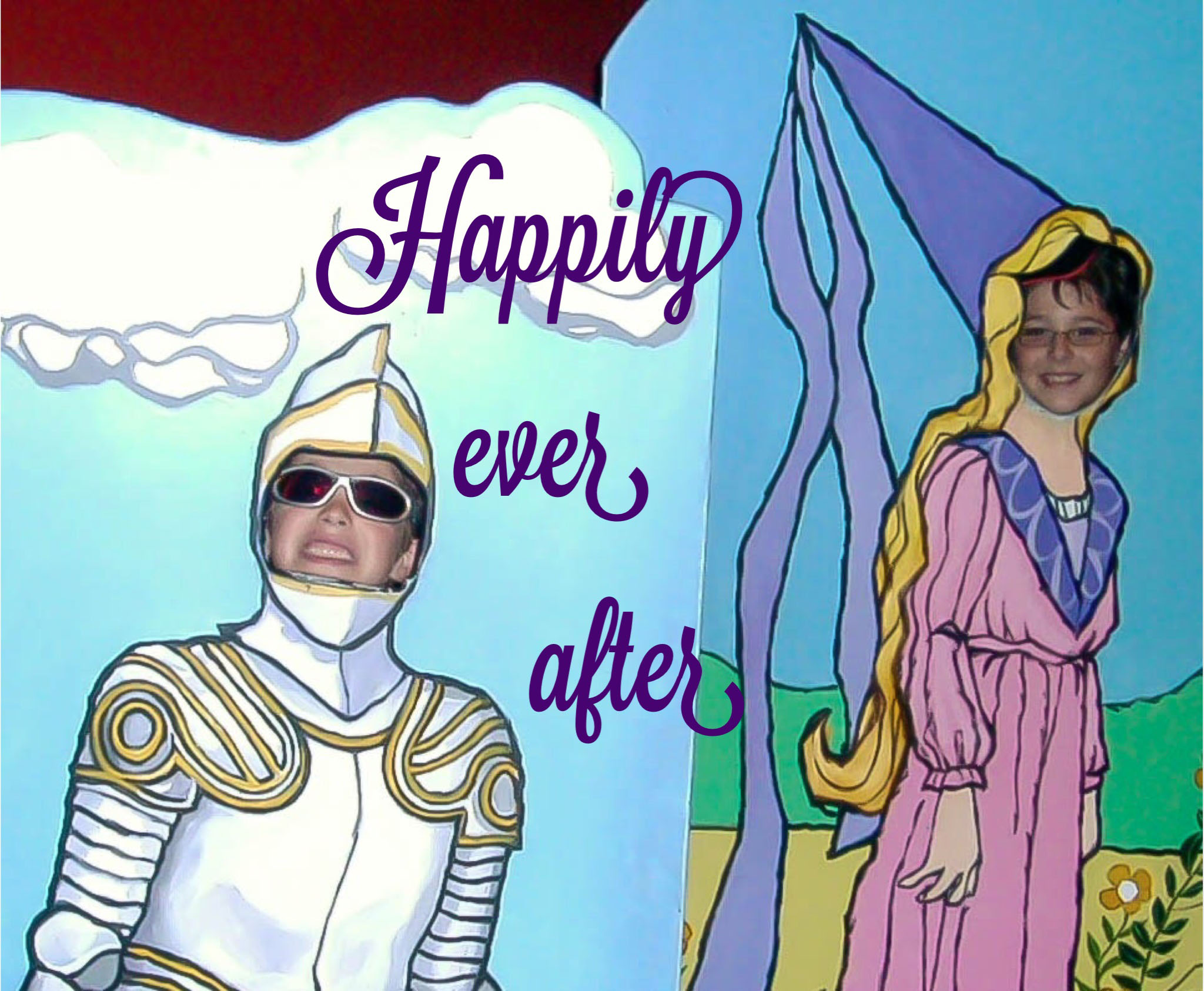
Penny is attracted to Mark because of his gifted story-telling. He’s prolific with his ideas. Mark thinks Penny is really cute, and he likes that she always seems to know how to spell words without having to look them up in a dictionary. He notices that she’s good at applying the rules of grammar, too. Their common interest in writing is what first brought them together. Each realizes that, if they were to blend their talents, they would have a beautiful marriage in which they create compelling stories through clear, consistent communication.

Before they can live happily ever after, however, our two lovebirds have some issues to overcome. Penny is a stickler for the rules that she studies so well. In her quest for perfection, she corrects punctuation errors, fixes parallel construction flaws, and battles to avoid inconsistent verb tense while she’s composing first drafts. Her compulsion to be exact gets in the way of production. She would notice the mistake in the opening dialogue above and abruptly stop to fix it before moving on with another thought. Heaven help her; she can’t let anything go.

Mark is overly distracted by his surroundings. He keeps a notebook on hand to jot down tidbits from the conversations he hears, peculiar behavior he sees, and story lines that come to him. When he writes, he knows what he wants to say and how he wants to say it, but he has little patience for Penny’s nagging about following the rules. In his opinion, those are really just suggestions that slow down his creative process. To Penny’s horror, he finds revision to be cumbersome. He wouldn’t care to change anything in the same opening sentences above.

KellyDeadwood-20147July-PrincePrincessPhoto

Penny and Mark’s relationship is complicated. Both have strong opinions and skills in different areas. Is there a way to help the couple get along despite their individual styles and abilities?

I relate to both of them. As a writer, I admire Mark. He is comfortable with his craft. He’s confident, capable, and inspiring in his creativity. He knows how to set a scene, develop characters, and engage audiences. He paints entertaining images, even with discrepancies in protocol. From him, I’m learning to let the rules go for awhile, write what I need to write, and fix the grammatical issues later.

At least I try to fix them later. When I’m revising, I’m aware that I’ll never master all of the idiosyncrasies that pertain to good writing. There’s just too much information to remember. But certain things pop out to me. Either I know how to make those items conform better to the rules, or I have to look up advice in a style guide. Taking a cue from Penny, I most often rely on The Chicago Manual of Style for three main reasons. First, it’s widely recognized by writing professionals as a reputable, Standard English resource. Second, each subsequent edition evolves to keep up with changes in the writing industry. Third, through my online subscription, I can get answers to questions that stump me.

Generally, I’ve heard it said that once you know the rules, it’s okay to break them. This applies to writing. For instance, consider the difference between conversational language and more formal communication. Suppose you draft the following e-mail to the high school composition teacher: “I am wondering to whom I should forward the paper.” Doesn’t it just feel a little awkward? It sure sounds that way to me. Few people, often not even the English teacher, talk like that. In relaxed, everyday conversations, I think most people simply bend long-standing rules and ask, “Who should I send the paper to?” It may not be perfect grammar, according to Penny, but it’s perfectly acceptable, as Mark will point out.

While I’m okay with text that reflects the way people naturally talk, I’m increasingly concerned about certain grammatical mistakes that are making their way into e-mails, messages, and online articles. One of the most common offenses I’ve noticed is misplaced quotation marks. Having seen so many, I started to doubt my understanding of the basic punctuation rules.

I went back to the books to brush up, and I’m relieved to say that some things never change. We still only have three rules to consider when determining where to place our ever popular quotation marks: inside, outside, and sometimes inside/sometimes outside.

Of those three, the rule I wish Americans would agree with and apply is: periods and commas always go inside quotation marks. The Chicago Manual of Style, Associated Press Stylebook, and MLA Handbook for Writers of Research Papers say so. Purdue University’s Online Writing Lab (OWL) concurs and further notes that this punctuation is standard in the United States but not necessarily in other countries.

For many reasons, we just don’t do things the same all throughout the world. Consider the following ways we in the US differ from the English. Here we write gray versus their grey, and practice instead of practise. We go on vacation, and they go on holiday. We can try to emulate the accent in their speech. But we don’t follow a king or queen and we shouldn’t follow foreign punctuation rules. We simply don’t want to confuse our American audience.

If you look back at Mark’s statement to Penny, you may notice that it’s improperly punctuated for those of us in the US. I should have written: “I hope I never have to read that.” The ending quotation mark is now correctly placed outside the period. Whew! Hopefully, I’m not the only one breathing a sigh of relief.

I recognize that it’s difficult for us writers to come to consensus over all the little details we face. Even within our own U.S. borders, we are bombarded with inconsistencies in how things are done. For instance, I used to cringe every time I read an article on Wikipedia that looked to me to be incorrectly punctuated. That organization has American roots and computer servers located in the US. So, why are its articles littered with periods and commas flagrantly outside quotation marks?

After a little research, I realized that the mistakes weren’t due to inexperienced contributors. The errors weren’t missed during half-hearted attempts at revision. They weren’t accidents at all. Wikipedia had established its own style and its own rules—which, as noted, are unconventional for us Yanks.

My Picky Penny tendency pushed me to get an explanation from Wikipedia itself. Why was a basic standard compromised? In an e-mail response, I was told that, “All of Wikipedia’s policies and guidelines are developed by community consensus…Wikipedia’s users are all over the globe, not just in American-English speaking places.” Yikes! That seems like a pretty big compromise to me, but I suppose if you make up your own rules, then you can rightfully claim that you’re really not breaking any.

I do concede some flexibility in what we’ll consider guiding principles. Remember my favorite resource, The Chicago Manual of Style? It discourages the use of italics for emphasizing words placed at the end of sentences, like I did in Mark’s statement to his betrothed. I could have written, “I hope I never have to read that.” The prevailing thought is that my readers would have naturally put emphasis on the last word, without a prompt from me. Was I wrong or breaking a rule to help the readers by forcing the emphasis and putting the final word in italics? Not exactly. The rule that applies is a pliable one. Not a hard and fast rule, like where to place an ending quotation mark. In this example, I was given flexibility to exercise a preference.

The hard part for writers is discerning between unbendable rules and suggested guidelines. It’s a daunting task. I’ve counted 35 different style guides used by just as many different groups of people. Lawyers, librarians, journalists, musicians, government officials, students, scientists, researchers, geologists, businessmen and editors all have their own style guides. No wonder writers struggle in deciding what to do under specific circumstances. Every industry, even every company, has the potential to do things differently.

If you pay attention, you’ll see how other writers address grammar issues. Be forewarned that they bring their own knowledge and personal choice—right, wrong, or just different—to their work. Personally, I have quite a bit of fun discussing fundamental principles with my father-in-law. He’s known to have a quirky way of punctuating sentences. Eventually, he convinces me of his unique logic, and I in turn try to persuade him to find a style guide that supports his view. (I’m beginning to think he’s British.) Picky Me suggests that if he can’t find one, then it’s time to conform to some published criterion. Heaven help me if he chooses Wikipedia or writes his own!

Let’s think back to Penny and Mark. In trying to help them blend their different writing worlds, I suggest that they, too, agree on one basic style guide. It’s less distracting to readers if there is uniformity amongst us writers. That’s one reason publishers and online sites post submission guidelines or indicate the manual of style they would like writers to comply with. At the very least, we don’t want to alienate or irritate their editors by ignoring the very tool they want us to utilize. We want our submissions to work for us, not against us.

Following the rules can be considered one of writers’ most basic job requirements. Consistency in applying them will make us look credible. Accuracy will generate respect; compliance may generate a paycheck. And Mark and Penny will have one less thing to argue about on their way to a fairy tale ending.

Born that way?

“It’s none of their business that you have to learn to write. Let them think you were born that way.” – Ernest Hemingway

Some writers seem to be born with a gift for writing with passions that evoke strong emotions, while others soothe you with their serene words. But only you, the writer, knows whether your story took six months or six years to complete or that the finished manuscript was the third, the thirteenth, or the thirtieth revision.

Only you know if you received a graduate degree in English Literature, took classes in creative writing, or attended numerous writers’ conferences. No one needs to know that you scour your thesaurus numerous times for the most dynamic verbs and read the movie credits in search of the perfect antagonists’ monikers.

No one knows that you keep a copy of The Romance Writers’ Phrase Book by Jean Salter Kent and Candace Shelton to find descriptive phrases although you pen thrillers, not romance. The book categorizes evocative phrases for quick reference (i.e.: Physical Characteristics; Facial Expressions; Voices; Colors). You never know when one of those picturesque words will tweak your imagination. Also useful are your copies of Barbara Ann Kipfer’s Roget’s Thesaurus of Phrases which is an alphabetical listing of familiar phrases and your Merriam-Webster’s Dictionary of Synonyms which contains words that can add punch to your story.

Only the final manuscript counts so continue studying, learning, and writing. It’s not the reader’s business that you’re not a natural-born writer. Who is? I won’t tell anyone you were not “born that way”.