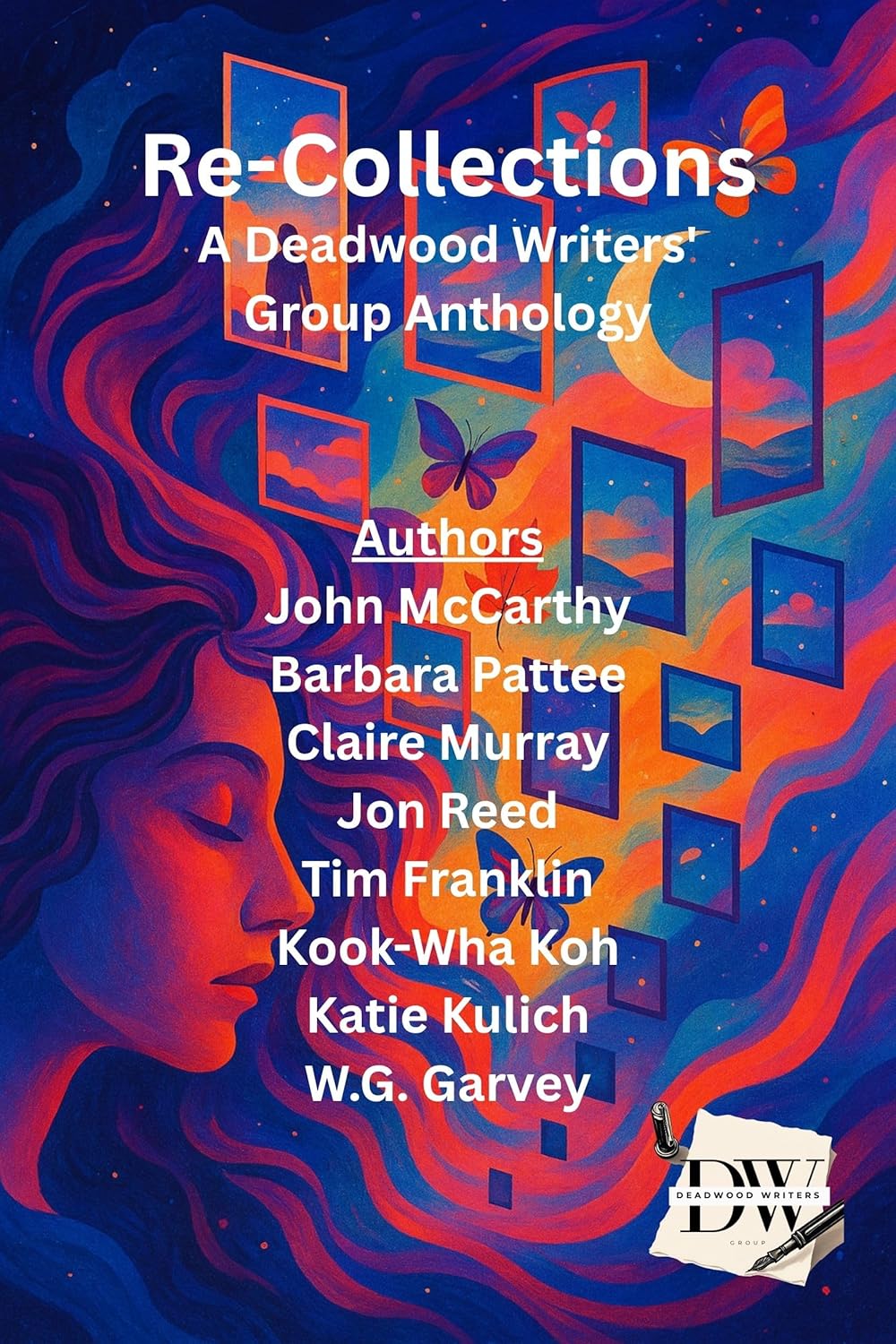
Re-Collections: A Deadwood Writers’ Group Anthology Series book 1 is live on Amazon. This is the group’s first anthology, which is a collection of stories, articles, and memoires. They went through a rigorous editing review to be in their best polished format. There is something for everyone. Our goal for future anthologies is to experiment with different themes and topics. Try it out. If you enjoy at least one story, please give us a 5 star review 🙂
During the meeting we discussed different marketing plans. Getting reviews posted on Amazon was one important step. Another was setting up this kindle version as part of the Amazon program. This means that if you have Amazon’s Kindle Unlimited subscription you can get this book for free. Or, as of this publication, you can purchase a copy for $1. Proceeds go to supporting the group, such as this website.
Sisyphus, from Greek Mythology, rolls a boulder uphill for eternity. With each attempt, the boulder rolls back downhill and Sysyphus must start the task anew. This is the author’s task once a book is published.
Some authors think that the publisher does (or should do) most of the promotion to sell their books. They might reference the Bestseller’s List for authors who’s latest book cover is promoted in stores, mailers, and social media. Places like Barnes and Noble and Books A Million have posters of books and authors to entice shoppers. As of this writing, Amazon is promoting books recommended by their editors. How do these books get on the ad banner, much less make the list?
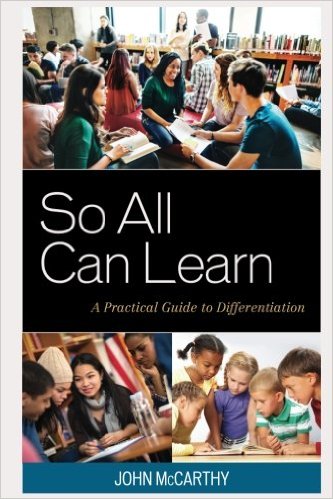
I don’t have the answer. My publisher for So All Can Learn: A Practical Guide to Differentiation (see description) has not told me, but is it her responsibility? The answer to that question is what I’ve been told by other authors before me, and when I did book publicity for a friend and excellent writer Phil Rosette: The best person to promote an author’s book is the author.
Publishers do promote the books. They have many that they must get air time on their website, mailings, and at the relevant book events. For most authors that’s as good as it gets. The few with high advances on royalties might get more investment in marketing. Again, a publisher has many books to promote. Considering the books you see on an end shelf, or display tables. Many are not rotated so that different authors are on display for the consumers. Likely, the same books will be presented week after week, because the publisher paid for the service. This practice is not exclusive to the book industry, as the same is found in many stores from clothes to groceries.
The author must be proactive in their book promotions. Sylvia Hubbard, author and book marketing coach, was once asked how long should an author promote their book? She responded (paraphrasing), how long do you want your book to be read?
If the best person to market and sell a book is the author, what should the author be doing? A few ideas include:
Use social media to keep the book in people’s minds. Keep the message fresh. Connect the book content to events or special dates throughout each year.
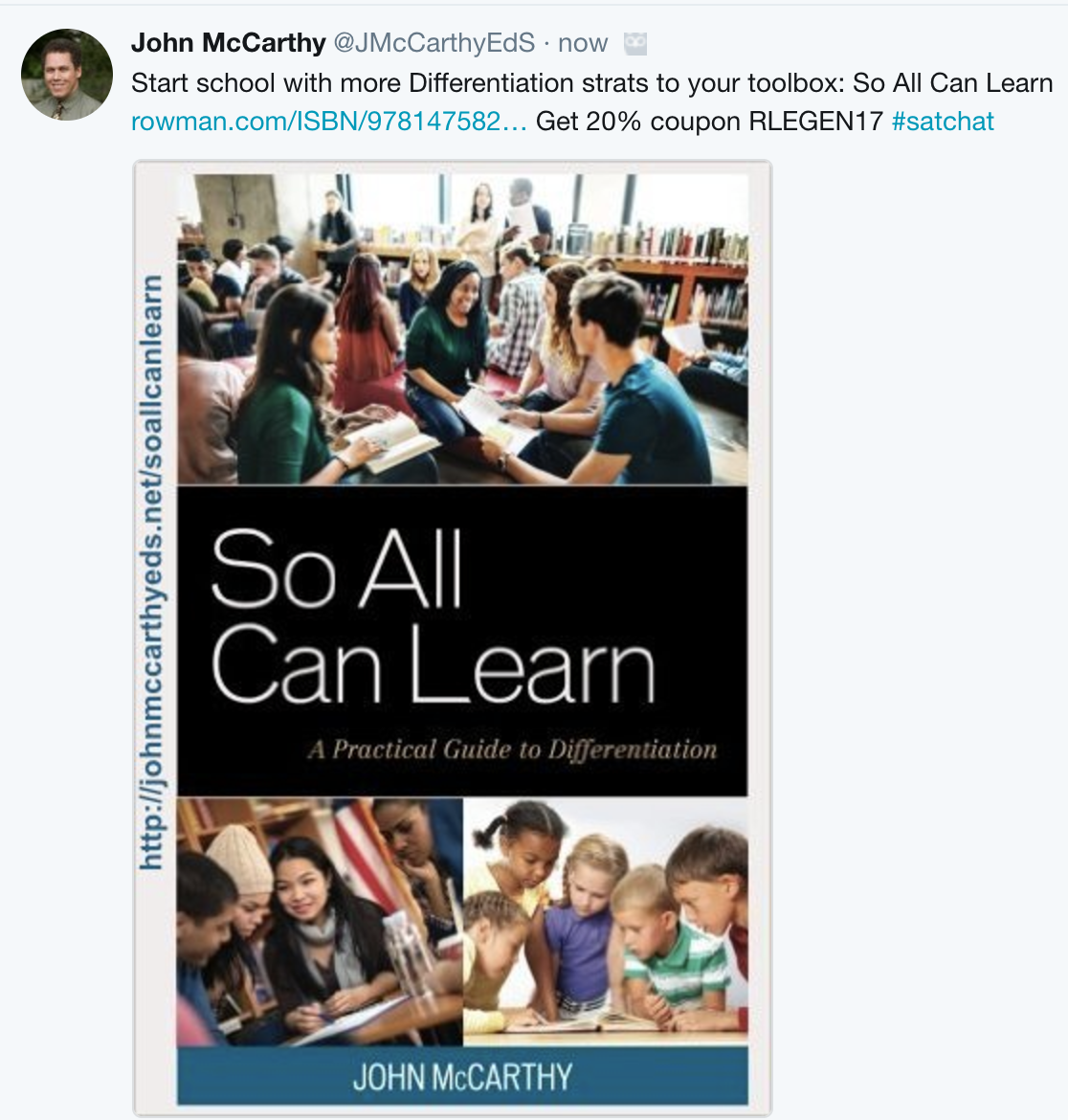
Share ideas and content that others would be interested, and find relevant ways to reference your book. For example, So All Can Learn can be purchased at Rowman & Littlefield for 20% off using the code: RLEGEN17 OR the Kindle version (as of this writing) is on sale for $9.99.
Present at events such as conferences, stores, and schools. Again like item 2, use topics that interests potential buyers, and that also tie-in to your book.
Recruit and invite people to read and write reviews for your book. Have them post the reviews where potential readers look, such as: Amazon, Good Reads, Barnes and Noble, and other sites. When potential buyers see that others have read your book and posted a positive review, they might be more likely to buy the book.
Create a website for your book. Here is mine for So All Can Learn.
Establish a listserv that you can share content you’ve posted on your blog and social media. Send out once a week or 2-3 times a month. Find the balance that works for you and your listserv. The key is content that they find relevant.
Give your book to key influencers. If they like the book they might share it with their networks as recommendations.
Use images related to your book where possible.
Many of these suggestions require you to put yourself out there. Some have suggested that self-promoting one’s book may be seen as negative. Who is best to sing the merits of a book other than the author? There may be a line between hard sell and convincing others that your book is worth the time. Being subtle all or most of the time will leave you with a dusty pile of untouched books. The result is that a publisher will wonder why you didn’t do more when sales are low. Most authors on the best sellers list started without name recognition, and had to become known. Those who were already known, likely had to establish themselves within their respective field. An author who chooses not to promote their book may become a best-kept secret, and lots of unsold books.
There are more ideas to try. This is a beginning. It will be time consuming, yet how important is your book? Catch your breath, and start rolling that boulder uphill–again, again, and again…
This list simply adds to the ongoing list of work produced by those who call themselves Deadwood Writers. Publishing work is a great accomplishment. Anyone who has done so can attest to that. But the work has only begun.
Writing isn’t the difficult step. Yes, it’s challenging, sometimes it feels impossible. Also, there are many who start and never finish. I have several incomplete manuscripts along my journey. But in relative terms, once the book is written and published, now there are the logistics of getting others to notice and read the book.
To put this in context, once someone is published, they have to sell their books. Get others to see the value of taking the time to buy the book and read it. Hopefully enough people like what they read and post a positive review.
There’s just the minor detail of getting one’s book noticed.
Creating and executing a marking plan is crucial. Rarely, and I do mean RARELY, does the publisher provide a marking budget that supports the author’s travels and their direct communications to the public. They do promote the book on their website and send it out to various media agencies, but the book is likely bundled with other’s books.
The best marketing is done by the author. No one is, or shouldn’t be, as passionate about the book as the author. Otherwise, the book is D.O.A.
Marketing requires a plan to get the message out to others. Using social media. Getting early reviews that are positive. And many more needs. One of the best steps I took for preparing my book, So All Can Learn: A Practical Guide to Differentiation is hired Sylvia Hubbard for a one hour coaching session to address any needs that I might not have considered. Sylvia provided me with an abundance of strategies and ideas from her own extensive experiences (https://sylviahubbard.com).
The website is up for So All Can Learn (www.soallcanlearn.org). I am currently lining up presentations and talks on the topic of my book, so that people who attend will get a sneak peak of the treasures they’ll find within.
Once you have a plan, implement and commit to it. The marketing work never ends.
In publishing, the conventional wisdom is that authors are their best marketers. This idea is sometimes a hard pill to swallow. Authors love to write. That’s what they do. Marketing is a distraction that should be pushed on to the publishers. Right?
Um, no.
People buy books because they like the premise, the subject, and/or the author. One would be hard pressed to find someone who says, “I love books by this ___ publisher. I get everything they put out.” An author carries far more influence, or at least they can if they put energy into their marketing. If the book is an author’s conduit with the writer for developing a relationship, marketing keeps it alive until the next publication nourishment.
Social Media is an author’s friend. It’s a bounty of tools to engage with a potential readership before, during, and after a piece is written and published. Publication alone is like standing alone in a desert at night. There is no one to hear you sing, shout, or whisper. Social media like Twitter and Instagram is the equivalent to having a megaphone to start. Build a network of followers and use relevant hashtags (#) turns the megaphone into a satellite television broadcast to local communities. Here are some authors who do an amazing job with their “broadcasts”:
Check out the May edition of Deadwood Writers Voices. Here is a sampling of what you can expect:
The Trip of a Lifetime: Australia and New Zealand Part 1 by Barbara Pattee on May 6
Barbara describes in detail the beginning of the enlightening tour she and her husband took to two island nations on the other side of the world.
Hot Blacktop, Ch. 11 Full Throttle, by Wendi Knape – @wendijowrites on May 10
Sienna’s shields protecting her heart are starting to break. Will she finally let Saint tear them down? Read Hot Blacktop’s Chapter 11, Full Throttle to find out.
Coffeeshop Chronicles by Diana Hirsch – @dianahirsch on May 18
Follow the monthly caffeinated escapades and explore life, opinions and values through coffeeshops, even if you’re a tea drinker.
Why do we remember some things so clearly and forget others? Why, on some occasions, when we hear a chance comment, do memories come flooding back but other times when we try to remember something we can’t?
Fine Dining by Sue Remisiewicz – @SueRemi on May 24
A monster reemerges after being buried for centuries and craving human flesh to eat.