Tag Archives: writing

Perfect Endings Belong to the Quotation Mark

Picky Penny said, “I’m studying The Chicago Manual of Style.”

Misplaced Mark replied, “I hope I never have to read that”.

Penny is attracted to Mark because of his gifted story-telling. He’s prolific with his ideas. Mark thinks Penny is really cute, and he likes that she always seems to know how to spell words without having to look them up in a dictionary. He notices that she’s good at applying the rules of grammar, too. Their common interest in writing is what first brought them together. Each realizes that, if they were to blend their talents, they would have a beautiful marriage in which they create compelling stories through clear, consistent communication.

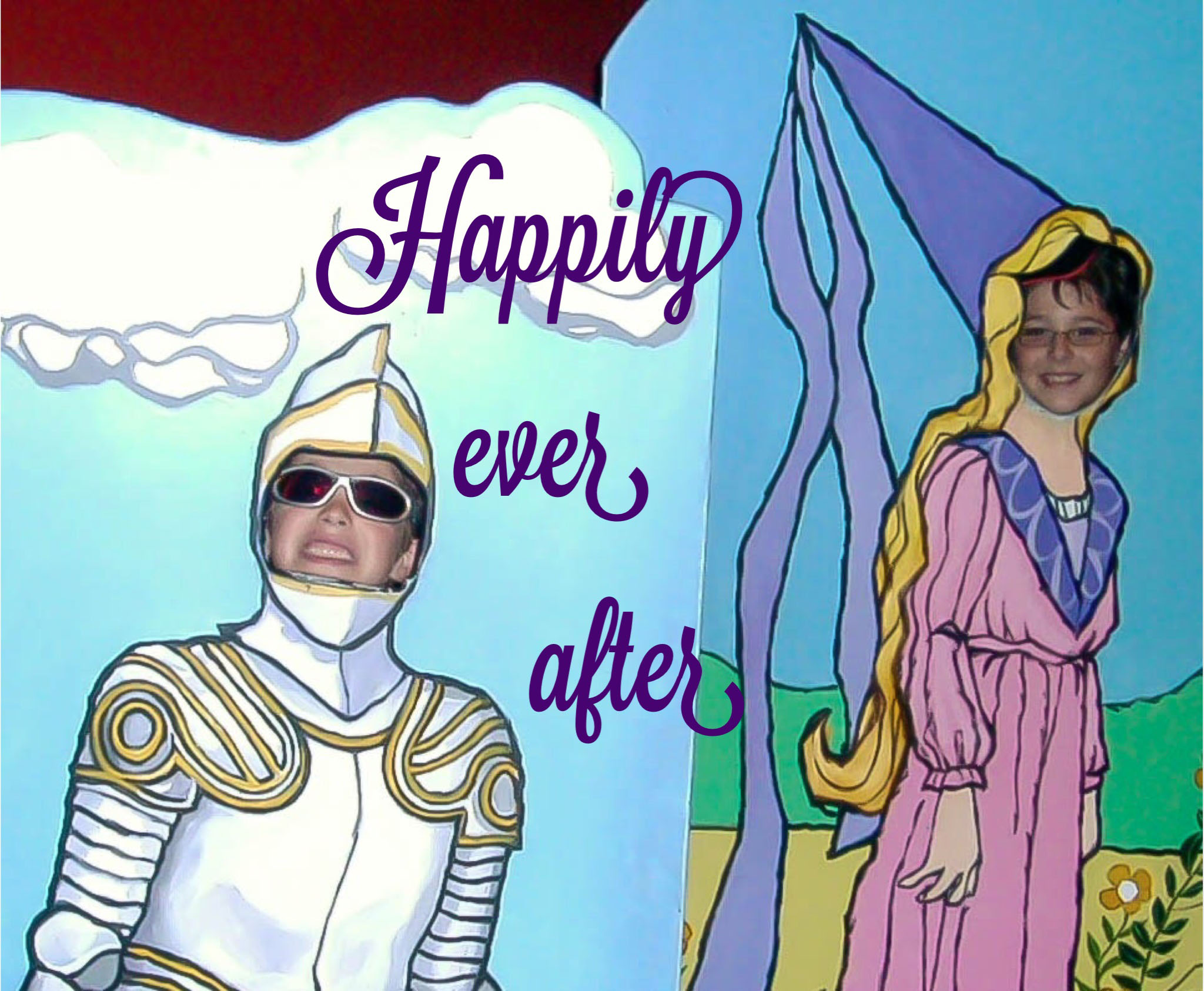
Before they can live happily ever after, however, our two lovebirds have some issues to overcome. Penny is a stickler for the rules that she studies so well. In her quest for perfection, she corrects punctuation errors, fixes parallel construction flaws, and battles to avoid inconsistent verb tense while she’s composing first drafts. Her compulsion to be exact gets in the way of production. She would notice the mistake in the opening dialogue above and abruptly stop to fix it before moving on with another thought. Heaven help her; she can’t let anything go.

Mark is overly distracted by his surroundings. He keeps a notebook on hand to jot down tidbits from the conversations he hears, peculiar behavior he sees, and story lines that come to him. When he writes, he knows what he wants to say and how he wants to say it, but he has little patience for Penny’s nagging about following the rules. In his opinion, those are really just suggestions that slow down his creative process. To Penny’s horror, he finds revision to be cumbersome. He wouldn’t care to change anything in the same opening sentences above.
KellyDeadwood-20147July-PrincePrincessPhoto

Penny and Mark’s relationship is complicated. Both have strong opinions and skills in different areas. Is there a way to help the couple get along despite their individual styles and abilities?

I relate to both of them. As a writer, I admire Mark. He is comfortable with his craft. He’s confident, capable, and inspiring in his creativity. He knows how to set a scene, develop characters, and engage audiences. He paints entertaining images, even with discrepancies in protocol. From him, I’m learning to let the rules go for awhile, write what I need to write, and fix the grammatical issues later.

At least I try to fix them later. When I’m revising, I’m aware that I’ll never master all of the idiosyncrasies that pertain to good writing. There’s just too much information to remember. But certain things pop out to me. Either I know how to make those items conform better to the rules, or I have to look up advice in a style guide. Taking a cue from Penny, I most often rely on The Chicago Manual of Style for three main reasons. First, it’s widely recognized by writing professionals as a reputable, Standard English resource. Second, each subsequent edition evolves to keep up with changes in the writing industry. Third, through my online subscription, I can get answers to questions that stump me.

Generally, I’ve heard it said that once you know the rules, it’s okay to break them. This applies to writing. For instance, consider the difference between conversational language and more formal communication. Suppose you draft the following e-mail to the high school composition teacher: “I am wondering to whom I should forward the paper.” Doesn’t it just feel a little awkward? It sure sounds that way to me. Few people, often not even the English teacher, talk like that. In relaxed, everyday conversations, I think most people simply bend long-standing rules and ask, “Who should I send the paper to?” It may not be perfect grammar, according to Penny, but it’s perfectly acceptable, as Mark will point out.

While I’m okay with text that reflects the way people naturally talk, I’m increasingly concerned about certain grammatical mistakes that are making their way into e-mails, messages, and online articles. One of the most common offenses I’ve noticed is misplaced quotation marks. Having seen so many, I started to doubt my understanding of the basic punctuation rules.

I went back to the books to brush up, and I’m relieved to say that some things never change. We still only have three rules to consider when determining where to place our ever popular quotation marks: inside, outside, and sometimes inside/sometimes outside.

Of those three, the rule I wish Americans would agree with and apply is: periods and commas always go inside quotation marks. The Chicago Manual of Style, Associated Press Stylebook, and MLA Handbook for Writers of Research Papers say so. Purdue University’s Online Writing Lab (OWL) concurs and further notes that this punctuation is standard in the United States but not necessarily in other countries.

For many reasons, we just don’t do things the same all throughout the world. Consider the following ways we in the US differ from the English. Here we write gray versus their grey, and practice instead of practise. We go on vacation, and they go on holiday. We can try to emulate the accent in their speech. But we don’t follow a king or queen and we shouldn’t follow foreign punctuation rules. We simply don’t want to confuse our American audience.

If you look back at Mark’s statement to Penny, you may notice that it’s improperly punctuated for those of us in the US. I should have written: “I hope I never have to read that.” The ending quotation mark is now correctly placed outside the period. Whew! Hopefully, I’m not the only one breathing a sigh of relief.

I recognize that it’s difficult for us writers to come to consensus over all the little details we face. Even within our own U.S. borders, we are bombarded with inconsistencies in how things are done. For instance, I used to cringe every time I read an article on Wikipedia that looked to me to be incorrectly punctuated. That organization has American roots and computer servers located in the US. So, why are its articles littered with periods and commas flagrantly outside quotation marks?

After a little research, I realized that the mistakes weren’t due to inexperienced contributors. The errors weren’t missed during half-hearted attempts at revision. They weren’t accidents at all. Wikipedia had established its own style and its own rules—which, as noted, are unconventional for us Yanks.

My Picky Penny tendency pushed me to get an explanation from Wikipedia itself. Why was a basic standard compromised? In an e-mail response, I was told that, “All of Wikipedia’s policies and guidelines are developed by community consensus…Wikipedia’s users are all over the globe, not just in American-English speaking places.” Yikes! That seems like a pretty big compromise to me, but I suppose if you make up your own rules, then you can rightfully claim that you’re really not breaking any.

I do concede some flexibility in what we’ll consider guiding principles. Remember my favorite resource, The Chicago Manual of Style? It discourages the use of italics for emphasizing words placed at the end of sentences, like I did in Mark’s statement to his betrothed. I could have written, “I hope I never have to read that.” The prevailing thought is that my readers would have naturally put emphasis on the last word, without a prompt from me. Was I wrong or breaking a rule to help the readers by forcing the emphasis and putting the final word in italics? Not exactly. The rule that applies is a pliable one. Not a hard and fast rule, like where to place an ending quotation mark. In this example, I was given flexibility to exercise a preference.

The hard part for writers is discerning between unbendable rules and suggested guidelines. It’s a daunting task. I’ve counted 35 different style guides used by just as many different groups of people. Lawyers, librarians, journalists, musicians, government officials, students, scientists, researchers, geologists, businessmen and editors all have their own style guides. No wonder writers struggle in deciding what to do under specific circumstances. Every industry, even every company, has the potential to do things differently.

If you pay attention, you’ll see how other writers address grammar issues. Be forewarned that they bring their own knowledge and personal choice—right, wrong, or just different—to their work. Personally, I have quite a bit of fun discussing fundamental principles with my father-in-law. He’s known to have a quirky way of punctuating sentences. Eventually, he convinces me of his unique logic, and I in turn try to persuade him to find a style guide that supports his view. (I’m beginning to think he’s British.) Picky Me suggests that if he can’t find one, then it’s time to conform to some published criterion. Heaven help me if he chooses Wikipedia or writes his own!

Let’s think back to Penny and Mark. In trying to help them blend their different writing worlds, I suggest that they, too, agree on one basic style guide. It’s less distracting to readers if there is uniformity amongst us writers. That’s one reason publishers and online sites post submission guidelines or indicate the manual of style they would like writers to comply with. At the very least, we don’t want to alienate or irritate their editors by ignoring the very tool they want us to utilize. We want our submissions to work for us, not against us.

Following the rules can be considered one of writers’ most basic job requirements. Consistency in applying them will make us look credible. Accuracy will generate respect; compliance may generate a paycheck. And Mark and Penny will have one less thing to argue about on their way to a fairy tale ending.

Pace

With the possible exception of cookbooks, dictionaries and encyclopedias, everything written has some sort of pace to it. From greeting cards to poems to speeches, each piece opens, gives a few high points and then comes to a conclusion. When done correctly, the reader takes no notice of pace. Getting a suspense novel to the point where pace fades into the fabric requires a lot of work. There are two aspects of pacing you will want to consider even before writing the opening scene: your characters’ traits and the conflicts your characters will face. More than anything else, traits and conflicts determine pace because they are the consistent threads throughout your story.

Character Traits.
Your main characters carry the story, so it is their actions that set the pace. Don’t be concerned with what your protagonist looks like at this point, just think of the conduct of your character. Think of how they act. Are they fast talkers? Are they methodical? Compulsive? Arrogant? Do they yearn for approval?

Get to know your characters personally, too. How far did they get in school? Do they have any military service? Are the married? With kids? Pets? Are they religious? What is their career, and how is that going? Any health problem that could slow them down? And, most of all, know their date of birth. All of this stuff determines your character’s psyche, and that determines how they behave. Spend one hour “interviewing” each of your main characters – like a reporter or detective would – and you will prevent a lot of future problems with pace, not to mention character traits. You’ll never use all the material garnered in an interview, but you will write more vivid characters and show truer action because you understand them better. At that point, your characters will tell you how gorgeous their eyes are, how slender their figure is, and all the rest of the eye candy.

Conflict.
The other aspect to consider before starting out is conflict. What has to be conquered to achieve your outcome? In lifelike fiction, you’ll need to consider timelines, material assets and the kinds of professional and emotional help your hero will need to succeed. You can’t have your protagonist globe-hopping conflict-to-conflict without allowing for enough time for him or her to get from hop-to-hop. The same can be said for how long it takes to build a boat out birch bark or to give birth to a baby. Lifelike fiction reads like it could really happen. Fantasy fiction, like Ian Fleming’s Agent 007, allows the author to play with things like timelines and history, facts and follies. So, for example, when Mr. Bond is dining in London at 10:00 p.m. and playing roulette in Monte Carlo at midnight – a distance of 641 miles – it does not take us out of the story. Fleming pulls this off because his character is immortal, but in mortal-drawn fiction, we have to pace ourselves to the dual drums of time and nature.

Opening scene.
Once you know you main characters and understand the obstacles they have to overcome, then you can write the opening scene. This sets the pace of your story. If you want to forecast fast and furious, then open with a tightly drawn scene that presents your protagonist already in peril. Show him witnessing a crime and then exit the scene with your character hastily being pursued by the bad guys.

However, if your story is going to evolve over several months or longer, you will want to open instead with a character-building scene, like a dinner with hubby, wife and family before he flies off to meet his fate. Then, when the lights go out in Scene Two, we care what happens to him. You’re pace is set.

In the first approach, you’re broadcasting to the reader, Hold on, this is gonna be some ride! With the second approach, you’re saying, Here’s someone you’re gonna like. Or dislike, if you choose to open on the antagonist. The difference is compelling.

Word choice.
As far as word count is concerned, the faster the pace, the shorter the sentences. If you want to broadcast a slower pace, then use more commas, and longer, compounded sentences, so you have to use even more commas. Really, it’s that simple.

Action should be consumed in small bites, but tension-building descriptions and internal reflections that lead up to the action scene should be drawn-out affairs. Action sprints across the page, and like a sprint it should be over in no time. Tension uncoils like a spring. That doesn’t mean the entire scene is completed in one or two paragraphs. It means the action is shattered into shards of short, breath-taking bits, and the tense descriptions into nail-biting disquiet.

In fast-paced scenes, use descriptive words by their first reference only, not their second or third meaning. Use words that are easily understood, or words that play on a previous scene or trait. Stick with simple character tags of he said and she said so as not to slow down the pace. Find the fewest words possible to keep the action moving.

Pause scenes.
Another strong consideration should be the pause button. After an action scene, give your readers a break. Use this time for your characters to reflect on what just happened; they need a break, too. Use this space to have them discuss how that last action scene changes what they need to do next. Pause scenes are excellent places for foreshadowing.

Read it out loud.
“Read your piece loud enough for the folks in the back of the room to hear you.” That’s the best advice I ever received involving pacing. If you read it in the same tone your character speaks, you’ll hear the cadence in their voice, too, as well as the meaning of the words. Does this “sound” like this character? You’ll pick up on idiosyncrasies like back-to-back tongue-twisting words, unnecessary adverbs or adjectives, and weak or overstated nouns. Reading aloud forces you to enunciate every word and hear every syllable through your outer ear. That shows you – the writer – what it sounds like to the reader’s inner ear. Now have someone else read it to you. Close your eyes and imagine that you’re someone who just bought this book and is hearing this for the first time. Did they stumble? Did they emphasize the right parts? Did your inferences come across? Does it sound like the same one you wrote? That’s the acid test!

Follow your plot line by alternating between action scenes and pauses. Sometimes, because of timelines and whatnot, one action scene will need to get dumped right on top of the last, or a longer pause will be needed to allow for time to catch up to your next scene. These deviations in pace need to be written with tender, loving care. You’re asking your reader to change cadence from the pace you set in the beginning. Where this does happen in your novel, try to connect the change in pace with a common thread or theme, to give it a pace of its own. Done correctly, your readers won’t even notice, but write it haphazardly and folks are going to trip up.

Subplots work nicely for pause scenes, especially in longer stories, providing they conclude with your story’s ending. Subplots need their own satisfying ending, too, so you’re effectively telling two stories at this point. Subplots need to be fully fleshed out and relevant to your main story. Subplots don’t need to be action-packed, but they do need to develop “in character” and in a timeline with your main plot. Ironically, the best subplots give rise and reason for dramatic character changes. Give subplots a lot of forethought because they are not easy to do well. Subplots not only take the reader out of the main story, but you as well, and a poorly developed subplot will only bog you down when you want to be at your most creative. And remember: What you put in your story, you must take out.

Next month: Plotting.
When Founding Father Ben Franklin famously said, “We must, indeed, all hang together, or assuredly we shall all hang separately,” he could have been talking about the fate of a story’s plot line instead of the fate of new nation. Plotting is a game that fiction writers play while conjuring up good ideas for their story. We’re the only genre of writers that plays What if…?

Changes throughout your story are the plot line’s development. And, like an architect’s set of detailed drawings, your plot line must conclude with a full rendering of your House of Cards if you expect anyone to buy it. Next month, we’ll look at how a plot line “hangs together.”

Mental images: zombies and coffee

Good, strong writing is found all in the presentation.  Consider the images that come to your mind when you read the following sentence: She was a zombie in need of more K-Cups.

So, what does that refer to?

Right now, you may be floundering and drowning in a sea of possibilities.  You need context to anchor your thoughts.  What should you be thinking of?

Figuratively, that sentence could describe a human female who cannot function without that first morning cup of coffee.  Literally, it could mean that a reanimated female creature drinks coffee and is running low on the packets.

Either way, the writer has set up the scene with specific, descriptive words about setting and circumstance.  Human or supernatural, your female character is of a certain social status to prefer the disposable, single-serve packets used in a Keurig brewer.

Let’s not forget the implied tension.  What if either one of them runs out of the single-serve packets?

Certainly, the story subject matter material is crucial to the events that happen next.  However, without any specific framework, your mind still generated images, thoughts, or presumptions about what that sentence means.  The presentation of that one sentence was strong, just strong enough to engage the reader and yet give freedom to create his or her own specific image.  After all, what does the female look like: blonde or brunette, or is her hair matted and covered in mud?  Is her skin dark or light, green or blue?

You want to choose the right nouns http://www.youtube.com/watch?v=kfnXUWJz0sE&feature=kp , words that create dancing images in the readers mind to solve the puzzle of the author’s intent.  If done well, the descriptions keep the story moving forward and the reader interested and engaged.  Are you intrigued?

If you’ve read this far, then you are and I did my job.  This is how inviting your writing should be.  What kind of images do you want to create for your readers?

How do you do this, find colorful language words to express nuances?  Start with a basic word and look to thesaurus or dictionary.  Typing the word “zombie,” an online thesaurus gives synonyms and antonyms for “odd person,” “ghost,” and “machine.”  Various dictionaries define a zombie as, among other things, a supernatural spirit inhabiting a dead body; a snake god; a tired, apathetic human; a spicy rum drink; and a computer virus.  Think of what other magic you’ll find typing in a different word.

Consider colloquial slang.  At some point zombie came to mean a lethargic person.  The word “shorty” now refers to clothing, cookies and an often-derogatory term for women.  What words can you mesh into new meanings?

You can also create your own connection.  It’s easier to take liberties in fiction and fantasy by the nature of creating a new world with your own rules, but nonfiction benefits from it.  That’s how I wrote the zombie sentence, with a human in mind.  It’s much more exciting than writing The tired woman had no more coffee. It also creates images that are more vibrant.

After writing it, I wondered, what if she was waking up in a post-apocalyptic world?

What does a sleepy zombie look like to you?

Information Dumps

An information dump is exactly what it sounds like: a steaming plop of backstory. It includes facts about characters and events that are relevant to your storyline but predate the opening scene. Often times, these factoids are the very building blocks of your story, but to start with them at the beginning – which is where they belong according to history – would carry as much suspense as a three-legged-turtle race. That’s why most suspense novels start with the main conflict already in motion. The characters develop as they navigate this conflict and the backstory comes in as they do. There are seven tools novelists can use to fill backstory: prologues, flashbacks, dreams, nightmares, internal thoughts, conversation and revelation.

Each has their place, but when you examine the first four, you quickly discover conflicts with the first rule of suspense, which is action! The last three rely on quieter moments in your story, and the information arrives between the action scenes. If all dumps go into toilets, then the first four are outhouses and the last three are indoor plumbing.

Prologues and Flashbacks
A prologue is positioned as the first read in your story, preceding Chapter 1. It can carry on for several pages. Flashbacks deliver the same kinds of information, only doled out between chapters and breaks in the story. It is hard to hold suspense in either format because, by their very nature, both take the reader out of the main story to enlighten them. Full stop, dump info, now back to the action! Most readers will let you get away with this once, but if you make a habit of it you’re likely to lose your audience to a tennis match on television.

I recommend writing prologues and flashbacks in the present tense, even where the rest of your novel is in past tense. This seems like a contradiction, but present tense allow your reader to become the parrot on your character’s shoulder, quietly watching the prequel unfold in real time, which, in and of itself, can build tension from even the most mundane events. In past tense, the same information comes out like a midnight visit to the outhouse: it’s all business, you wouldn’t be here if it was necessary, and it’s not some place you want to hang about.

It is important that your characters, not the narrator, tell the backstory, even if the characters in the backstory are not the main folks in the novel. Narration ruins tension, pure and simple. Past tense narration is a big yawn.

Dreams and Nightmares
Where flashbacks and prologues tell of past factual events, dreams and nightmares show the future, and they are not real. Even where the dream relives some past event, the circumstances in the dream are always different from what really happened, and that makes them unreliable for information dumps. Dreams hardly ever work with tension, but nightmares can have a place if the information you’re dumping is traumatic. Fires, the tragic loss of a loved one, or the face of the killer the night of the pummeling can work very well in nightmares, providing that someone wakes up the dreamer. Suspense is intrigue, not mystery, and readers deserve a “true” meaning of it all. Without this “truth” conversation between two on-page characters, your readers are still in a dark outhouse – they don’t know what, if anything, they just heard is trustworthy.

Minimize your use of prologues and flashbacks, dreams and nightmares, and you will minimize your problems with backstory. Now, let’s look at who flushes properly.

Internal Thoughts
Internal thoughts allow your characters to quickly dispense past information and future schemes at the same time while staying within your main conflict. (Consider: He reads the email and thinks, First time I met Sluggo, didn’t have my gun. Won’t make that mistake again.) People do not have long conversations with themselves – or talk in complete sentences. One past fact, relevant to the story’s future, that’s what you want. Too much internal thought and your readers are going to go huh?  because with internal thoughts, you are not only inside the character’s head but the reader’s head, too.

Conversation
Far and away, the best place for your backstory is between the quotation marks. Just don’t make it sound like a witness’s testimony. Conversation is just that; it is two or more people conversing, not one character speaking to an audience of one or more. In filling backstory with conversation, usually one character will know the past event and the other character will draw it out of them, either intentionally or entirely by accident. You need to decide who’s going to be telling this prequel because you can’t be in two people’s heads at the same time. Think of our parrot jumping from protag’s shoulder to the other guy’s, back and forth, back and forth; poor bird will get so dizzy he’ll drop off the page. And so will your readers.

You can show some internal dialogue within conversation, but only if it is brief and it moves the action forward quickly. (“Sure, I was there. Hundreds of people was there when the lights went out. But I didn’t see who knifed’m,” Sluggo said with air of defiance, confident they’d never be able to identify him in the pitch black.) Now we know  that Sluggo did it; his “internal thoughts” just told us one thing while his “dialogue” told the questioner something else. Your reader knows more than this other character does!

It is always best to pull backstory out of your characters and avoid using narrative as much as possible. Some narrative will be necessary, like in the above example with Sluggo, but the more you let your characters tell your story, the stronger they will become.  Sweet-scented candles burning in the lavatory.

Revelation
Revelation is a surprise to both your readers and characters alike, and it hits like a thunderstorm. It can come in the form of a phone call from the doctor’s office, old letters found in the attic, or a sudden, unknown, rich relative, but it has to be a shocker. It has to be a turning point in the story. There is nothing gratuitous about revelation, and placement is just as critical as content. They don’t work in the very beginning or at the very end of your story (unless your protagonist is Sherlock Holmes). In the beginning, not enough has already been established; it’s all revelation. Plop it down right at the end and your readers are going to feel cheated. But incorporate it as a turning point in your story and a revelation can both explain the past and set the table for the rest of the banquet in an instant.

Imagine a different story… Back in Chapter 10, the sweet matriarch of our imaginary story died, leaving our hero, Andrew, without any benefactors. At the end of Chapter 15, we read how, Andrew has finally been evicted along with his new wife and infant from the home he’s grown up in all his life. The nanny’s son, he was, always helped out where he could. And now, the nasty niece, Nancy, and her troop of lawyers have taken over the estate and kicked Andrew and family out after 22 years, penniless and hopeless. Chapter 16 opens with Andrew’s wife pounding on the outhouse door and shouting, “The doctor’s office just called – DNA confirms that the letters in the attic are REAL! He was your father! The estate is yours, not Nancy’s!” Now that’s a revelation. The entire story turns at this point. Our hero who was destitute in Chapter 15 is now master of the house, and in the final scene of Chapter 21 we gleefully see Nancy on her knees scrubbing floors as Andrew’s five-year-old comes storming into the kitchen in muddy boots, demanding, “Where is my lunch?” Your reader gets up from your sumptuous table feeling full, and full of anticipation for what you’re going to cook up next.

Dump the dump
So if backstory always work best woven into dialog, why not just dump the dump? What if, instead, you scattered the information like a soft, spring rain. Now, the scat dissolves slowly and enriches the plot. For example, when getting into the head of your bad boy, what if you have one character in Chapter 1 tell how he was kicked out of Boy Scouts for fighting, and a couple of chapters later have another character, an ex-con, talk about how he was a model prisoner and released early. Then in Chapter 8, his first wife tells us how he battled alcoholism after losing his business to the IRS. We see this character’s evil development was years in the making; something not possible in one cognitive scene. In the end, the rain dissolves the information when and where necessary and the roots of our story grow stronger because of it.

Next Month: Pace
Suspense means action, and action demands quick movements from both your characters and your plotlines. However, a suspense novel is a marathon, not a sprint. Run too fast and you’ll burn out before the finish line – or your readers will. You want to keep a strong cadence, but there will be times you’ll want to back off just a bit and let your characters – and your readers – catch their breath. Next month, we’ll look pacing; when to trot, when to gallop, when to graze.

What’s Magic in a Million Words?

In addition to being a ‘word’ person, I’m also a ‘numbers’ person.  So when I hear someone say, “You have to write a million words before you will have something good enough to publish,” both sides of my brain start to fire up.  Can you imagine?  A magic number to work toward, and when you reach it all your writing dreams will come true.  Sounds wonderful, but I know it doesn’t work like that.

Nonetheless, a lot of people seem to be striving to meet that magical number.  Do a search on the internet for the phrase ‘write a million words’ and you’ll see what I mean.  So what’s the allure?  I think the draw is due to several messages the phrase communicates:

1)       Practice Makes Perfect – This centuries old bit of common sense is motivation to keep at it and work to improve at what you do.  I would modify it to say, “Practice, with feedback, makes perfect.”  You can do a lot of your own editing to improve the quality of your work.  However, getting feedback is important in order to avoid the blind spots you get from being too close to your own writing.  Don’t take the ‘million word’ phrase too literally and wait till you hit the one million mark to show your work to anyone.  The better way is to get feedback as you go and be open to constructive advice.

2)       Persevere – Rejection comes with the job so don’t take being turned down by publishers and agents personally.  If you self-publish and don’t gain an audience, don’t take that personally either.  There are many reasons why your work might not be accepted.  You may never find out the reasons, and if you do it may not make any sense or have anything to do with your talent.  So when a rejection letter comes in, resolve to keep going and continue on your writing path.

3)       It’s Helpful to Have a Goal – No matter how much you love writing, there may be times when you can use some extra incentive to keep you moving along.  Getting to the million word mark can be a fun way of challenging yourself, or creating a friendly rivalry between writers.  Organized events such as the National Novel Writing Month offer support and resources to help and encourage you toward your goal.

Ultimately, writing is a journey with no fixed end and no roadmaps to sure things or dead ends.  If things don’t happen for you in the first one million words, maybe it will happen in the second.  Author Ursula K. Le Guin said “It is good to have an end to journey toward, but it is the journey that matters in the end.”  Enjoy your journey, wherever it may take you.  That’s where the magic lies and the only person who can stop it is you.  Don’t let it end too soon.