Category Archives: Author’s Craft

How Important is the Title?

What weight should we give to the title of a novel?

If the sum of a book is 100%, is the title worth 20% or 80%? On the one hand, if the title isn’t catchy then potential book buyers may never pick it up. All the efforts the author has put in will never be tested. What a waste for both author and reader. On the other hand, if the title is too convoluted readers may not understand the direction the author is taking them. Like a four-star chef, authors want readers to finish their creation. Putting it aside half-finished is worse than having never started. It is the difference between telling the waiter, “I’ll try something else, thank you,” and telling your friends, “I’ll never eat in that restaurant again.”

This question has been weighing heavily on my mind for the past few months as I turn the final corner on writing Knock Softly (working title). I’ve asked a few fellow writers – those who are in my writing group and have read the manuscript so far – to think of something better. Nothing is sticking. I try not to fret about it, tell myself it’s not important until you finish, but that finish line is now in sight and the fret is turning into sweat.

Let’s look at the responsibility of a title. That’s right, a title has responsibilities. First and foremost it has to succinctly sum up your story. It also has to be catchy enough to cause a reaction. It should say either “pick me up” or “not for me.” But is that all? Shouldn’t the title also come into to play at the end of the read? Shouldn’t the reader be able to see that title again on someone else’s shelf and be able to recall the entire story? Have an engaging conversation with that person over the book? Gone with the Wind does that. So does Hunt for Red October and To Kill a Mockingbird, and numerous others. That’s my dilemma with Knock Softly. I want a title that will recall the entire tome when next you see it again.

I came up with Knock Softly strictly as a constant reminder to myself that no main characters die in this story – there are things worse than death. Cancer is the villain. Curing our heroine is the story’s master thread, and keeping that central to the other events in the story hasn’t been difficult. Those other events include our heroine’s infidelity and a tortured past life she’s kept secret from her husband and children. Only mitochondrial DNA can save her now. To get it, her husband must delve into her dark past. Her desire to die with her secret is almost as strong as her will to live for her children and the child she carries. Knock Softly doesn’t convey any of that.

In Knock Softly, we have a mother of two, pregnant with another man’s child and suffering stage-4 cancer. She refuses to abort the baby, even though it increasingly diminishes her own chances of survival. Her husband rides the full length of the emotional rapids as he discovers there is so much more to the woman he married.

I don’t have the answer to my question; what weight should we give to the title of a novel?

I suspect it’s a squishy number, based on how strong the author’s own name is. Steven King could call his next novel Untitled and it would sell out. I doubt 100 copies would sell if my name were on it. For someone like me, a mild-mannered suspense writer whose day job is composing coherent internet ads in forty characters or less, I suspect the title is worth nearly half of everything written. It is in advertising, and in selling newspapers.

Now taking good suggestions for A.K.A. Knock Softly. Anyone?
Why You Should (Shamelessly Self-) Promote Yourself

I believe in shameless self-promotion and so should you.

I don’t mean just with your writing but with all aspects of your life.  You need to be passionate.  Who else is going to get excited about you and your work if you aren’t?

I have never taken off work on my birthday, and I never will.  It’s a waste of a good opportunity.  When someone asks that standard “How are you doing today?” question, I reply, “I’m doing great; today’s my birthday.”  I always get a smile and some variation of “Oh, I didn’t know.  Happy Birthday!”  It’s a bonus when that comment is followed by a “Let me treat you to lunch/coffee/spa day/paid week off” offer.

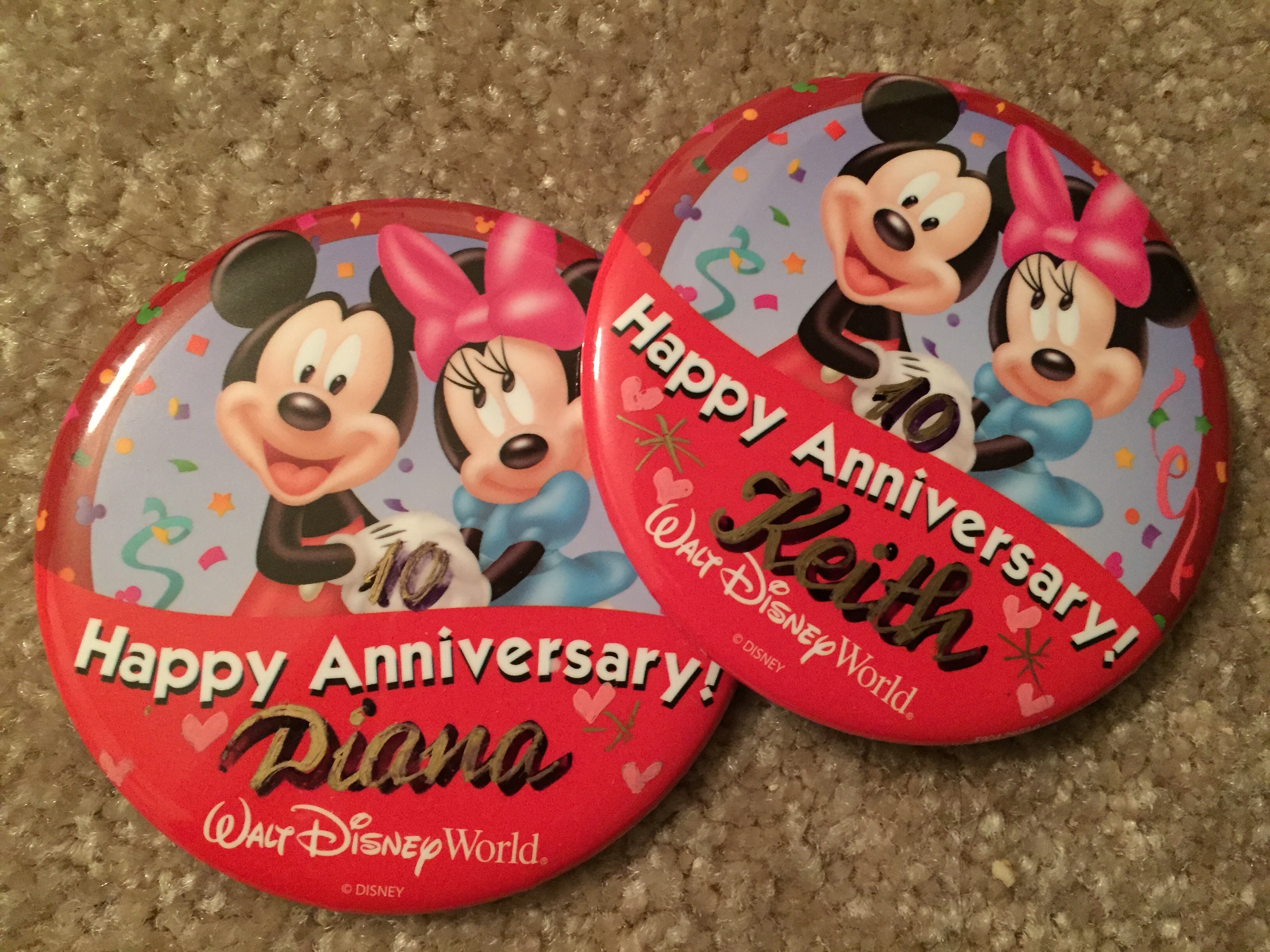
FullSizeRenderbuttonsI’m all about free stuff.  My husband and I celebrate every fifth wedding anniversary in Walt Disney World.  The resort staff knows we’re there for our special occasion–they know because we told them–so they give us large, cheerful Happy Anniversary buttons that we wear.  Because these days being married more than nine weeks can be an accomplishment, I tell everyone we meet “It’s our ##-year wedding anniversary.”  Compliments feel good. We get numerous congratulations, free drinks, special appetizers and special treats.  On our 2013 trip, a gift shop cast member took our buttons and surprised us with free personalization of our names and “10th anniversary” artfully crafted in gold calligraphy.  Those buttons were the most complimented, commented and coveted aspect of our trip.

The point is no one knows to celebrate you if you don’t share that information.  By telling people, you are celebrating you yourself.  Others will follow your lead and celebrate.

No one would have done anything if we weren’t bold.  Being bold is not egotistical or vain.  It is being proud of your accomplishments, whether they are personal or professional.

Think about the kids you know, yours or others.  Would you be hesitant to share the fact that one of them made first trumpet in the band?  Would you be embarrassed to brag that he or she won the science fair?  Would you volunteer that information?  If you don’t hold that back, then why would you hesitant to share your writing success?

To increase your success, you must promote your work.  Promoting can be as simple as telling people, “I am a writer.”  With every book I publish–three to date, all available through kindle on Amazon–I send an email out to my family, friends and acquaintances stating, “I published a book, (Title).  Go to (this link), please buy my book, and then leave me a review at (this link).  Thank you.”

When you ask, you may be surprised by what you will get.  With emails like that, I received reviews of Lessons from Dad: a Letter to You and a 4-star rating of my first fiction book, Jimmy the Burglar.  My most successful project publication to date is my first short story, Mom, Star Trek and Las Vegas: a Grand adventure with 10 reviews, two first place state awards and one third place National award. Give them a read yourself, and let me know what you think.

In order for people to know you’re a writer, you must tell them.  By promoting yourself, you are holding yourself accountable to others, thus motivating you to set goals and deadlines.  It also encourages you to write when you feel uninspired or stuck.  Will this generate sales?  Maybe and maybe not.  If sales are a part of your goals, then exposure is what you need.

Doing self-promotion can be intimidating.  I’m outgoing,–I get that spirit from my Dad–so it’s not as scary for me.  This does not mean I am not tentative. What if no one likes my writing?  If no one knows I exist, I’ll never know. And I want to know.

I promote myself on a variety of social media sites: Instagram, Twitter, Pinterest and, reluctantly, Facebook.  The more people who see me, the more I am noticed.  Those two statements are different.

Am I that important to merit or deserve all this media attention?  Yes I am.  I’m a talented wordsmith with three books, two columns staff for Michigan Scrapbooker Magazine and one award-winning blog.  However, some people may think these are modest successes and therefore, I’m not worth all this fuss.  I’m simply pretending to be more than I am.

But I’ll never be more than I am without believing I am.  You need that fierce approach to your writing.

If you’re not proud of your work and share your pride, why should anyone else be excited?  I won’t be.

Be strong.  Be fierce.  Be shameless.  Be successful.

Open Mouth and Insert Foot

Before I dedicated my mornings to writing, I woke to Live! with Regis and Kelly. Legendary showman Regis Philbin routinely bantered with his energetic, down-to-earth co-host, Kelly Ripa. The pair spent weekday mornings sharing the details of their ordinary moments and extraordinary lifestyles. They rehashed what they did the night before, described where they ate and which Broadway show they had seen, and revealed how they handled common family concerns. Additionally, they offered sports commentaries and kept viewers abreast of the latest breaking news. In as much as Seinfeld was plugged as “a show about nothing,” I considered Live! with Regis and Kelly to be a show about anything. I was impressed with the hosts’ ability to simply talk to one another while multitudes of people tuned-in to hear their dialogue. For years I was entertained as I watched the pair interview guests and converse with ease over just about any topic that came to mind. They had a talent that I admired and a skill that I never mastered.

Speaking in front of even a small audience of friends has repeatedly proven to be against my better judgment. I’ve learned through wobbly knees, rapid heartbeats, trembling hands and a quavering voice that I’m among those suffering from a fear of public speaking. Luxuriously, I dodge the podium as much as possible. Unfortunately, there are some casual, unavoidable social settings, which make me uncomfortable too. I’m afraid that I may say something that doesn’t make sense or that could be taken in a way I don’t intend.

My worst fears were realized during a recent visit to my husband’s workplace. Of all people, he knows that my thoughts may evolve into untrustworthy utterances. He’s witnessed them, unscreened and with just enough whimsy to embarrass me, leaping from my mouth. Yet despite his understanding of my quirky nature, he bravely took me around to say hello to some of his co-workers.

First, I asked one woman if she had been to lunch yet. Under normal circumstances, that would have been an innocent question. My husband and I were, after all, on our own way out to eat. It was the topic on my mind. But before I could take the question back, I remembered that my husband had rescheduled a business lunch meeting, with this woman and another co-worker, so that he could take me out that day instead. Ugh! I received an awkward stare and flat response from the woman that, no, she hadn’t been to lunch. At which point, I probably should have invited her to go with us, but I wasn’t picking up on any warm and loving vibrations. Redirect: “So, are you ready for the holidays…?”

Moving on, slowly behind my husband, I resisted the urge to drop to all fours, tuck my tail between my legs, and bolt for home. Instead, I followed his direction and was led to meet and greet more people. I gained a little confidence when someone I knew joined us on our quest to minimally disrupt the diligent as we paraded throughout the building. I should have anticipated, however, that the sense of safety provided by larger numbers couldn’t protect against self-inflicted torture.

We found friendly and familiar Andy sitting inside his office. He’d worked with my husband for years, but I hadn’t had many opportunities to interact with him. Spying family photos on a ledge, I walked towards them to have a better look at Andy’s young children. An adorable girl about the age of five was clearly his daughter. She looked so much like him. My brain processed what I knew of Andy and came to rest on the fact that he had both birth and adopted children. Before I could form a more constructive statement, I heard myself blurt, “Oh, she’s so cute! Is she your daughter?”

I swear there was no inflection on “your,” and I think I could have recovered from that question. But my husband, being no help whatsoever, was already laughing and interjected, “Does she look like the postman? Or did that picture come with the frame?” Ugh! I rambled on and hoped no one could hear me through all the noise being made. “I mean, is she from your own loins…?” Awkward joined now by archaic. Darn those Bible studies!

Can’t we go to lunch yet? I wondered. More frantically, I inwardly pleaded, Beam me up Scotty! A moment later, I was ahead of my husband and fleeing to the safety of the elevator. We were getting closer and closer to the exit. I was nearly free from faux pas. Then I heard him quite seriously ask, “So, do you want to go say hi to my boss before we leave?”

Dancing on Stilts

The paradigm shift was like a blast to the heart of me, peeling back the shadows that have long lingered, filtering in the sun and enlightening my mind. It hasn’t happened at the best time. The shift starts to move, its future on stilts. A small man with dollar signs for eyes looks up at me poised to run the sharp and wicked teeth of a saw across my newly born legs. I don’t know which way I’m going but I know I want to get there.

A step forward and I’m racing to catch up momentum carrying me, my balance precarious. I stop, hop and readjust. The stilts are very uncomfortable. I try again when a fork in the road appears before me. Which path do I take? There’s the black one. It’s poured and rolled to perfection, the double yellow line telling me not to cross, to stay on course, my destination is directly ahead. I see a sign adjacent to the road written in gold telling of untold riches dead ahead. The other road is uneven, made of dirt, rocks and clay, the dust a cloudy mass, making the road barely visible. I inch forward and test the road with a single stilt. I watch it disappear and pull back quickly, stumble, and nearly fall.

A sudden breeze brushes my skin and it carries a familiar young whisper. Should I turn back? No. But I answer, sending my voice on the same wind. A sense of calm turns the voice away and I look back to the path. The way is clear. There are large gaping holes and no lines of sight to help me on my way, no signs telling me what might wait for me ahead. These boarders meander to mysterious pockets of forest calling me, small voices daring, beckoning me to enter. What lay in the hidden knolls, waiting for discovery? My heart tells me to go.

Hugging one stilt, fortifying my choice I look ahead before I move. From this height, what I see on the craggy path makes me smile. Letters large and small paint a picture of wild passion. Structures thin and wide made from the trees, burst above the canopy dotting the landscape opening wide the sounds like a hurricane. However, each comes with trappings and danger, my mind spinning with the flux of images, the barrage of letters making my mind spin and my fingers twitch. Are they trying to tell me something? My breath hitches and my heart races but I look further ahead trying to see where it all ends. The images change to ones of hope and love. I reach for them, want to grab hold, and never let go, their light embrace a wish in my heart, each a start helping build something beautiful and lasting.

Then I look down and see the small man. He smiles and I shiver, his small flat and pointy teeth seeming huge as if I were seeing them through a magnified glass. He taunts me. He knows my weaknesses.

“Leave me alone!” I yell, stumble, and right myself quickly, the wake and power of my words causing a ripple in the vast line of trees.

The little man laughs. I make my way to the dirt road.

The little man claws at my stilts with one hand, banging the terrible saw on my tall wooden legs. I wobble and tip back. Bending at the waste, my momentum carries me toward the road. I hold on tight afraid I’ll meet the ground.

If I fall, will I be able to get up again? To find the end of this journey where I can start a new one, it is a chance I have to take.

I, jump, and lift my legs dancing out of his reach trying to flee, kicking him away. In a flash of light, he is below me again banging and banging and banging, laughing. He forces me one way when I’m leaning, reaching for another. I kick him off again and run, gripping tight to the handles of the stilts praying I won’t fall and I’ll find my way.

When the uneven road connects with the burden attached to my feet, I sigh with the reprieve. I am careful. My balance strengthens. My confidence grows. The dirt road is mine and the little man is far behind, but I still feel him watching. My eyes look to the road ahead. My dreams are there. I don’t care that it is laden with potholes and dust storms. I will dance around the ruts and cover my eyes through the storms until I get to the destination that awaits me.

Organizing Your Work

inspiration

“Ideas are like rabbits. You get a couple and learn how to handle them, and pretty soon you have a dozen.” – John Steinbeck

What should you do with the dozens of writing ideas you have acquired from reading blogs and books on writing? If you’re a typical writer, you keep notebooks, 3 X 5 cards, envelopes, napkins, and even sticky notes handy to jot down any ideas as they come to you.

Learning to handle those ideas isn’t easy. There may be apps that will help you stay organized, but I’m a pen-and-paper person. So an app suggestion would fall on my deaf ears – for now anyway. I’ve learned to handle my numerous notebooks and random pieces of paper in a more organized fashion using folders. For example I maintain separate folders for:

  1. Each of my short stories
  2. Character, business, and place names
  3. Descriptions of interesting locales, occupations, and hobbies
  4. How to write mysteries articles
  5. How to write romance articles
  6. How to develop characters information
  7. Plot ideas, titles, and dialogues
  8. And each of the novels I’m working on

In the past I simply dumped any writing not relevant to what I was working on at that time. Never again. I no longer dump ideas, which may not work in one story but could be used in a future manuscript. One phrase from my “Titles” folder with an idea from my “Romance” folder combined to create the beginning of the romance manuscript that I started some time ago. It’s still a work-in-progress. Of course, this story has its own folder.

What suggestions do you have for organizing your writing?