Category Archives: Nonfiction

Up from Under the Bridge, Eh?

Pure Michigan campaign ads had persuaded trolls—residents of Michigan’s lower peninsula, like me—to crawl out from our homes south of the Mackinac Bridge. It was Labor Day weekend, the last chance for many families to head up north before the start of a new school year. For my family, this was the perfect time to explore the beauty of our grand state’s upper peninsula. Our adventure began in the city of St. Ignace at the area’s number one, Trip Advisor rated, hotel: the Best Western Harbour Pointe Lakefront.
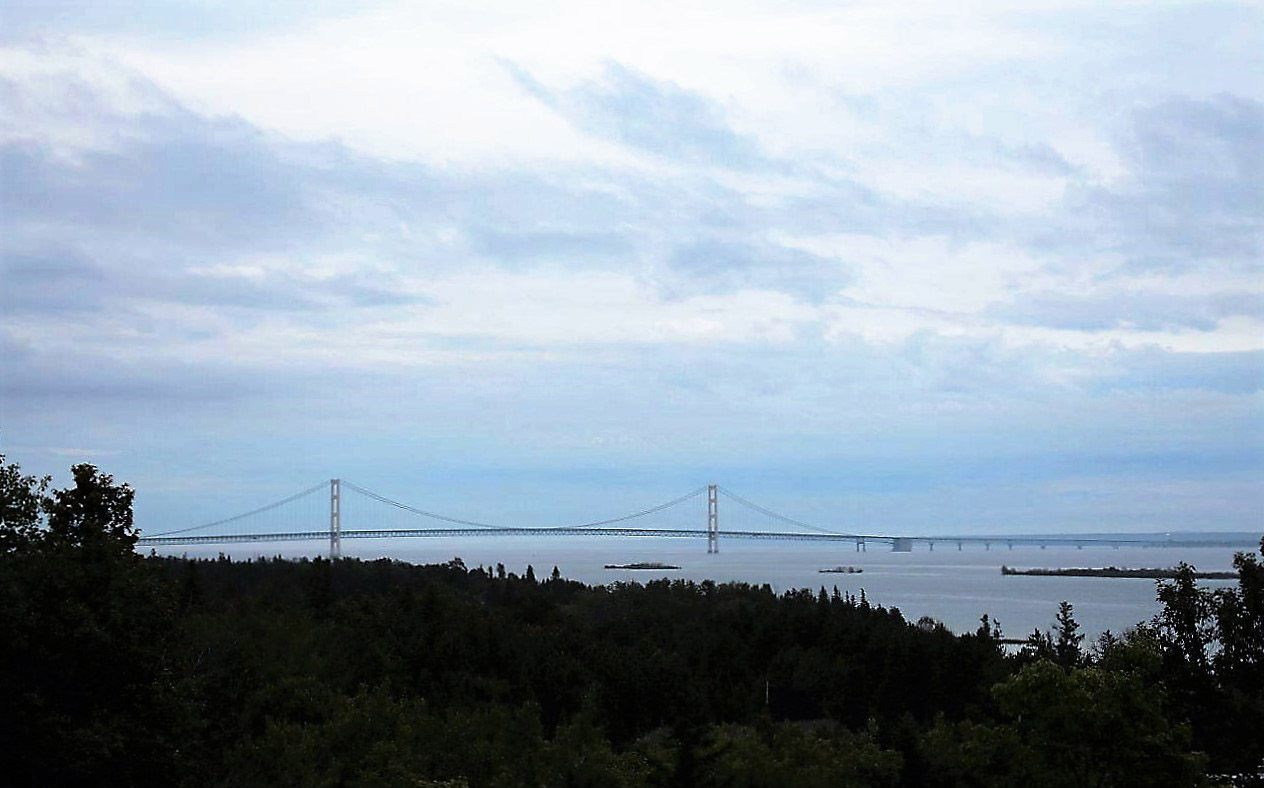
kellysept-2016-macbridge

Nicknamed Mighty Mac, the Mackinac Bridge is the longest suspension bridge in the western hemisphere and fifth longest in the world.

After dinner, my husband, four children, and I sat around a bonfire with other hotel guests. I asked Zach, who was part of the hospitality staff, if he knew any ghost stories. He was busy unloading wood for the fire but sat down for a few minutes to share some of the rumors he was familiar with. I light-heartedly listened to Zach’s fanciful stories. What I didn’t know at that time was just how much this discussion would affect my psyche and influence my decisions throughout the rest of the trip.

Zach recalled the tale of a woman who had an extramarital affair. Townspeople killed the unfaithful wife by dunking her repeatedly underwater in what is known as the drowning pool, a twenty-feet deep, seaweed-infested lagoon on nearby Mackinac Island. The ghost of the woman reportedly now haunts that area.

Intrigued by this story, I later looked online for more information. I read through pages and pages of creepy hauntings that had frightened local residents and visitors, but I couldn’t find the exact story Zach had referred to. I discovered one other, however, that best fit his account.

Haunts of Mackinac author Todd Clements described the unfortunate outcome for seven prostitutes who were accused of being witches. The ladies were subjected to a test in order to determine their innocence or guilt. A large boulder was tied to each lady. Then they were thrown into the drowning pool. If the women floated, they would have been found guilty—considered witches—and subjected to further punishment: death by hanging. Since every one of the accused actually sunk deep below the surface of the water, they were vindicated of sorcery but had drowned in the process of proving their innocence. The women now make appearances as eerie, shadow-like figures floating above the lagoon or as huge, larger-than-life splashes on the surface of the water.

Other stories also indicate that the drowning pool is haunted by ghosts. But Zach didn’t seem to believe in ghosts at all. He preferred to talk about a story that was based upon measurable, physical evidence. He said that hundreds of bodies had been uncovered during construction of the Grand Hotel. “There were so many bodies, they eventually stopped trying to retrieve all of them, so there are still hundreds, maybe thousands, lying beneath the building.” That’s not a fact the hotel advertises on its webpage, but Zach was confident of its authenticity. He emphatically added, “That’s a true story.”

The unique history of Mackinac Island may support that claim. Indian chiefs were buried there; soldiers died there. Other people committed suicide and murder. Death is nothing abnormal, of course, but it does produce an odd result on Mackinac. The island is considered to be one of the most haunted places in Michigan.
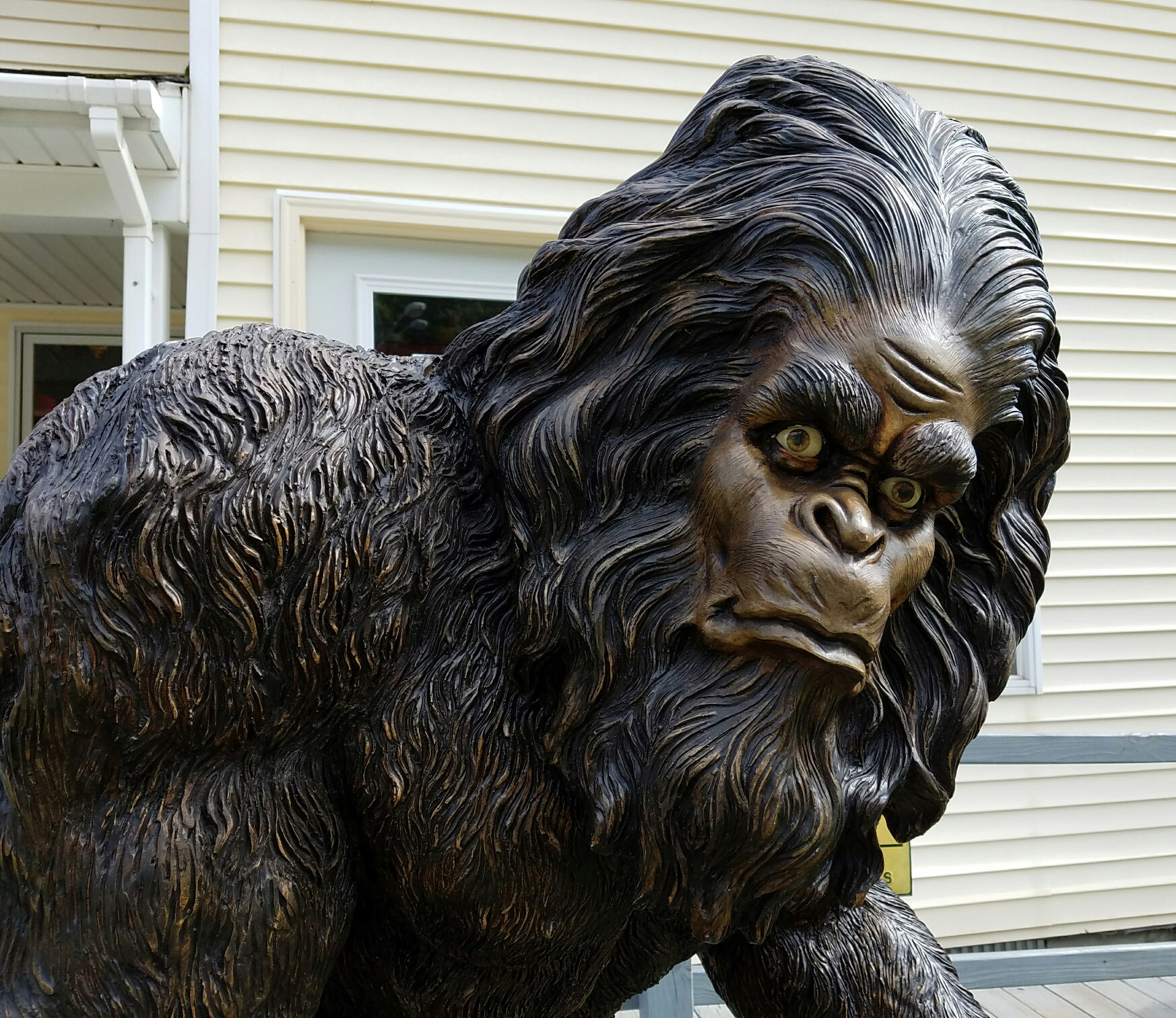
kellysept-2016-bigfoot

This Bigfoot sighting occurred right in front of Muldoons’ restaurant and gift shop in Munising.

I suppose Zach has never seen a ghost, and so he finds it easy to dismiss the paranormal. But how do reasonable people like him react to legends of animal-like creatures such as Bigfoot?

Animal Planet’s popular television series, Finding Bigfoot began its eighth season in January 2016. Enough people watch the show to keep it on the air. Does that mean they believe that these creatures actually roam the earth? Or are they watching only to be entertained? Arguments run rampant in online forums as people seriously debate the question “Would you shoot a sasquatch?” Some believers say “I couldn’t kill it” and skeptics respond “You can’t kill something that doesn’t exist.”

Zach is probably a skeptic. He joked about having seen a similar phenomenon, the Dogman. It’s described as a large dog that walks upright on two legs and terrorizes the northern part of Michigan. Because Zach had laughed, I knew he didn’t want me to think that he truly believed in the werewolf-like animal.

But people in our remote towns are seeing mysterious things they can’t easily explain away. Documented reports are so convincing that I admit this: As my family and I hiked through the U.P. wilderness, I was on guard against two specific entities besides ferocious cougars, man-eating black bear, and venomous Massasauga rattlesnakes. I looked deeply into the thicket of the forest and wondered just what I would do if I crossed paths with the gruesome Dogman or the iconic Bigfoot.
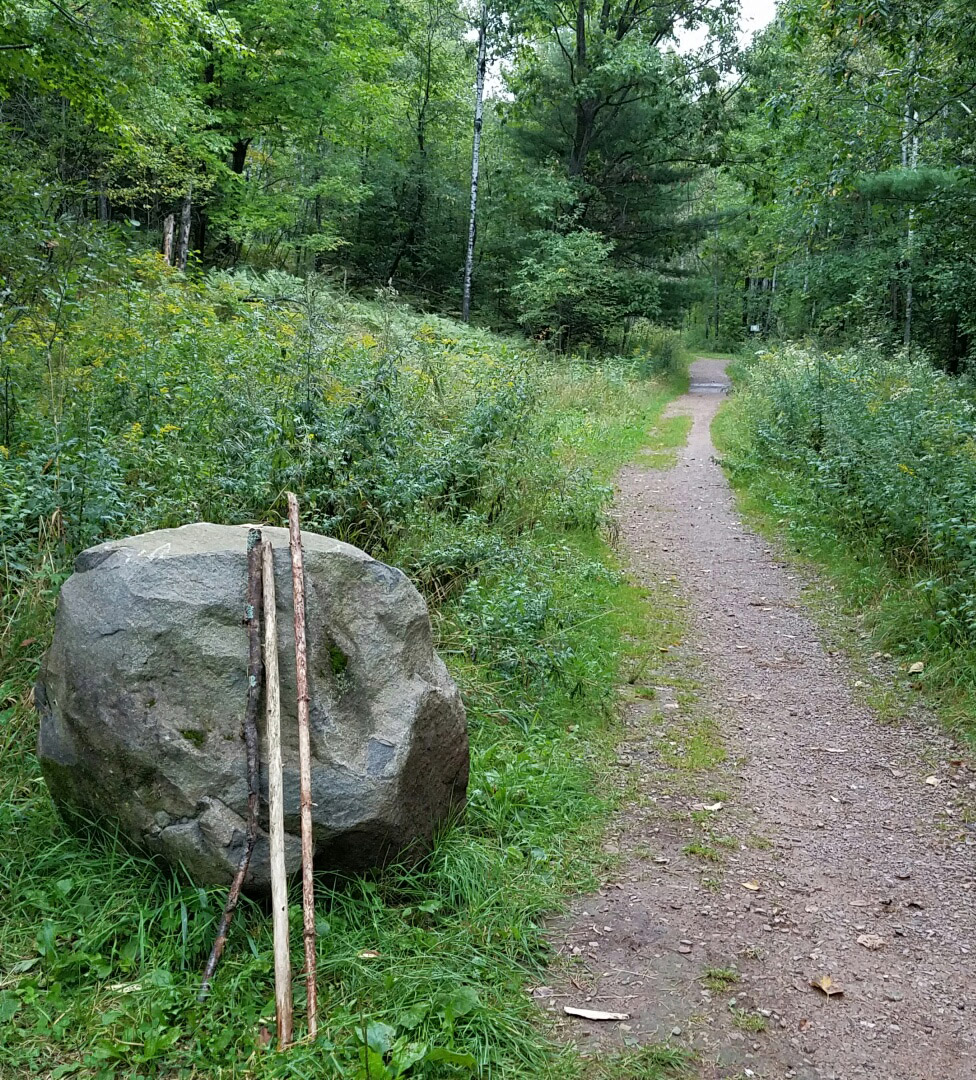
kellysept-2016-wlakingsticks

Preparation for our hike included selection of the right-sized walking stick. Luckily, we found these at the trailhead.

I stayed on the trail best I could and kept searching for anything out of the ordinary. I quickly dismissed non-threatening deer tracks. I counted the number of toes in common dog prints and made sure to find four paw prints in stride with one another. I listened for evidence that my family and I were being studied and stalked. Were our feet the only ones to be thudding upon the ground? Why were the birds in the trees suddenly taking flight?

In one hand, I tightly gripped the three-foot long walking stick I had selected at the beginning of our hike. I used the stick to brush the tall grasses that lay ahead of me, hoping to roust camouflaged critters. Occasionally I practiced twisting the knobby branch up and out in front, like a jousting pole or a sabre.

The fingers of my other hand delicately wound around another item that empowered me with confidence. I reasoned that I wouldn’t use it unless the risk to my family was too great not to. Could I actually do it? I wondered and considered alternative scenarios. I knew that I might very well be faced with no other choice.

I was convinced at that point. Determined. If the worst should happen and a feral beast were to get too close, I would swiftly raise my arm, take aim, and throw my treasured, tasty, chicken pasty at the creature. No Yooper would let that staple go to waste. By the time he finished it, my family and I would be long gone and safely out of the woods.
Mount Adams

Crouched in a blinding sleet storm on Mount Adam’s summit, I was alone and numb all over. Stranded in howling mist and 50 mph winds, it was early afternoon on what was supposed to have been a normal tranquil June day in 1989. Any thoughts of a view south 3,000 feet above the Great Gulf to Mount Washington four miles away were gone. I could barely make out a weather-battered wooden sign a few feet away in a greenish-black maelstrom. Huddled back to the storm on a tiny summit, there were only a few boulders for shelter. I was elated to have climbed to the top and worried that no one else was there. Did every other hiker in the White Mountains know something I didn’t? Was this a serious miscalculation? 

Worse, I had lost sight of a four-foot-high rock cairn a little below the summit. It was the only marker showing my way back down, since there was no trail of boot-prints in the rocks at this altitude. I needed to quell a growing sense of unease. If the rock cairn didn’t reappear soon, I was in deep trouble. Having climbed the White Mountains and the Appalachians many years, I was experienced and in good condition, but beginning to realize I might be in over my head. 

Already tired from climbing all morning, the storm was sapping my energy. Even though the wind was blowing ice pellets, I badly needed water, food, and rest to make it back down safely. A sandwich and almost-empty canteen of water was of little help. Yes, I had gained the top, but the rock cairn was the first of many I would have to find while crawling down a massive boulder field in blinding weather. Wandering around Mount Adam’s summit in this storm was inviting death from exposure or a serious fall off a precipice. 

Far below at the trail head, four hours before, the day had been promising with only clouds and spotty afternoon rain. Just an hour ago, I had decided to continue into the growing storm, to be able to say I had climbed Mount Adams rather than simply on it, a now seemingly small distinction. Caught up here, I was barely hanging on, trying to think clearly. How long should I wait for the rock cairn to reappear? I finished the soggy sandwich and took another gulp of water, my hands now too cold to hold the apple in my backpack. Prospects of finding shelter were bleak, but I couldn’t stay where I was. 

A sheltering line of weather-beaten, stunted junipers lay a thousand feet below past the exposed Knife Edge on the Durand Ridge over a mile away. The junipers were gnarled and twisted from a lifetime of constant wind and weather; the last living things at this altitude beside lichen moss. I looked around and couldn’t see any lichen growing on the summit, a sobering thought. I had no way to call or signal for help. Even finding the ridge below would be an iffy proposition if hypothermia set in. The nearest Appalachian Mountain Club shelter was far below and east in a mountain Col of Mount Madison, and there would be little chance of finding it. Without Madison Hut as an alternative, I was left descending in a blinding storm along the Knife Edge. 

With winds increasing, it was difficult seeing anything through my rain-fogged eyeglasses, so I couldn’t make out a compass reading even if I wanted. There was a distinct possibility of never finding my way down, instead laying down in exhaustion to die somewhere under a boulder. Thinking was fuzzier by the minute, disoriented as I was by Adam’s deceiving wind gusts, but an outline of a rock pile appeared a moment in the swirling mist. I scrambled toward it before it disappeared. The next quarter-mile descent would involve crossing a field of slippery boulders, trying to locate more cairns in growing black sleet. Never having been in a mountain storm before, I hadn’t realized rock cairns are silhouetted against lighter sky while climbing but otherwise disappear into a bare stormy mountainside. 

How had I gotten myself into this and would I learn anything if I survived? My wife, Joan, found a Tee-shirt on a Maine vacation that said, “Hiking is Life! The Rest is Just Detail.” I was wearing the now-soaked shirt, but a detail like not risking my life had been forgotten. I was soaked from head to foot despite two supposedly waterproof wind-breakers, one over the other. Special hiking socks were squishy-wet, no longer insulating or protecting against abrasion. Waterproof hiking boots were soggy and chafing; special hiking trousers and underclothes sodden.  

After what seemed like an hour of carefully feeling my way down through the  summit’s boulder field, often losing sight of trail marker rock cairns, I finally found a path below approaching the Knife Edge. The welcoming field of stunted junipers finally appeared, meaning a little more shelter from the driving rain and slashing wind. I crouched out of the maelstrom to take stock, no longer lost but wet, shivering, and beginning to have difficulty walking. 

I still had another three miles and a few thousand feet to descend, almost three hours to the trail head. There was no way to avoid losing my footing on occasion in the rain-swollen stream-bed that had been the rocky Airline trail that morning. Each step became slower, legs and feet afire; a beating they would feel for days. It took more than what I thought would be three hours, and I was dizzy, almost delirious, by the time I reached the trail head parking lot in late afternoon’s drizzling rain. 

I sagged against the car, glancing up a last time. Mount Adam’s summit was now shrouded in a frightening storm, no longer visible. I began unzipping soaked clothes with fumbling fingers before setting the car’s heater to maximum, luxuriating in its warmth. 

The adventure had been both rewarding and dangerous. But, where had I gone over the line; that it was too hazardous to continue? Perhaps it was time to stop solo-climbing, because it wasn’t clear when I should have turned back. I still don’t know how other climbers balance the risk and reward of summiting mountains, but many have died working it out. The question is, will I turn back next time?

Trip of a Lifetime – Australia and New Zealand: Part 5

Tuesday, April 5: Our group gathered in the hotel lobby for a visit to a predominately Maori school, Kaitao Middle School in Rotorua. Kaitao is a recipient of Grand Circle Travel donations. Roger again acted as our chief for purposes of introductions. A few selected students and staff welcomed each of us with the traditional Maori greeting. The Maoris greet a person by shaking right hands while placing the left hand on the person’s right shoulder and leaning forward touching foreheads to breathe in the person’s essence. The students sang a Maori song for us and we sang God Bless America for them. This school’s philosophy is to create a positive atmosphere for their students encouraging them to embrace their culture and to learn about others.

After a scenic drive to Auckland, we had a casual late lunch at Sal’s Authentic NY Pizza pizzeria. While there, a game on their TV attracted our attention. The NCAA Basketball Championship game between Villanova and North Carolina was in its final half. The game was so exciting that we didn’t want to leave. We ordered more pizza and cheered on whichever team we favored. The commotion we made prompted people walking past the small pizzeria to peek in. The teams were tied at 74 with less than a second to go. It looked like overtime would decide the winner. Suddenly the place inside and out erupted into loud cheers when Kris Jenkins’ three-pointer with four-tenths of a second remaining won the game for Villanova. Final score 77 to 74. What a great unexpected addition to our trip. We returned to the hotel and relaxed on our own for the rest of the day.

Wednesday, April 6: The first activity of the day for half the group was to sail on the Pride of the Sail in Auckland Harbour. The boat was operated by Brad at the helm and Brook as his assistant. What fun we each had taking our turn at the helm. Afterward, our half of the group exchanged places with the others and enjoyed a Harbour City Walk. An alternate option was a visit to the Maritime Museum.

The coach then took the entire group on a two-hour site seeing tour of Auckland. Our farewell dinner at the hotel was spectacular and delicious. A member of our group asked Roger to read aloud a prayer expressing her appreciation for the warm friendship of her fellow travelers and her wonderful experience on the trip. I couldn’t help but shed a few tears at her heartfelt words. Another member wrote a beautiful poem about our fun group and her great experience on the trip. We ended with hugs, kisses, and promises to try to keep in touch. This farewell dinner gave us a chance to say goodbye to those who were leaving this portion of the tour to return home while the rest of us continued for a few more days of travel.

Thursday, April 7: On our way to the Bay of Islands, we stopped at an impressive bird sanctuary run by a man and his wife. We learned about the kiwi, the national bird of New Zealand. Other birds also were housed there. In their one-room museum, we saw many pictures of birds, several stuffed birds, and pictures from visiting students illustrating what they learned at the sanctuary.

After our stop, we continued on the scenic ride to Copthorne Hotel and Resort in Paihia. Dinner at the hotel was followed by a relaxing evening where some of the remaining members of the tour group sat on the porch to socialize while overlooking the Bay of Islands.

Friday, April 8: At the wharf at Paihia, we boarded the Hole in the Rock Cruise boat. During the cruise, we saw about twenty playful bottlenose dolphins and other wildlife. The weather cooperated and we were able to cruise through the hole in the rock, a fascinating rock formation at the entrance to the Bay of Islands. On the return trip, Roger and some others climbed to the highest point on one of the islands from which they had a beautiful 360-degree panoramic view of the Bay of Islands. We stopped for lunch in the historical quaint town of Russell. We cruised back to the wharf, did a little site seeing, and later had an evening meal on our own.

Saturday, April 9: In the morning, our group took a guided tour of the Waitangi Treaty Grounds. That afternoon Roger and a friend played golf at the nearby course overlooking the Bay of Islands. Some people went to the waterfall, while the rest of us relaxed at the hotel.

Our dinner meal at the Only Seafood Restaurant on the stunning Paihia waterfront was delicious. Ronan and Roger ate green-lipped mussels in curry sauce. They were a sight to behold sucking the mussels from the shells and licking the dripping sauce from their fingers. The rest of us dined on less messy, but still tasty seafood.

Sunday, April 10: We loaded our packed bags on the coach for our return to Auckland. On the way, we stopped at the Glow Worms Cave for a tour. A few of us opted not to take that tour which included lots of descending stairs. We remained on the bus and socialized. Our next stop was the Jet Park Airport Hotel where we stayed in preparation for a 4:10 am departure the next morning. We had our dinner meal at the hotel and slept for a few hours.

Monday, April 11: Check-out time came much too early for this night owl. We took the shuttle bus to the airport. Ronan flew with us to Sydney, his hometown, and reminded us that we had to set our watches back two hours. Qantas served a satisfying hot breakfast on the flight to Sydney.

The crazy saga of our return home began when the Qantas flight was well over an hour late departing the Sydney Airport due to some mechanical problem. Not a very comforting announcement to hear. Roger said with that delay we might miss our Delta flight out of Los Angeles. After about 15 hours of flying, we arrived at the zoo, I mean, L. A. Airport, to retrieve our bags. We found numerous long lines at immigration. There were only two people handling the line we were in and one left for a break. Grrrr! Passengers in other lines who were behind us got through faster than we did.

Finally, another immigration agent arrived to process us. From immigration, we walked forever to the curbside Delta check-in. A couple of ladies in front of us gave the skycap a hard time about paying for their overweight luggage delaying us even more. Upon reaching the front of the check-in line, the skycap said that we were one minute too late to get checked in. The machine locked the skycap out. He hurried inside to find someone who could override the machine. This took another 10 minutes. Our plane was scheduled to depart at 9:20 am and it was already 8:45. His supervisor overrode the machine to check us in and gave us boarding passes.

Usually we go through the faster TSA line, however, our boarding passes didn’t indicate TSA pre-check. So we were directed to the regular, longer security line. Ugh. It was now 8:58. I did as the man at security suggested and politely asked to take cuts from people ahead of us who had later flights. They all said yes. This cut a couple of minutes off our time in the security line. Fortunately, my knee and hip replacements didn’t set off the machine. Yea!

It was about 9:09 when we finished. Roger grabbed his shoes and ran in sock feet to the gate a short distance from security. I can’t run, but I did a very fast walk to the gate with untied shoes. We arrived at the gate at 9:14. Luckily we were allowed to board only because they were still boarding a few other passengers. Apparently, that plane was also a little late. Thank goodness. I settled into my seat, exhausted, but grateful that we didn’t miss the Delta flight home.

The craziness of our flight out of Sydney and the delays at the LA Airport did not distract from our wonderful learning experience in Australia and New Zealand. I can’t thank my husband enough for adding this trip to my bucket list. We can’t wait for our next travel adventure.

The Best Seat in the House

“This is my command: Love each other.” ~ Jesus

(John 15:17, NIV)

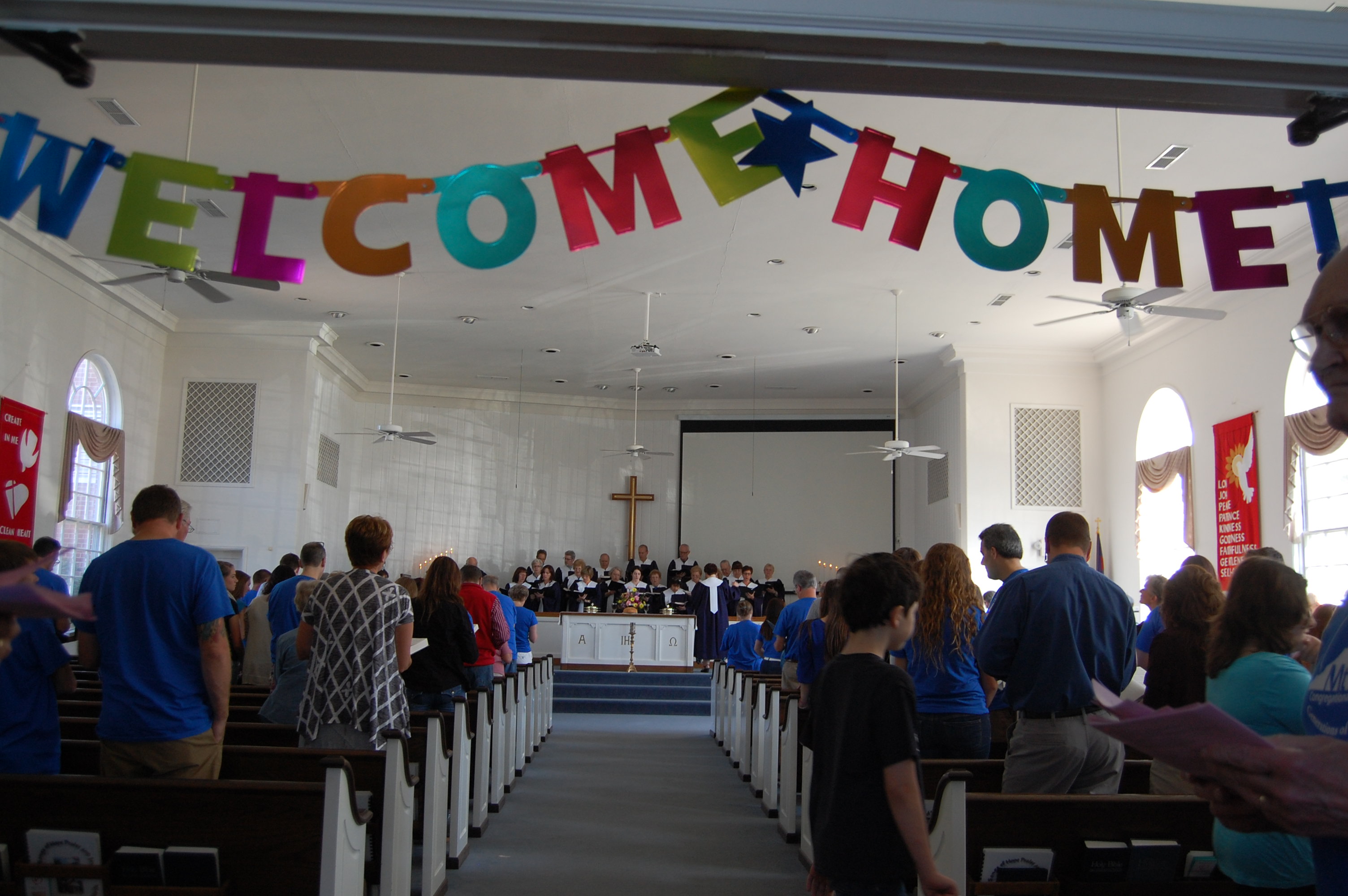
For over 125 years, Mt. Hope has been inviting visitors to become part of its church family.

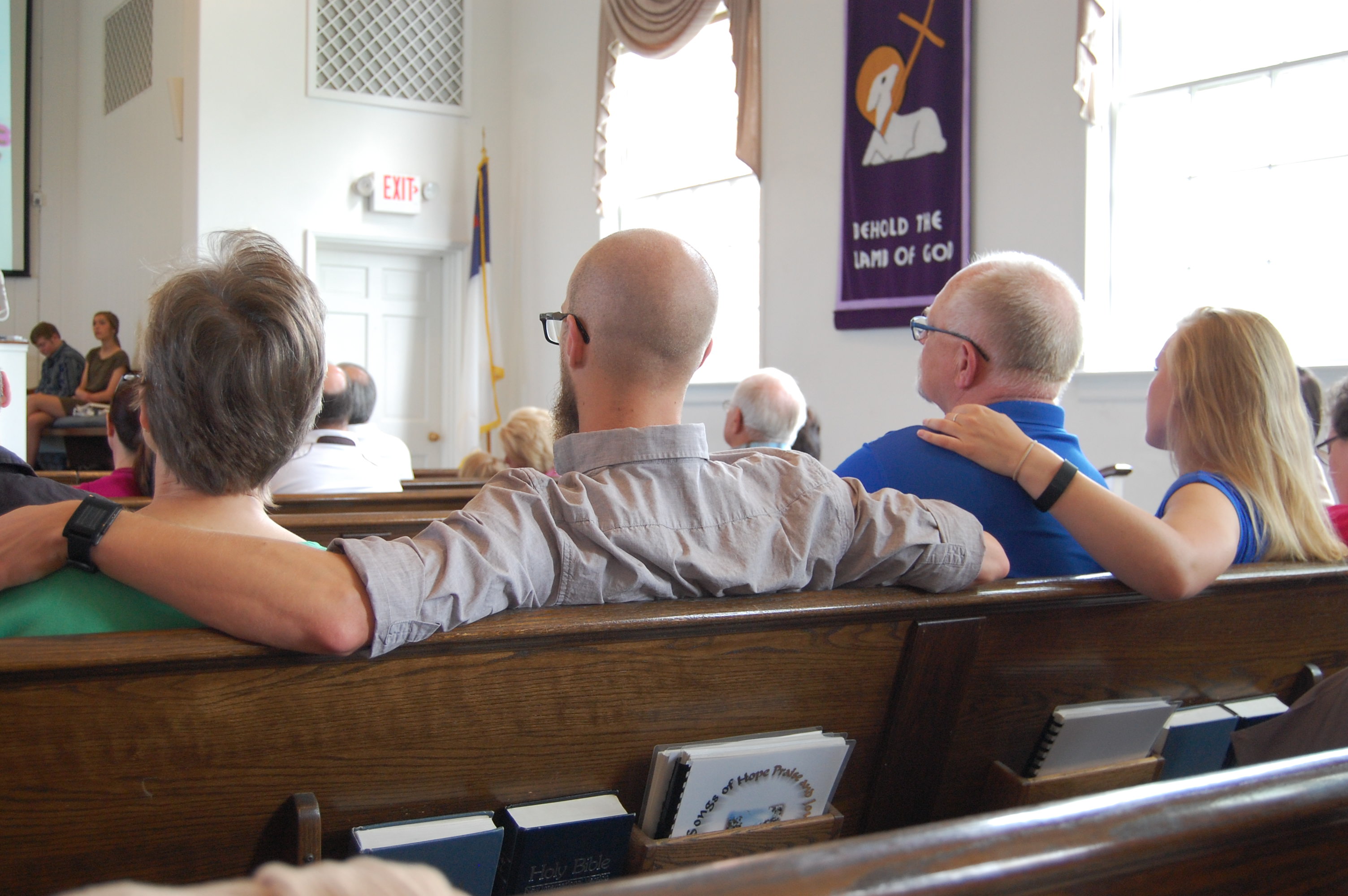
Oliver sits directly in front of me. The five-year-old was a student in my vacation Bible school class. He snuggles up to his mom. With a broad smile and a gleam in his eye, he leans in to kiss her cheek. She puts her arm around him and hugs him close. Oliver’s dad sits on the other side of the young boy. The two of them have the same color of hair, brown, and similar haircuts. The dad stretches his arm all the way out—behind and past his son—and caresses his wife’s shoulder. The way he stares and smiles at his wife in that moment tells me he adores her. She’s looking down at something in her lap and misses that glance of affection. All the while, Oliver is delightfully sandwiched between his parents. All three are visitors to church on this particular Sunday, but I’m sure they’ve been here in the past. Probably on a day that they came to hear Grandma Mary Ellen sing in the choir.

The trio fit right in with the rest of us regular worshipers. Love is abundant at Mt. Hope. Ours is a small church, but we’re big on family.

Across the aisle, in the front row, Kelsey sits where her mom used to. Everyone who knew Jan was saddened by her untimely death, due to a medical mistake. We miss her, but her husband Bud is the most distraught. We hug him when we can and cry with him when we do.

Nearby, Toddler Theo is full of youthful energy. He can’t be contained. His Nana carries the squirming child out of the sanctuary and to the nursery. I know she will stay there to play with him and keep him content, unless his Buppa happens to be volunteering in the back room to watch the young children during this morning’s service.

Farther back in another pew sits Sami. She rests her head upon her dad’s shoulder. Her neck is tilted—practically at a forty-five-degree angle—to her body. How could that position be the least bit comfortable, I wonder? I watch as her father protectively wraps his arm about her. Familiar tattoos peek out from beneath his short-sleeved shirt. His little girl is now a young lady. All grown up at eighteen and going to college in the fall. She will miss her daddy and mommy, though. Anyone can see that. Despite open seating to the right, Sami’s mom is pressed tightly up against Sami, an aspiring pharmacist. Beauty and brains, the perfect combination.

"Signs of affection are common during church service."

Signs of affection are common during church service.

A baby cries, and I don’t have to turn to see that it is Abela’s little sister. When just a few months old, the baby was baptized here. Pastor Steve poured holy water over the baby’s tiny forehead, and then our church family welcomed her by singing, “Jesus Loves Me,” like we do for all the babies. This precious little one didn’t even cry. She just cooed and smiled as she was carried up and down the main aisle so we could meet, eye-to-eye, the little person to whom we were promising to teach and guide and raise as one of our own. I hoped she would one day know how significant her baptism was. Even the water used to bless her was special. It came directly from Pastor Steve’s last trip to Israel. He had collected it himself from the Jordan River, where Christ had been baptized two thousand years earlier by John.

Today, the spot next to Al is vacant. His wife, Doris, is in the hospital recuperating from surgery, so their son Clark fills the void. Several pews forward from them, Mitchell is missing. He must be performing in a weekend matinee. What else can an actor be expected to do? Even on Sundays, the show must go on. On the rare occasion that Margaret isn’t in her usual spot, I immediately expect to find her at the piano, which she sometimes plays when our church accompanist, Sharon, cannot.

From my seat towards the back of church, I see all this and more. Dawn and Bill’s twin sons are training at West Point, so I know that the parents regularly sit beside lifelong friends and gab while they wait for service to begin. I notice when Grandpa John comes in to claim his place alongside his two grandkids. I hear when Lynn laughs and when Karen and Susie sing.

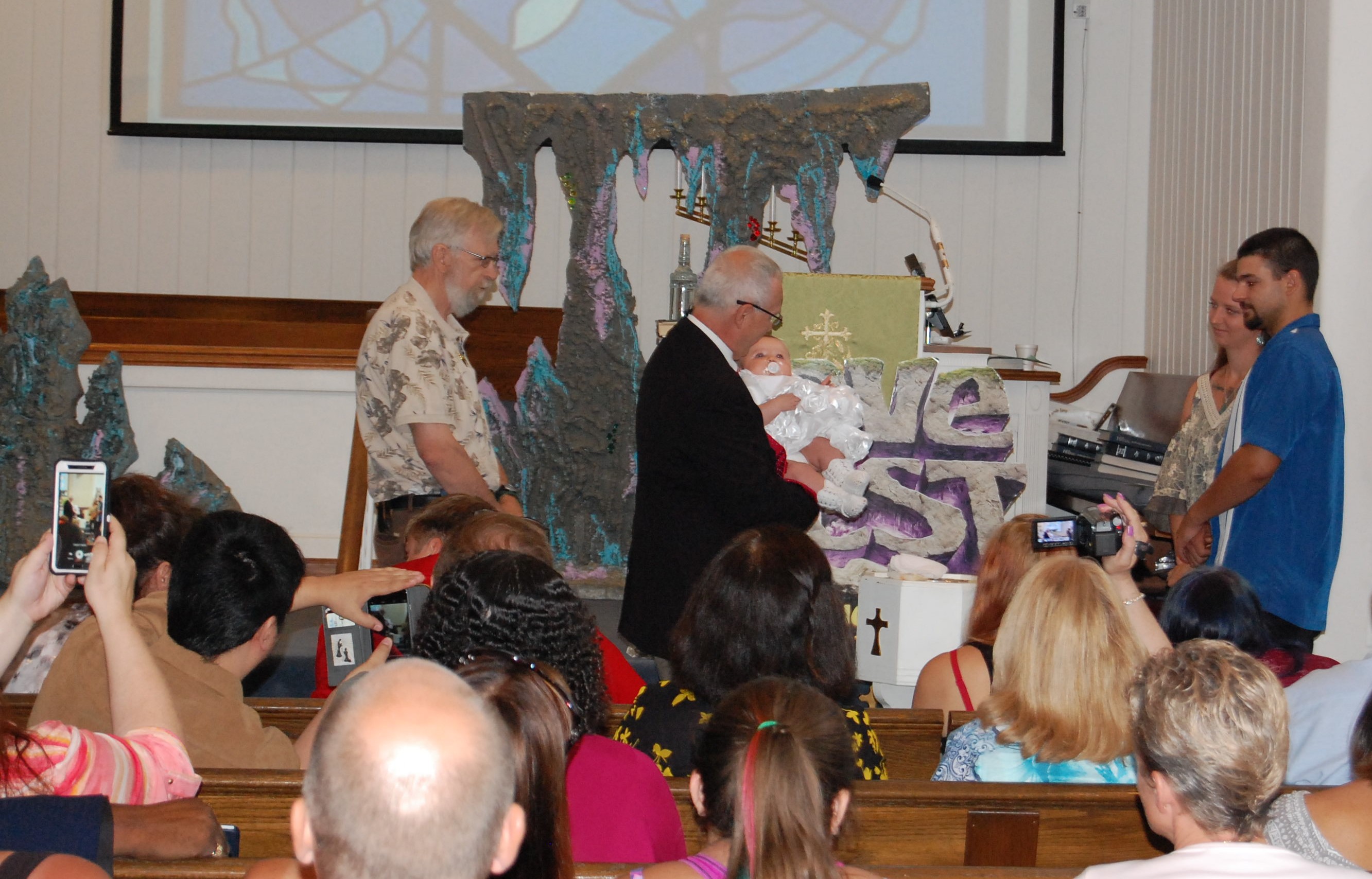
This morning, I can tell that we have visitors. Clumped together at the front, they must be with Bertha. She’s way out of place up there. Normally, she’s even farther back than me. But when I see her look closely at her great-granddaughter, clothed in a white gown and bonnet, I understand. There will be another baptism.

My mind races. Is the family bothered by the vacation Bible school decorations that will show up in the background of the baptism photos? Surely they didn’t expect a cave, complete with stalagmites and stalactites. I get up and quickly approach Pastor Steve who is seconds away from starting service.

“Should I move anything out of the way? Is it too late?” I whisper in his ear.

He smiles, shakes his head, and assures me. “We’re fine, Kelly. We don’t need to change a thing.”

This baby has a beautiful start in her journey to Jesus.

I return to my vantage point near the back of the sanctuary. Pastor Steve’s words float around in my mind and I think about this loving family that I’m a part of. Steve’s right, I know. We may try to capture life’s biggest moments from the perfect angle of a camera lens, but by focusing too intently, we might miss the delightful things that happen in the background.


Editor Log: Improve Yourself Iimprove the World

Travel outside of one’s country irrevocably changes one’s perspective about the world, one’s own country, and–if you’re really lucky–oneself.

IMG_7210

While in Astana, Kazakhstan, I saw the meaning of true mutual respect among teachers and students, “the” best hospitality I’ve ever known, and the kind of manic driving that makes any urban setting in the United States a passive joy ride. Note: I’m told by my hosts in Kazakhstan that driving in Turkey is even more manic.

In London, England, I attended a museum exhibit about the space race from the point of view of the Soviet Union. Much of what was shared is either glossed over or not present in US or World History curriculum.

Seoul, Korea is the most clean place anywhere, and there are not garbage cans to be found. People are just expected to clean after themselves. No one flicks cigarette buts out the window or set on the ground empty bottles and cans. There is much higher regard for the local environment displayed than seen in the United States…in general terms.

Writing is the same way. To improve and grow as a writer, we need to look at ourselves as someone from another country or planet. Reflect deeply on the strengths and challenges one has. Be honest with yourself, but do not look at areas of growth as spaces of weakness and validation that the skills are not there. Reflect, practice, and learn from others. Assume that “Any One” can be a teacher for just “the” right moment that you need.

Improve yourself, improve the world.

Dublin, Ireland streets are clean, at least from one day trip. Day two to follow. The people have a sense of humor that was noticeable among even the people I did not talk to. As I tour Ireland, I look forward to what shift in my prospect that will occur by the time I return to the US.