Category Archives: Nonfiction

Coffee Shop Chronicles: Playing with Toys

Starbucks

Bear, DE

April 2006

I expected one thing from this morning’s workshop hosted by the University of DE, entitled, “Reconnect with Your Creativity”, but took away something completely different.

I want toys, now!

That’s what the first workshop session was: toys. Slinky, Lego, twisty ties, magnetic 3D designs, balls, stretchy toys, flip frogs…all that stuff that we played with as kids. We were each given a secret task. It turned out that everyone had the same secret task: draw a flower. I thought of my college Roomie and her flowers and drew as she always did: one stem, two leaves, five petals and a cloud in the background.

There were only pink and green highlighters on the table. No other colors? I wondered. Well, these will do.

The instructor watched us a bit. “Why didn’t you ask for other colors?” she commented. “Why did everyone draw the stem green?”

“How often do we not ask for help at work? How often do we do things because ‘that’s the way they’ve always been done’?”

Woah. Deep thoughts. Why didn’t I ask? I thought about it, almost did. But didn’t. I was already being chatty. I want to be that energetic “Wow” person. What held me back?

That’s a rhetorical question. I think.

Ashley made me a thick, yummy Mocha Light Frappuccino just now. She gave me the leftovers in a separate cup. That’s on my left and a half-eaten slice of reduced-fat coffee cake is in front of me. I’m at the corner table with the sun full on my back. I’m so warm, so comfy.

I wonder as I look around how many people would benefit from this type of this. The playing, I mean, not the food. Or maybe both, the indulgence of it all.

“Why didn’t you play with the toys?” she asked us. “What held you back? Why are you or why are you not creative?”

How am I creative? I write. I journal. They’re the same things and yet they’re separate. I draw or sketch on my journal pages. I scrapbook, a little bit.

How can you coax creativity out of others? That’s a really good question. I write letters, so maybe my friends will write me letters back. There’s something personal and imaginative putting pen to paper, even if you just write about the weather like Dad always did. Playing board games, perhaps? I don’t have many local friends, but I do have my coworkers.

Everything relates back to my job. Do those same reasons hold you back at work? Why don’t you ask questions?

We explored office atmosphere. Imagine the office you want. How do you get there? Provide toys at staff meetings. Create “our” traditions or ways of doing things, not “mine” or “yours.”

I shared this with my boss. I was so hyped up over this!  He seemed to get it, some of what he has been saying all along. Think new aspects for what he has said in the past.

When is a good time to reinvent myself? Do I need to? I will be that bubbly person I see myself as, the same one my friend, Tina, sees in me. The chatty person Dad taught me to be. In my mind’s eye, I see me chatting at new scrapbook stores. I see mentioning at a crop, “Who wants to do lunch with me?”  I can invite other Penn State alums over the house for company. I see me being the fun person in the room. Maybe I’m not ‘The One’ everyone flocks to at a party, but still.

Do these people here see that? The baristas do. Natalie and I have a chat. “Give us your email,” she says, “so we can stay in touch.”  Yes!  They do emails with previous employees when they leave.

Liz beside him says, “Well, you’re like an employee.”

So…I imagine what I want to be and be it.

Could it be that simple?
Close Encounters of the Creepiest Kind

What scares you? Think beyond concrete things like losing a job, facing the death of a loved one, and worrying over an upcoming surgery. I want to know if you’re afraid of anything truly creepy. Have you ever seen a ghost? Are you haunted by something you can’t explain? Do you wake terrified from nightmares?

For some people, there’s a tendency to disregard strange phenomena as figments of the imagination. Other individuals seek greater understanding by examining evidence and drawing logical conclusions, if any can be made. And there are the many skeptics who conveniently point to dreams as the scapegoat that makes most sense of weird and mysterious events.

Before offering an alternative explanation for the bizarre things that happen in our world, I have a few peculiar stories to share. In the end, I’ll provide a solution for overcoming the dark forces that work their way into our lives.

An adolescent boy told me of a premonition that he had experienced while sleeping. He dreamt a family friend had died. When he woke, he was upset and immediately went to find his mother. He found her downstairs, sitting at the kitchen table, and crying. She had just finished a phone call in which she had been told that the woman in the boy’s dream actually had died in a tragic car accident.

I know a woman, too, who was plagued by disturbing events that began after she had fallen asleep. She would be very glad to blame the strange incidents on awful and vivid nightmares. But what she went through felt as real to her as the premonition was for the boy in the above story.

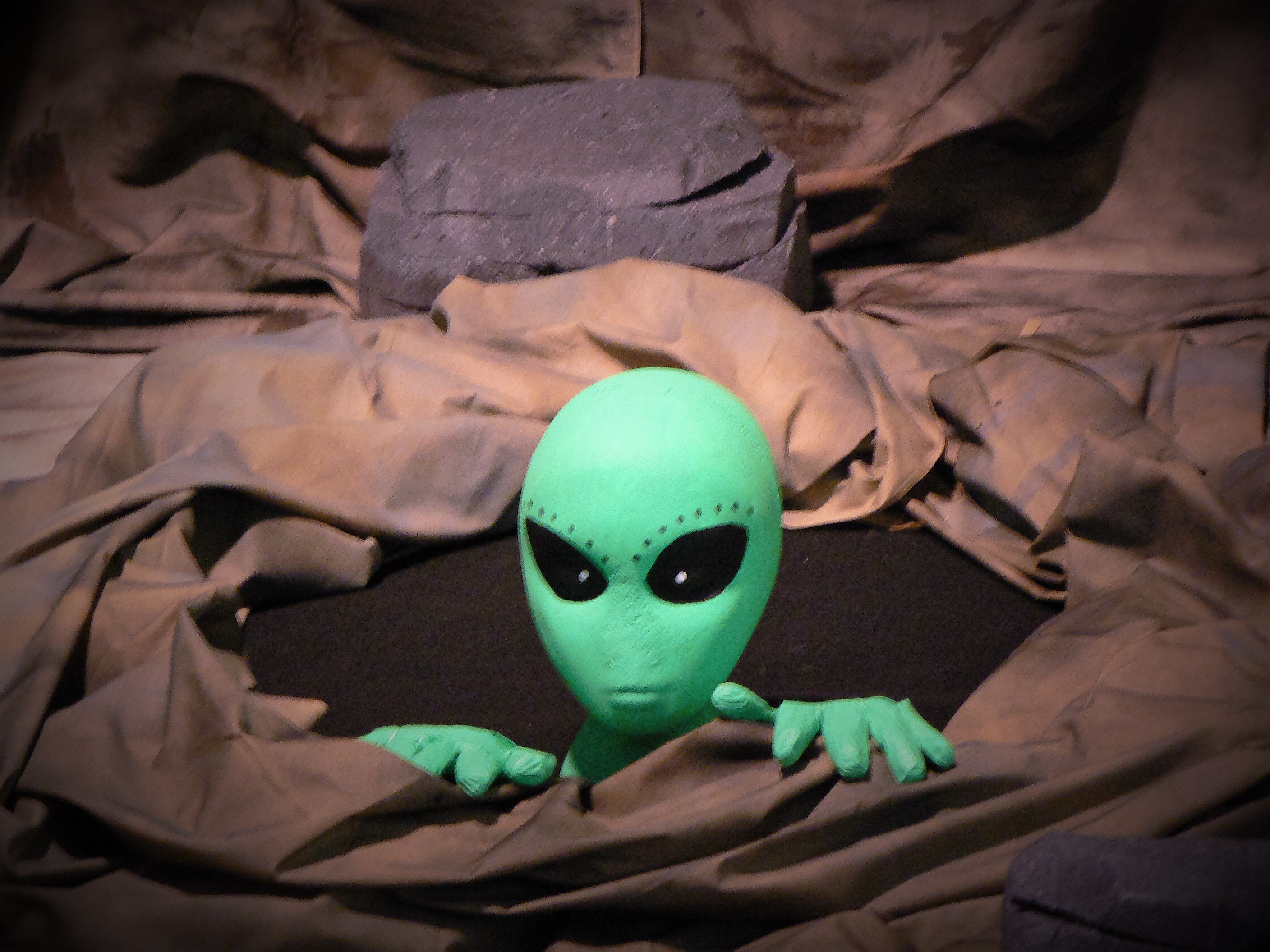
As a young, married mother, the woman heard a noise—outside her bedroom window—that caused her to wake from sleep. She called out to her husband, who was lying beside her, but he wouldn’t stir. The woman was paralyzed and helpless during the events that unfolded. Her experience was typical to that of other people who claim to have been kidnapped, taken aboard an alien spacecraft, and subjected to invasive experimentation. After being returned to her bedroom, the terrified woman was then able to wake her husband. He tried to console her and reasoned that she must have been dreaming. In the days that followed, however, his wife’s arms erupted in strange rashes that doctors couldn’t diagnose and adequately treat.

alien

What do you believe in?

The assault was the second time the woman had felt like she had lived through a close encounter. The first occurred when she was a child. She remembered waking to alien creatures peering at her. Frantic and scared, the girl ran to her parents for help, but they dismissed the sighting by saying “it was probably nothing more than a dream.”

Nothing more than a dream . . . reassuring words perhaps, and yet we don’t fully understand our dreams. They’re the focus of great speculation. What are their purpose? What do they mean?

If you’re like me and have woken to your own scream during an all-too-intense and seemingly real nightmare, you may agree that dreaming of an evil, unearthly presence leaves you feeling more powerless than if you had been confronted by a human villain. At least we have some ability to fight a delusional person, like a lunatic wielding an axe.  But how can we avoid ghosts that haunt us, combat aliens that control our bodies, and escape malevolent forces that take advantage of our minds when we’re supposed to be resting peacefully?

The first step is to examine what our beliefs are about nonhuman, intelligent, supernatural entities.

When people of faith talk about God and His angels, it’s easily accepted that these highly regarded spiritual entities exist and influence our lives for the better. The conversation doesn’t spur sideways glances and raised eyebrows from friends and relatives. They don’t flinch and wonder whether or not we’re losing our rationality. Instead, we collectively hold to endearing thoughts and feelings about our all-powerful God and His heavenly host. But by believing in these good and protective entities, we would be hard-pressed not to also believe in the sinister angels—Satan and his demonic brethren—who defy God.

According to the Bible, God created the angels to have freewill—the liberty to choose right from wrong, to love and obey God or not. One of God’s angels became selfish and rebellious. He convinced a third of the other angels to fight with him in an effort to dethrone God, but that devil and his evil bunch lost. They were cast out of heaven and roam throughout the earth.

Since the Bible doesn’t mention how to deal with extraterrestrial beings, and I’ve never seen one myself, I’m not sure that I believe they are what many people think they are: life forms from another planet or galaxy. I’m more inclined to think that they’re a trick of the devil. Sensational spectacles that Satan orchestrates in order to divert our attention away from God. While we’re reading the latest conspiracy theory and arguing amongst ourselves about whether aliens exist or not, the one thing we’re not doing is worshipping and glorifying our Lord and Savior.

The devil will get what’s coming to him. Don’t let him drag you down along his way.

Fortunately, ghosts have steered clear of me too. A sighting would absolutely freak me out, because I believe ghosts are manifestations of evil. Ephesians 6:11 (NIV) tells us “Put on the full armor of God so that you can take your stand against the devil’s schemes. For our struggle is not against flesh and blood, but against the rulers, against the authorities, against the powers of this dark world and against the spiritual forces of evil in the heavenly realms.”

The spirit world is real, and it’s divided between good and evil. You may as well paint a bullseye on your chest and get ready to fight for your everlasting life. You are targeted by the devil. His arsenal is full of ways to tempt and deceive you. Sometimes he’s brazen enough to make a personal appearance. Often, he’s more subtle and fills your mind with negative thoughts. His goal is to steal you from God.

In this battle, let’s remember that God loves us most. We can defend ourselves against the tricks that the devil employs when he’s “looking for someone to devour” (1 Peter 5:8). Evil spirits, aliens, internalized whispers of self-doubt and hopelessness lose their power over us when we open the Bible and study the Word of God–when we learn for ourselves how to recognize truth and how to dispel lies.

Sweet dreams, my dear readers.

Hiking Isle Royale

 My father, brother, and I climbed Isle Royale’s 1,394-foot Mount Desor in June of 1959 in the process of hiking the island’s length. That first night, we were half-sleep in a three-sided lean-to with distant flashes of lightning reflecting off a dark, wind-rippled lake. A sudden storm was sweeping in and the loon calls were eerily sorrowful. An eight-foot moose waded offshore, almost invisible in deepening dusk. Quiet campfire flames had died to glowing embers as I drifted off thinking about the day. 

Earlier that afternoon, atop the island’s highest mountain, I could see Canada fifteen miles away in the distance across Lake Superior. We were exhausted and soaked to the skin, having hiked and climbed five hours through rain from Windigo Bay on the island’s western tip. I had never gazed across such a great distance. This was my first mountain hike into primitive wilderness on hallowed ground only Native Americans and fur-traders once traversed. There were no humans for miles. We had been told to avoid a pack of fifty wolves and several-hundred moose roaming about, but how one does this was never clear. 

My father was rummaging in a backpack, my brother and I crouching with aching limbs, out of breath, facing opposite directions. I had never heard Dave so deeply tired exclaim, “Hey, you won’t believe this, but there’s a coyote or fox, or maybe a wolf-pup, staring at us only twenty yards away. Take a look.” I was too worn out to turn around. Wolves had crossed from Canada on an ice sheet years earlier. We weren’t in a hurry to come upon wolves, or moose, armed with only jack knives. But a wolf pup might belong to a wolf pack. I finally turned around to see what it looked like, but it was gone. 

Unclipping a canteen of water purified with Halizone, I took a gulp, forgetting I had also added a fizzy grape-flavored Kool-Aid tablet to kill its taste. The result was something between grape juice and battery acid. I poured a bit into a cupped hand, discovering flakes of metal. Either the Kool-Aid tablet or the Halizone was corroding the inside of the metal canteen, but I needed water and didn’t care right then. 

After Boy Scout camping, hiking the length of Isle Royale was a real challenge. We planned to traverse its 55 mile length on the Greenstone Ridge Trail in five days, the same distance south to the Keweenaw Peninsula across Lake Superior. Two days before, we had departed Copper Harbor crossing the world’s third-largest fresh water lake that would later sink the ore-freighter Edmund Fitzgerald. But we were on a 40-foot under-powered launch unimaginatively named the Isle Royale. A five-hour rolling ride had us sea-sick long before the island’s eastern end at Rock Harbor. 

After setting up base camp and boarding a daily launch to the island’s west end, we headed up the trail planning to descend each night to a shelter at a remote lake. We left Windigo Bay with full canteens, but they were empty by mid-morning. Personal water-filtration systems had yet to be invented, so we planned to boil our water each night. By that first mid-morning, we gave up and simply filtered stream water through a handkerchief before adding more tablets of Halizone. Although Giardia Lambia intestinal parasites must have been in the water, they were unknown at the time. So, fortunately, none of us became ill. To carry less food and reduce pack weight, we planned to fish for dinner so our packs were heaviest before we began using canned food. Climbing Mount Desor with 65-pound loads on our backs didn’t begin well, plagued as we were by a fine drizzle and swarms of blood-sucking black flies. We hadn’t planned on a muddy trail and poor footing, trying to ascend a mountain before mid-day. We thought we had conditioned ourselves, weeks before, by carrying fifty pounds of boulders in backpacks around the neighborhood but, no, we were woefully out of shape. 

Two hours before Desor’s summit, still carrying our heaviest loads, my father came upon a moose antler on the ground, a perfect hiking memento. To our astonishment, he decided to carry the extra weight and hang it on his office wall. The black flies were driving us mad, circling just out of reach before alighting and drawing quick bites. Blood was running down our faces despite spraying ourselves with ineffectual Citronella bug spray. That was before we donned last-resort beekeeper’s hats and tried to protect our hands with gloves. 

Skidding on a slippery trail for hours in rain and growing darkness, a twisted ankle or broken leg would have been disastrous. We were days from help if we mishandled a knife or hatchet, much less burned ourselves in a campfire. We might apply a tourniquet or bind a cut before dragging someone out, but no one was coming to help. Cell phones hadn’t been invented and there was no way of sending messages. Boy Scout training never included Indian smoke signals, and there was no one around to read them anyway. The nearest a seaplane could land was Windigo Bay, weather permitting, and that wasn’t going to happen unless my father had a heart attack, in which case it would be too late. 

We were on our own now, in the first bug-infested three-sided lean-to by Lake Chicken Bone. It wasn’t all that inviting with a leaky roof and muddy dirt floor. Too dog-tired to care, we needed food and warmth, but had outsmarted ourselves with only a few cans of food to eat. We couldn’t fish for dinner because the shoreline was overhung with underbrush. By minimizing pack loads and bringing only canned food, we couldn’t start a fire anyway with wet firewood to cook nonexistent fish. Without a campfire, our father lit a tiny camp stove with heat pellets, and boiled life-restoring, dried-package chicken noodle soup. That was before everyone realized, all too quickly, soup made with Halizone-laced water leaves something to be desired. 

1930’s Civilian Conservation Corp’s boys hadn’t put much effort into Isle Royale’s three-sided lean-to construction. We spread our sleeping bags on dirt, thankful it wasn’t muddier. In the 30’s, there were only a few depression-era hikers to stay in such a jerry-built construction. Besides, there wouldn’t be anybody to complain to three decades later. Our father apportioned out our chicken-Halizone water soup and we were ready to slide into sleeping bags when a Tarantula-like spider appeared atop mine. It was hairy brown with shiny black eyes and totally unafraid. I was readying a knife attack when my father simply shooed it away. I immediately fell asleep despite knowing it might well climb inside sometime in the night. 

We awoke the following morning to more loons calling across the water and no sign of moose or hairy spiders. Scrambling into bright sunlight, we breakfasted on dry cereal and canned orange juice without bothering with a morning fire. Wanting to hit the trail for a long day ahead, we shouldered backpacks and left to ascend Mount Desor once more and gain the Greenstone Ridge. 

The path runs the length of the heavily-forested island and, from Desor’s summit, appears to be the spine of a long green animal basking in a cold blue expanse of Lake Superior.

We had been looking for semi-precious greenstones, found in only two places on the globe, Isle Royale and 180 degrees away on the globe in South Africa, but found, instead, a field of wild strawberries and feasted on them for lunch. 

Our day ended at a second lake-side lean-to and another fight with wolf spiders. This second batch were more determined to stay comfortably dry inside the lean-to, apparently thinking it belonged to them and not itinerant hikers. However, we weren’t putting up with any spider-nonsense and attacked them with sticks and knives while they scurried about. Too late to fish, we used more precious canned goods; Spam, peaches, and baked beans. 

At the end of the third day, more than 30 miles northeast of Windigo Bay, we finally caught three pickerel for dinner. Slipping them on a stringer to stay fresh, we lit a campfire to fry them. No sooner had we turned our backs than seagulls swooped down for their share. We chased them off with more sticks, before dining on a great dinner of fresh pickerel. That night, there was another moose wading offshore in purple twilight. Although we had been taking pains to hang our backpacks on overhead branches so they wouldn’t attract animals, my brother somehow left his atop a picnic table this time instead of overhead on a tree branch. When we were fast asleep, campfire long dead, a fox tore into his pack and ate everything foxes like. Dave’s candy bars must have attracted it but, with all of Dave’s food gone, the next few days meant a reduced diet for everyone. 

We finally finished the fifty-mile, five-day adventure trek to Rock Harbor, having learned how little we knew about wilderness hiking. Anything more challenging would need better planning.


Editor’s Log: Challenges mean Opportunities

strategic_partnership

The Deadwood Writers is about to celebrate 14 years of existence. The group was founded as part of one person’s college course assignment in 2002. At the time that the facilitator role was passed on to me there were approximately five members. We met in the Barnes and Noble (BN) in Northville, near the back of the store in a small space near the music section and the bathrooms. It was a good space for the group’s size.

The members, some of whom remain active today, were dedicated in both attendance and sharing of their writing. Yet one challenge was growth. The group’s vision has always been to provide a welcoming space to all writers and authors. Without growth, there would be the risk of atrophy from lack of perspectives.

This is where Patti gave tremendous help. Patti was Barnes and Noble’s CRM or Community Relations Manager. She handled the community outreach for the store. At that time BN stores sought to be a hub for the community. They invited schools, churches, and other organizations to do book fundraisers. Book groups were established through the volunteering of a community member. Sometimes the CRM might facilitate that effort. And there was the Writer’s Group.

From my travels around the country, writer’s groups are more difficult to establish than the book groups. It requires a structure and a facilitator willing to engage and welcome people to participate and lay bare their vulnerability through sharing of their writing. Having participated and facilitated several writer’s groups, I can honestly say that maintaining one is both an expense in energy and time, and one of the most rewarding experiences. It’s why I love being a part of the Deadwood Writers for 14 years.

Patti helped us grow the group with putting us into the calendar and in the store newsletter. She partnered with us to bring in authors and publishers. In the process, she taught me the ropes for relationships with authors, publishers, and the store, which has been invaluable. The group grew to over 30 members. We moved to the Cookbook section, which has been our home ever since.

When Patti retired, Betsy took over as the CRM. The rich relationship continued to grow. The Deadwood Writers group sponsored workshops on writing. One important focus was the 6+1 Writing Traits. We brought in a publisher who conducted several sessions on how to publish and market one’s book. We also continued to bring in authors to speak about their writing journey. A study group was established that meets one hour before the main meeting. The group continued to grow.

When Betsy left, Gail continued supporting the relationship. Deadwood writers continues to flourish. We established this blog where members regularly post a variety of stories and articles. Others actively edit the work so that there is shared feedback happening outside of the scheduled meetings. There has been talk of self-publishing work by the members who write for the blog. Stay tuned 🙂

Today, as we celebrate our 14 years as a group and as a partner with BN, we face new challenges. As most people know, bookstores like BN must reinvent themselves to stay relevant and profitable. It’s amazing the creativity and innovations that these smart staff come up with, such as a toy section, electronics, and high quality journals. As consumer demand increases for these merchandise, BN can continue to sell books, its core love. The challenge that each store faces is how much store space is used for merchandise and where do the groups meet when their space is taken over.

BN’s answer has been the cafe. But the cafe is loud from the machines used for coffees and blended drinks. Sit in the cafe and try to carry on a conversation, and count the interruptions. The space is just not conducive to a group that is having a serious conversation around topics that everyone participating wants to “hear” and share ideas.

I wonder what other groups have done to manage this environment? I wonder how other BN stores have balanced community relationships with merchandise placement?

We are attempting to work with our beloved home base to find a solution that maintains the relationship. We hope to find an equitable solution so that the group might maintain another 14 years at BN. Stay tuned.

Do you think that in today’s market a bookstore benefits from community relationships through book groups and writer’s groups? Or is there more benefit to pushing out community groups by product placement for the “promise” of more profits?

Coffee Shop Chronicles: The Details of People

Great Lakes Coffee Roasting Company

Detroit, MI

July 2015

Here I am.

How dependent we are on our electronic devices.

I love that the baristas here write names on the for-here mug.  I feel personalized.  I’m drinking the Brazil, so this reminds me what cuppa of coffee to get next : this or try something new.

Wi-Fi here keeps flickering, and I can’t connect my tablet to the network.  So I’ll write here, in my journal, by hand.  There’s no going back now.  It feels personal.

Speaking of, I just had a conversation with the man next to me.

I always wonder what motivates a man in a business suit, complete with a tie and tie clip, to be in a coffee shop at 3:10pm on a Friday afternoon.  Me, I’m done with work for the day, and I’m waiting for a storytelling event nearby.

The man has an accent.  Middle-Eastern, I think.  It’s a soft voice, casual and smooth.  I would never know that if the Wi-Fi wasn’t jittery.

I met with my editor the other day.  She commented that she can run her entire magazine from her laptop at a coffee shop.

I agree.  It’s pretty amazing.  I can write for any publication anywhere and talk via email to anyone.  However, the life you write about is up there, beyond your keyboard, above your laptop screen.

Staring at my screen, I’d never have noticed his light blue, long sleeve shirt.

He would never have seen me smile at him.