Category Archives: Publishing

First Experience with Dead Rising 4

Note:  There are spoilers in this article.


Though Dead Rising 4 was released in December 2016, I was unable to play it until mid-March.  I had to wait until it was made available for my favorite gaming hub, the Steam Network, before I could download it.  Unlike Resident Evil 7, my resolve to stay spoiler-free until I could experience the game for myself was successful.
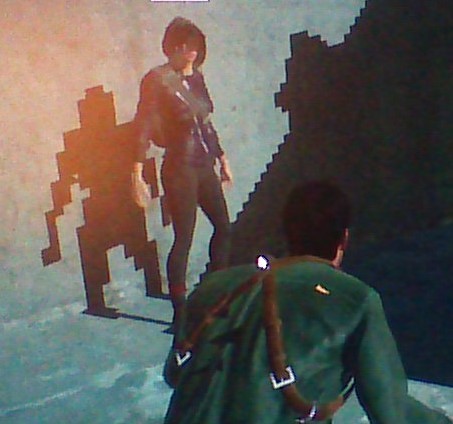
Like Resident Evil 7, I was certain that Dead Rising 4 would not run on my computer.  I chose to test it anyway and was pleasantly surprised when it booted up – although the load time for the starting screen took a while.  The only nitpicks I initially had were that shadows appear as distorted, blocky shapes, and there was a bit of a lag in the gameplay.  But that’s nothing that ruined the experience for me.  All I care about is that a game runs without crashing.

After the ending of Dead Rising 3 seemed to guarantee that there would be no more zombie outbreaks and that the story was over, the fourth game added another layer to the overall narrative.  In a lot of ways, Dead Rising 4 goes back to the roots of the series – it features photojournalist Frank West as the lead protagonist, takes place in the town of Willamette after a zombie outbreak has started, and has an intriguing mystery at its core.  It even lends some more depth to Dr. Barnaby, one of the antagonists in the original game who was responsible for starting the zombie epidemic in the first place.

One of the things I liked best about Dead Rising 4 is that, unlike its predecessors, there were no time constraints.  Instead of rushing through the game to solve the mystery before the clock ran out, I took my time exploring and killing zombies to my heart’s content.  I also love that the game brought back the option to dress the main character in a variety of wacky outfits, as well as create combo weapons and vehicles.  To take it one step further, Frank has access to a piece of military tech called an Exo-suit that can amplify his speed and strength.  In this outing, he throws cars at zombies to off them if he wants.  So far, I haven’t made much use of the Exo-suits apart when the game makes it a mission objective to put one on.  It is something to explore further.

While I encountered more than a few game glitches – my PC is old – nothing ruined the overall experience.  The one that really got annoying was when I undertook a mission to take out all the zombies present inside a pool hall.  Toward the end of the fight, the camera panned up to show a shot of some second story windows before a handful of the more aggressive zombies crashed through them; the camera angle remained fixed on the windows all through the ensuing fight and its aftermath.  While I worked out a way to kill the remaining creatures regardless, I was unable to exit the building since I couldn’t face the door.  Fortunately, this problem was corrected by loading the checkpoint given to me at the conclusion of the fight.

Apart from that glitch and the general lag in the gameplay, the other bugs I encountered regularly were seeing one or two zombies embedded inside a wall or walking into a room that is completely black.  I couldn’t see anything even with night vision enabled inside these black rooms.  While I enjoyed the game even with these glitches, I hope a newer, better computer will help eliminate them.

Overall, I liked the story developed for Dead Rising 4, but I also feel there are ways in which it could be better.  For starters, the character of Vick, one of Frank’s journalism students, didn’t live up to her potential.  In the opening chapter, I got the sense that she had a personal stake against the military group called Obscuris that was secretly creating and experimenting on zombies.  Had Obscuris taken someone Vick cared about for their experiments?  I was disappointed when this idea didn’t play out; Vick was simply a budding journalist out to write a prize-winning story.

I was also a bit disappointed with Calder, the “uber-zombie” hinted at during the first half of the game.  I remember feeling a sense of dread as I chased him through a train yard filled with mangled, heavily dented cars and then into the sewers.  I didn’t know what kind of monster to expect, but a highly intelligent former soldier decked out in an Exo-suit wasn’t quite it.  What made it weirder was when Frank caught up with Calder, the latter was, for some unknown reason, hell-bent on destroying the research that created him.

I felt that Calder and his motives could have been fleshed out better.  And if I had written the story, I would have had it so Vick and Calder were blood-related.  That would have made for quite the dramatic climax.

The ending to the main game still had its share of drama.  The final scene had Frank pulled from the rescue chopper by a horde of zombies and supposedly killed.  However, there has been news of an expansion pack called Frank Rising that will continue the story and have Frank striving to find a cure for zombie-ism before he fully joins the ranks of the undead.

I don’t know if there are any revelations that would allow for another game in the series.  Unless the company behind the Dead Rising franchise can come up with an intriguing, believable story for a fifth game, this may truly be the end of the road.  Whatever the future holds, I’ve definitely enjoyed the ride so far!

Despite my enthusiasm for Dead Rising 4, the game got pushed to the side for about a week in favor of Mass Effect: Andromeda – more on that in my next blog.
 

Editors Note: Self-Marketing – An Author’s Responsibility

inspiration

In publishing, the conventional wisdom is that authors are their best marketers. This idea is sometimes a hard pill to swallow. Authors love to write. That’s what they do. Marketing is a distraction that should be pushed on to the publishers. Right?

Um, no.

People buy books because they like the premise, the subject, and/or the author. One would be hard pressed to find someone who says, “I love books by this ___ publisher. I get everything they put out.” An author carries far more influence, or at least they can if they put energy into their marketing. If the book is an author’s conduit with the writer for developing a relationship, marketing keeps it alive until the next publication nourishment.

Social Media is an author’s friend. It’s a bounty of tools to engage with a potential readership before, during, and after a piece is written and published. Publication alone is like standing alone in a desert at night. There is no one to hear you sing, shout, or whisper. Social media like Twitter and Instagram is the equivalent to having a megaphone to start. Build a network of followers and use relevant hashtags (#) turns the megaphone into a satellite television broadcast to local communities. Here are some authors who do an amazing job with their “broadcasts”:

Hashtags are a powerful tool for expanding one’s influence.

  • #dwriters – all things about author’s craft and staying up to date on publications on this site: Deadwood Writers’ Voices.
  • #amwriting – find an eclectic resource of writing references and conversations by writers.
  • #2write – an up and coming place for resources on writing. Soon to be a chat group for live conversations by aspiring and published authors.

More on hashtags in the next installment. But here’s an article with 44 Essential Twitter Hashtags Every Author Should Know.

***

John McCarthy, Ed.S. has a forthcoming book in late 2016: So All Can Learn: A Practical Guide to Differentiation

Follow @jmccarthyeds & @stsorywynd for more updates and commentary.

***

Check out the May edition of Deadwood Writers Voices. Here is a sampling of what you can expect:

The Trip of a Lifetime: Australia and New Zealand Part 1 by Barbara Pattee on May 6

Barbara describes in detail the beginning of the enlightening tour she and her husband took to two island nations on the other side of the world.

Hot Blacktop, Ch. 11 Full Throttle, by Wendi Knape – @wendijowrites on May 10

Sienna’s shields protecting her heart are starting to break. Will she finally let Saint tear them down? Read Hot Blacktop’s Chapter 11, Full Throttle to find out.

Coffeeshop Chronicles by Diana Hirsch – @dianahirsch on May 18

Follow the monthly caffeinated escapades and explore life, opinions and values through coffeeshops, even if you’re a tea drinker.

Memory? By Claire Murray – @ClaireAAMI on May 21

Why do we remember some things so clearly and forget others? Why, on some occasions, when we hear a chance comment, do memories come flooding back but other times when we try to remember something we can’t?

Fine Dining by Sue Remisiewicz – @SueRemi on May 24

A monster reemerges after being buried for centuries and craving human flesh to eat.

So, I Asked Alice…

Here comes fall. What an appropriate name for a season in which the leaves drop as fast as the temperature.

AliceUnderground1My blog last month talked about possibly using crowdsourcing to publish Broken String, my new novel that is now in final edit. I received several comments at Deadwood Writers Voices and thanks to all of you for that.

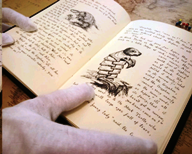
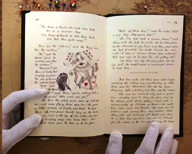
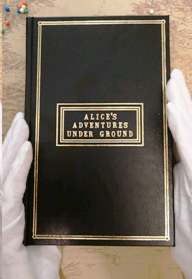
To better understand Kickstarter.com, I decided to “back” one of their book projects. To get a feel for how this might work, I backed the 150th Anniversary Edition of Alice’s Adventures Under Ground. It is being produced in Australia under License from the British Library.

This is Charles Dodgson’s original version of Alice and it includes the 37 illustration Dodgson did himself, with the story in his own hand writing. Lewis Carroll was a pseudonym for Charles Lutwidge Dodgson. His penname was derived from the Latin spelling of his first and middle names, and then reversed and translated back to English.

This 150th Anniversary Edition is leather bound with gold embossed titles with black and white and two-color illustrations. I’m looking forward to seeing it on my classics shelf, after I’ve read it.

AliceUnderground3If you are not familiar with the backstory of Alice, Dodgson originally wrote it as a short story for his College Dean’s daughter. After hearing him tell the tale, twice, during two rowboat trips, Alice Liddell, asked him to write it down for her. He wrote it out in long hand and did his own illustrations, then he had it bound together and gave it to Alice as a Christmas present in 1864. He was encouraged to have it printed for sale and so expanded the story from 15,000 words to 27,500, and brought in renowned illustrator John Tenniel to do better illustrations. He self-published the story, retitled, one year later. That 1865 typeset version is now known as the first edition of Alice in Wonderland. One hundred fifty years later, we have a finely crafted tome of the author’s original words and illustrations, as he presented it to twelve-year-old Alice.

AliceUnderground2Participating with this project has given me insight in how a successful program works. Their costs were projected at AU$20,000 and they raised over AU$109,000 from 1,081 backers worldwide. During the six weeks, I received several emails with updates on the project, complete with pictures of set pages and workers busy on the production. It was a very easy process and it gives me some hope.

Now, I’m not the British Library and my story hasn’t been loved by children of all ages for 150 years, but seeing how they organized the campaign and how they grew interest from under 100 the first week to over 1,000 backers by the end is encouraging.

For my project, I’ll first need to gather a core group of readers, friends and fellow writers to back the project once the campaign does start. Kind of give it a push out the door. Getting that core group to reach out to the friends they know who might enjoy a suspense novel like Broken String is critical to the overall success. Backers of my project would receive deep discounts on signed, first editions of the printed book and first day delivery of the e-book, much like the Alice project offers. I would like to offer versions in limited edition, hard cover, trade paperback and e-book to have the widest price range for backers.

It’s still just an idea germinating in my head. I’ll keep you updated, but I would love to hear from more of you as far as what you think of this idea. What kind of a discount would entice you? Or, what else would be enticing enough for you to back a project like this?

Wanted: Graphic designer for the cover art. Can you recommend anyone?

Superfan Powers Activate!

I've found the new workbook as useful for blogging as the original book (another reason to share).

I’ve found the new workbook as useful for blogging as the original book (another reason to share).

What is a Superfan, you ask? Good question.

A Superfan is someone who adores, loves, admires and worships your artistic work. It’s not a phrase I coined, but a word someone wrote on a blog sometime mid-2015. If anyone out here has also read that intriguing post, please let me know so I can correctly credit the author. The word stuck with me, and it’s a way I now frame my thoughts and perceptions and just about anything when it comes to supporting fellow writers.

I am a Superfan of some writers, meaning I devour anything they write. I promote them by screaming from the rooftops and through my typing fingertips on social media. They owe me nothing, but I owe them my inspiration. Something about their writing, artwork, photography or personal interests resonates with me and I can’t not support them.

I stumbled on Marcie Hill’s book, “62 Blog Posts to Overcome Bloggers Block,” at a time when I was struggling with my blogging topics. The tip that resonated with me most was: It’s not cheating to publish a pictures-only blog post. I never thought about that, even though I have seen such posts elsewhere. I devoured her book, used some of her tips, and then I left an adoring review on Amazon. She wrote me back, “Thank you for that review.” I followed her blog and her Twitter account. Without asking, she did the same, and that’s how our relationship started.

Part of Superfandom is how writers treat me. It’s that personal touch, that sharing with others. I prefer to show my appreciation of Instagram photos with words rather than just Liking them. After commenting on @josameys.words poem about villains and heroes, we had an intense, and rather hilarious, discussion about the pros of being a villain and which Disney villains have the best wardrobe.

Remember the key word in social media: Social.

These authors, artists and other people talk with me. I couldn’t attend a weekly Twitter Chat with Nori (@ReadWriteLove28), so I Tweeted her.

“Wish I could’ve made it, but was still getting over bronchitis.”

She Tweeted back, “@dianahirsch Oh no 🙁 I hope you’re feeling better now!”

I replied, “Yep. Finally better. Took 2+ lingering weeks, but I’ll be ready next #RQWN.”

She replied, “@dianahirsch Oh good, I’m glad!”

Someone who takes that much time and attention is my idol. To show my appreciation for anyone who does that, I retweet their Tweets, I {heart} their videos on Vine and Like their Facebook page, when I’m on Facebook. Beyond such standard protocol, I ask questions and send encouragement through Direct Messages (DM). I show my hero worship by engaging with them on a personal level.

You can make people like you and have your own Superfans by doing those same things. Make sure there’s personal interaction not just some stock “Thank You for Following Me” auto reply. Be polite. Be sincere; don’t say something if you don’t mean it. Make followers feel important; they are your best advertisement and supporters. Answer questions. Send loads of virtual warm fuzzies across the Internet. Emulate the people you want to be.

Make people smile. They will adore you for that. It’ll make you feel good, too.

Typo!

Every novelist needs a copy editor. Why? Because a copy editor makes sure the author is wearing his pants before he steps on stage, makes sure the author doesn’t have a trail of toilet paper stuck to her high heel as the lights come up. Yes, typos are that glaring.

Novelists cannot correct their own typographical errors because they know too much. Knowing what was meant to be said, the author reads what’s in their head not what’s on the page. It’s not a fault, just a fact. A copy editor will not have those preconceived blind spots. They will catch where you wrote breathe instead of breath. Copy editors will see the wrong use of their, they’re and there where your eyes will not. They will find your misplaced commas and misused semi colons and correct grammar where necessary. They will pick up on common wrong-word errors that spellcheck cannot, like typing were when you want where. And at finding missing little words like, for, an, and, at, or and so. Your mind’s eye does not see these kinds of mistakes, either.

Your copy editor is the last person to edit your story before you send it off to your publisher, so you’ll want to entrust this person with as polished a manuscript as possible. The best way to do this is to re-read your entire novel one last time, only lip-syncing it from start to finish.

You don’t have to say the words out loud, but you do need to move your tongue, lips and jaw. What happens is your mouth slows down your mind and forces you to say and see what is on the page. You are also likely to discover syntax errors, run on sentences, passive voices and homonyms, all the stuff that trips up coordination between the tongue and the eye. You’ll discover errors in pacing and entire passages that, really, can be cut. Your only criteria at this point is to clean up and clarify; everything else should be done. Reading like this will catch most of these common errors.

A good copy editor is essential today, whether you are self-publishing or have an agent. What comes out of his or her hands is what will stand the test of time. You, the author, will make all the suggested changes (or not) and correct the typos before submitting it, so in that sense you always have the last word. But by lip-syncing your novel one last time, you will make the copy editor’s job much easier, and much faster.

Who should you hire for this? Yes, I said hire, not ask as a favor. If you are really serious about wanting others to recognize your work, don’t skimp here. Ask other writers who they’ve used and who they would recommend. When you find someone you hear is good, and available, take them to dinner. You don’t have to wine and dine them, but get to know them and what they like to read. Ask them about their funniest stories with editing. That will tell you how much they like their job. Offer a few quips of your own about your research or who your protagonist is based on. At the end of dinner, you’ll both know each other better. You’re looking for someone who wants a personal stake in your novel, who wants to be as proud as you are to see their name attached to it. What they charge, what you pay, should be secondary to that.

How much you should pay is entirely up to you and your copy editor. Somewhere between a dollar a page and three dollars a page seems to be the going rate. The two copy editors I have worked with both charged a flat rate. I paid $250 for my first novel and $350 for my second, but they both moonlighted and neither could be bound to a timeline. The first time I hired a librarian, the second time an accountant. Both were equally methodical. I discovered accountants are very good at finding words that don’t add up, if you hire one who has a good command of the English language.  English teachers are another good source. An editor who reads your genre can be helpful, but don’t make that your only criteria. Critical editing is not what a copy editor edits for. All of your plot development, character development and timelines should be nailed down long before a copy editor sees it.

One final word on typos. No one gets them all, and that’s a good thing if you are in the antiquarian, collectable book business. If you don’t believe me, just go ask Alice. Or Huck. Or that “fool Red Cross woman” in One Flew over the Cuckoo’s Nest. True first print runs of these classics, identified by their typos, are selling for several times what a second printing will fetch. But that still doesn’t bode well for the author.