Editors Note: Self-Marketing – An Author’s Responsibility

inspiration

In publishing, the conventional wisdom is that authors are their best marketers. This idea is sometimes a hard pill to swallow. Authors love to write. That’s what they do. Marketing is a distraction that should be pushed on to the publishers. Right?

Um, no.

People buy books because they like the premise, the subject, and/or the author. One would be hard pressed to find someone who says, “I love books by this ___ publisher. I get everything they put out.” An author carries far more influence, or at least they can if they put energy into their marketing. If the book is an author’s conduit with the writer for developing a relationship, marketing keeps it alive until the next publication nourishment.

Social Media is an author’s friend. It’s a bounty of tools to engage with a potential readership before, during, and after a piece is written and published. Publication alone is like standing alone in a desert at night. There is no one to hear you sing, shout, or whisper. Social media like Twitter and Instagram is the equivalent to having a megaphone to start. Build a network of followers and use relevant hashtags (#) turns the megaphone into a satellite television broadcast to local communities. Here are some authors who do an amazing job with their “broadcasts”:

Hashtags are a powerful tool for expanding one’s influence.

  • #dwriters – all things about author’s craft and staying up to date on publications on this site: Deadwood Writers’ Voices.
  • #amwriting – find an eclectic resource of writing references and conversations by writers.
  • #2write – an up and coming place for resources on writing. Soon to be a chat group for live conversations by aspiring and published authors.

More on hashtags in the next installment. But here’s an article with 44 Essential Twitter Hashtags Every Author Should Know.

***

John McCarthy, Ed.S. has a forthcoming book in late 2016: So All Can Learn: A Practical Guide to Differentiation

Follow @jmccarthyeds & @stsorywynd for more updates and commentary.

***

Check out the May edition of Deadwood Writers Voices. Here is a sampling of what you can expect:

The Trip of a Lifetime: Australia and New Zealand Part 1 by Barbara Pattee on May 6

Barbara describes in detail the beginning of the enlightening tour she and her husband took to two island nations on the other side of the world.

Hot Blacktop, Ch. 11 Full Throttle, by Wendi Knape – @wendijowrites on May 10

Sienna’s shields protecting her heart are starting to break. Will she finally let Saint tear them down? Read Hot Blacktop’s Chapter 11, Full Throttle to find out.

Coffeeshop Chronicles by Diana Hirsch – @dianahirsch on May 18

Follow the monthly caffeinated escapades and explore life, opinions and values through coffeeshops, even if you’re a tea drinker.

Memory? By Claire Murray – @ClaireAAMI on May 21

Why do we remember some things so clearly and forget others? Why, on some occasions, when we hear a chance comment, do memories come flooding back but other times when we try to remember something we can’t?

Fine Dining by Sue Remisiewicz – @SueRemi on May 24

A monster reemerges after being buried for centuries and craving human flesh to eat.
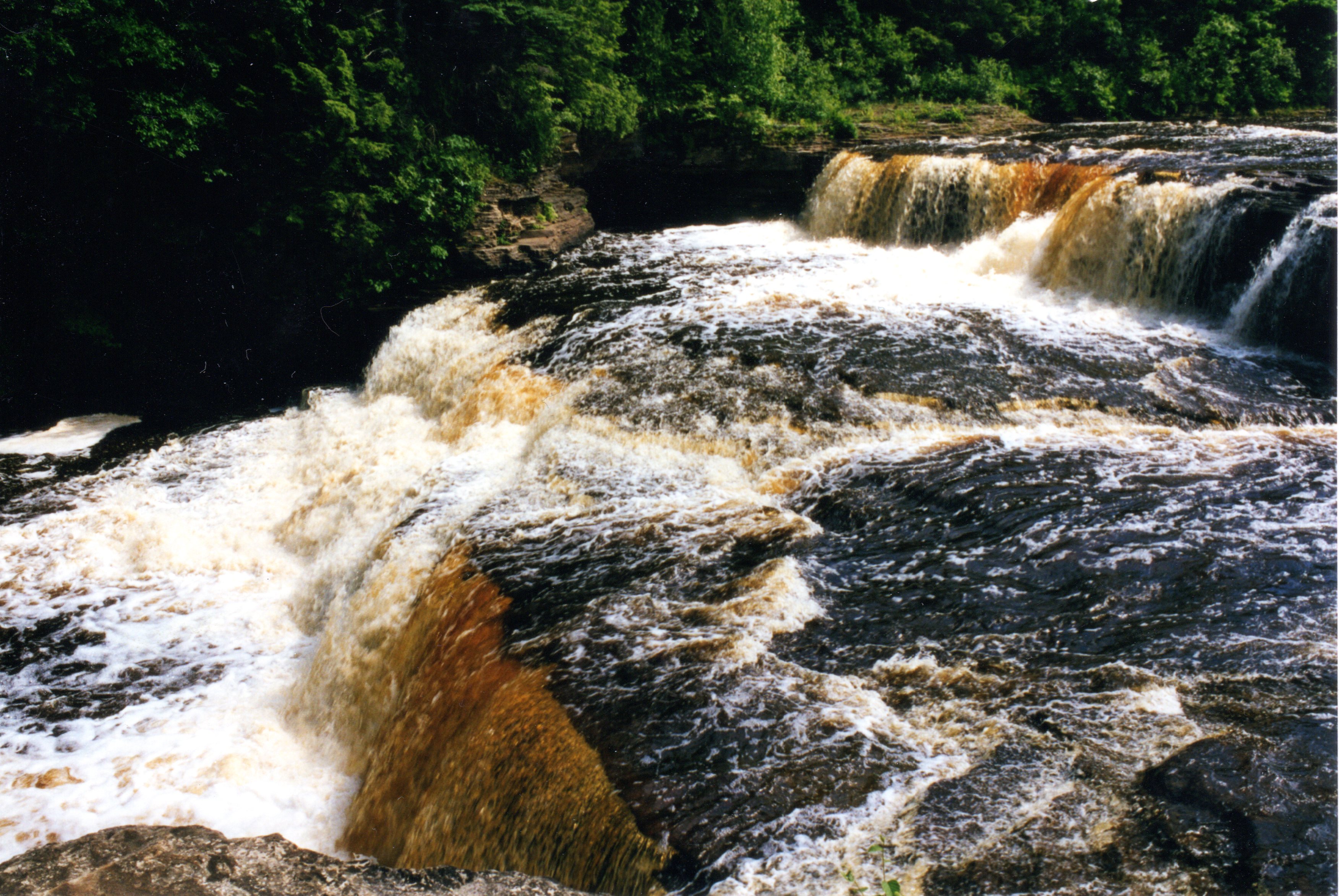
River Crossing

2016-04 PicI must have been five years old the first time Mama warned me about the river. I let go of her hand and ran into the cold water ‘til it covered my bare feet up to the ankles. Before I could go any further, Mama grabbed my wrist and yanked me back onto the shore.

Her gaze blazed through me. “Don’t you ever go trying to cross the river, girl! Even if you make it, the evil on the other side will do you in.” Though young as I was, I sensed that I ought not try to explain I only wanted to cool my feet.

In the thirteen years since, I’ve heard that warning from her hundreds of times. She varies the words some, but she always puts the same stress on the last three words, “do you in.” Every time she says it, the same fear that shook me at five years old comes back to sizzle through me from head to toe.

Sometimes, I sit on a boulder and watch the river and the forest on the other side. The dangers of the river are clear. Water plunges down a bunch of tall, steep drop-offs that line up one right after another. Lose your balance on the slippery rocks and the river will sweep you away, knock you unconscious, and make you helpless as water fills your lungs, bit by bit, ‘til you are dead.

I respect Mama’s warning about the river. What I don’t get is the part about the evil on the other side. I asked Papa about it once. He just pursed his lips and said, “Mind your mother, Jilly.” I never asked anyone else. ‘Cause if I spoke Mama’s business to anyone but her, she’d ground me for weeks and not let me talk to anyone ‘til she cooled off.

Now, I feel a bitter, deep loneliness. Papa died last year. High school graduation day has passed. Things are changing and Mama stays the same. She wants me to stay the same, too. But today, for the first time in thirteen years, I stand barefoot in the river with cool water up to my ankles. Staring, staring at the other side.


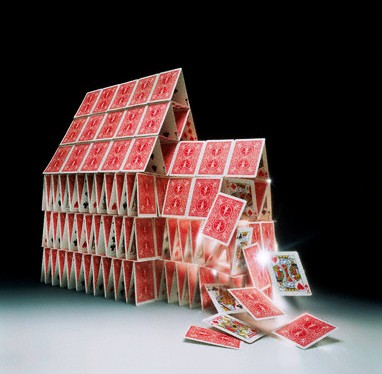
Playing Trump on the House-Of-Cards

Opinion is solely the author’s


I had a funny thought. If Donald Trump and Gary Hart met up with Neil Diamond and Sam Spade to play cards, Trump would insist on playing Clubs. Would he lead with his golf club, night club, yacht club, or his billy club?

House of Cards - ArchialAlternativeFilesWordPress

Donald Trump has certainly stirred up the nation. Love him or hate him, you have to give him that, and then you have to wonder why. His apparent lack of understanding is actually well understood by many who don’t Get It (what the feds are doing). A lot of people think our government is rigged and now only works for those who grease the wheels. They see the great divide getting wider with Congress leading the charge.

They may be right. For the first time in history, most Senators and Congressmen are millionaires. That says a lot about what this sitting batch of politicians have been up to since getting elected. The problem is, there really isn’t a better candidate than Donald Trump. It’s sad that in a nation as smart as ours, we wind up with him leading the Four Stooges into this summer’s conventions.

Ted Cruz isn’t going to fix what’s broke. Neither is Hillary Clinton. Other issues aside, there isn’t a shadow of difference between them when it comes to the top one percent’s overarching influence. John Kasich is probably the most electable republican in November, but the meek no longer survives in the Party of Lincoln.

Bernie Sanders is like the funny grandfather who loves to tell you all the things your parents did wrong. That’s why, I think, he has the nation’s youth on his side. He also has, by far, more individual contributors than Hillary Clinton. No matter how much money each person gives, they still only get one vote in return. Hillary’s PAC supporters remind me of Captain Gulliver being tied down by 100 Lilliputians. I think Bernie is a better candidate than Hillary, but the problem with any democratic President is that we gain nothing but four more years of gridlock.

The only thing on the republican-held Senate and House agendas will be stopping the clock for yet another four years. In the past decade, Congress has passed numerous laws that benefit few but affect millions as if the consumer doesn’t matter. Our laws are now written, not by congressmen, but by lobbyists for congressmen. Trump is the only one who wants to change that. The others just want to be contestants on Who Wants To Be A Millionaire. And that, regardless of anything else Trump declares, decrees, boasts, belittles or bungles, is what’s going to get him elected.

I just don’t want to hire a nerd to fix my plumbing. We tried that in Michigan.

At the federal level, there is not enough support for the impoverished city of Flint; everyone is too busy campaigning. On the state level, there is not enough urgency or empathy, and way too much politics – still! This is a House-Of-Cards that has already fallen.

Governor Snyder’s business acumen in governmental issues does not infuse a lot of confidence to elect a billionaire businessman to the White House. Not in Michigan, anyway, where we see everyone just dragging their feet and pointing fingers, and nothing getting done.

Flint is a killer example of cronyism. Literally, in the case of Legionnaire Disease, and long-term in the case of thousands of children under the age of six, who drank government-issued lead poison. It was totally preventable if those appointed to manage the city had followed established safety guidelines. Then, when their snafu surfaced, it was covered up for almost a year while Lansing, the EPA, the MDEQ and Flint’s Emergency Manager(s) played the blame game. While people were dying!

Is this what we are to expect on a national level if The Businessman is running the country?

Flint wasn’t the first mole to get whacked, and it won’t be the last. There are hundreds, if not thousands, of American cities large and small that are operating water supply systems with 50, 70, 100-year-old lead-leaching pipes. If the next President wants to build a jobs program that will reach across the nation, as well as across the aisle, then upgrading the nation’s potable water system would be a healthy place to start. Roads and bridges are important, too, and the rails and docks are in even greater need of modernization. Then there is the aging and overburdened electrical grid that all of us depend on almost as much as oxygen.

There’s lots to do. We just need to elect people who want to aspire to things besides becoming millionaires. Or hiring apprentices. It’s a pity we don’t have a None of the Above option on the bottom of each ballot.

Playing Trump in November will certainly bring down the House-Of-Cards that is today’s Capital Hill. And, who knows? Without all of the special interest lobbyists setting congressional agendas, a political career might become noble again.

But I still need to hear more substance from Trump before I can vote for him. Washington is a lot closer to Lansing than it appears on the map.


Read On!

-Phil


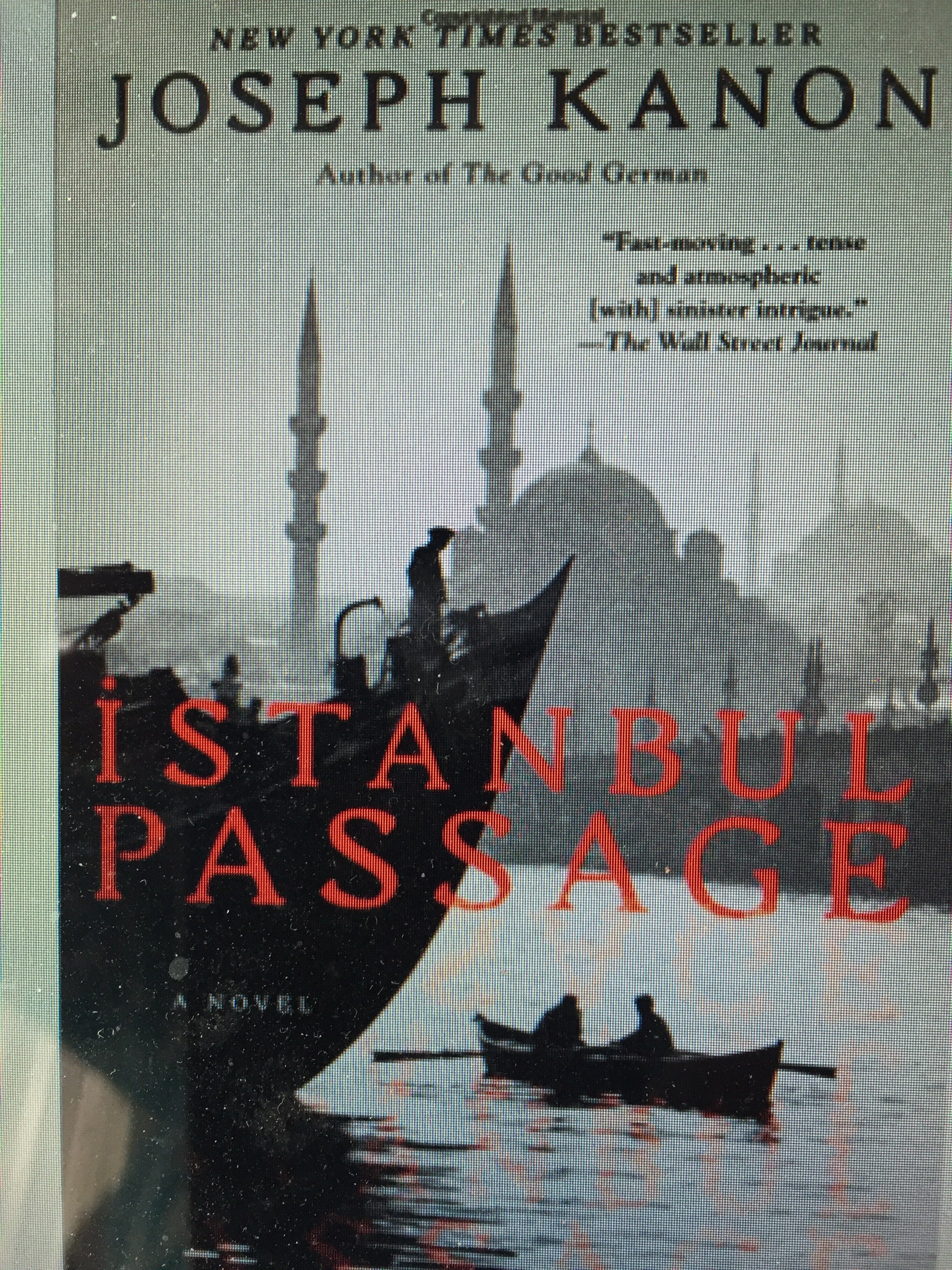
Istanbul Passage: A Novel by Joseph Kanon

IMG_1233

Outside it’s rainy and chilly and it seems like spring might not make it this year. There’s not much I can do about the weather. What I can do is stop wasting time and start focusing on what I’m going to write about for this month’s blog.

I just finished reading Istanbul Passage: A Novel by Joseph Kanon. It’s an international spy thriller that takes place in Turkey at the end of World War II. It kept me mostly sitting on the edge of my chair afraid to breathe. I kept wondering: What was going to happen next?

One of the most interesting things Joseph Kanon did, from a writers’ and readers’ perspective, was make Istanbul, the city itself, come alive. It’s a character in the story and a very important one. This is an example from the beginning of the book. Notice how the city gradually comes to life, like a person almost:

“During those first weeks they didn’t see the old wooden houses, listing and creaking from neglect, the backstreets with clumps of garbage and mud, cracked fountains seeping moss. They saw color, heaps of spices, everything that wasn’t Germany and water everywhere, a city where you took ferries just to be out on it, looking at domes and spires, not the crooked, dirty streets. Anna wanted to see everything, the famous sites, then things she found in books, the Camondo Stairs, twisting down Galata Hill, the cast-iron Bulgarian church, the Byzantine mosaics out near the old city walls where they could eat picnics on the yellow grass, looking up at the giant stork nests in the ruins.”**

Reading the book was like stepping back in time, into the Istanbul that existed in late 1945. Joseph Kanon makes it possible for you to walk down streets, up hills and through back alleys. You feel the rush of flagging down a taxi or running for the tram. Coming down a steep hill in the funicular took my breath away.

“They caught the ferry back to Eminonu and wandered through the spice market like tourists, looking at the tall cones of ground spices and piles of dates. At a nougat stall . . . But then the man turned, eating candied pistachios, just another fat man, and Leon realized he’d been staring and looked away. They went out the side exit, past the bird market, cages noisy with song and fluttering.”***

IMG_1239

I loved visiting the mosques, the bazaar and out to dinner to a nice restaurant. I became fascinated by constantly having to take a boat from the European to the Asian side and then back again.

What I took from this book is that it’s possible to make a city, any city, a character in your story. If you do, it could be a lot more interesting! Have you tried this technique?

*Istanbul Passage: A Novel by Joseph Kanon, Atria Books, 2012.

**Location 345 of 6,447.

***Location 3,301 of 6,447


Coffee Shop Chronicles: Writing Letters

IMG_0479Tuscan Cafe
Northville, MI

What is that woman writing?

“Hey, behind you,” I whisper to my husband. “There’s a woman writing.”

We’re sitting along the wall in what I’m calling “our spot.” I seem to default here when I come in; the light is good and I’m out of the way from the main path. My husband finished his mocha coffee latte drink a few minutes ago and is checking something on his phone. I glance over his shoulder and see a woman writing.

I don’t know how I know that she’s writing something personal, but I do. Maybe it’s the slouch her shoulders, determined but relaxed. Maybe it’s the slow way her hand moves, the pause she makes, deliberate yet light and free. She’s focused but not intense. Is it a story? Journaling? A project?

I’m curious.

My husband half turns, that way, when you try to casually stare without being obvious. I’m staring directly at her. She doesn’t notice me.

“I can’t tell,” he says.

Neither can I, but it’s time to leave.

“I want to see,” I say.

The exit is behind me; there’s no reason for me to move in her direction. I stand up and shrug my coat on. I make my go-to excuse, and I say it loud enough so that if she was listening, she wouldn’t be suspicious.

“I’m going to use the bathroom before we leave.” That door is in front of me, so I can conveniently walk past the writing woman.

She is writing Thank You cards.

The cards are white, but they don’t have that white embossed shiny-matte, off-white texture of wedding cards. Her cards have Thank You in black, neutral font. The text is friendly and readable, not some flowery script but not a dull Garamond or Times New Roman. There’s a color design clustered in the center around Thank You–flowers, I think–but the style is neither masculine nor feminine. There’s a stack of cards next to her in a non-descript box with a flimsy plastic lid that you’d find in a Hallmark store. It looks like she’s writing with an ink pen, nothing fancy but higher quality than you’d get in an office supply store.

I see all of this in about 5 seconds, maybe 10. Staring can be creepy, and there’s no time to casually chat. I don’t want to disturb the magic. She’s intent and focused and fortunately doesn’t see me staring at her and the table full of notecards.

I walk out.
I don’t bother to fake-stop in the bathroom.

I think of this now because it’s April, the month of so many things: National Poetry Month; Camp NaNoWriMo; National Rebuilding Month; Testicular Cancer Month, Autism Awareness Month, and National Card and Letter Writing Month.

I started writing letters to my friend about two months ago. These are notecards from Target $1 Spot. The 8 cards are all the same design with the word “Gratitude” on the front. I bought them because they’re a friendly peach color with matching envelopes.

So far, I’ve received no letters in return and I don’t expect any. I write as if we were talking side by side and, yes, I write them when I’m in coffee shops. These small cards aren’t intimidating because there’s only room for a thought or three, just short and fun. And now I discovered a whole movement.

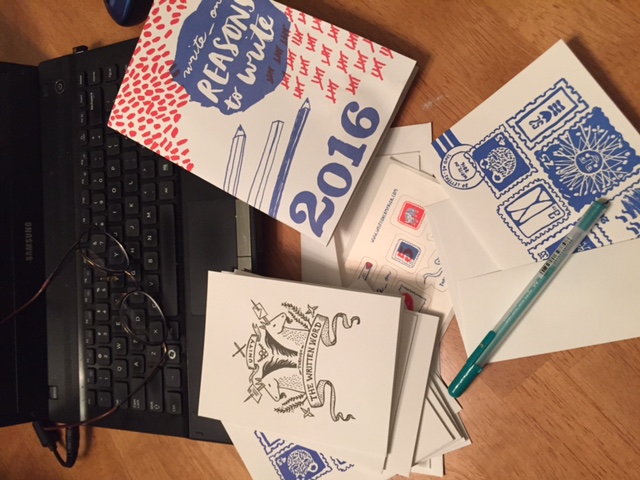
There’s a campaign called Write_On which distributed 10,000 free writing starter kits to encourage people to write a letter a day in April. I’m not a fan of setting daily deadlines; to me, it’s a setup for self-failure if you miss a day. Regardless, I signed up for and received one of the kits.

The six-card kit includes envelopes for mailing–as a papercrafter, I can say that including envelopes is the polite thing to do. There’s stationary with envelope, stickers, a colorful inspiration booklet and a gelly roll pen. I’m a writer. I like paper. I like pens. Any letter writing I do, once a day or not, spreads more joy than if I didn’t write at all.

I’ll never know what that woman was writing or thanking people for, but do I need to?